
World War II Part Two: The Turning Points and the Road to Victory
From Stalingrad and El Alamein to D-Day, the atomic bomb, and the fall of Berlin — how the tide turned against the Axis and a devastated world was remade.
The Turning Points of 1942
1942 started with Axis advances, but ended in terrible defeats. The Japanese continued to expand across Asia and the Pacific. They captured Burma. They arrived at the gates of India. They bombed Australia and Sri Lanka.
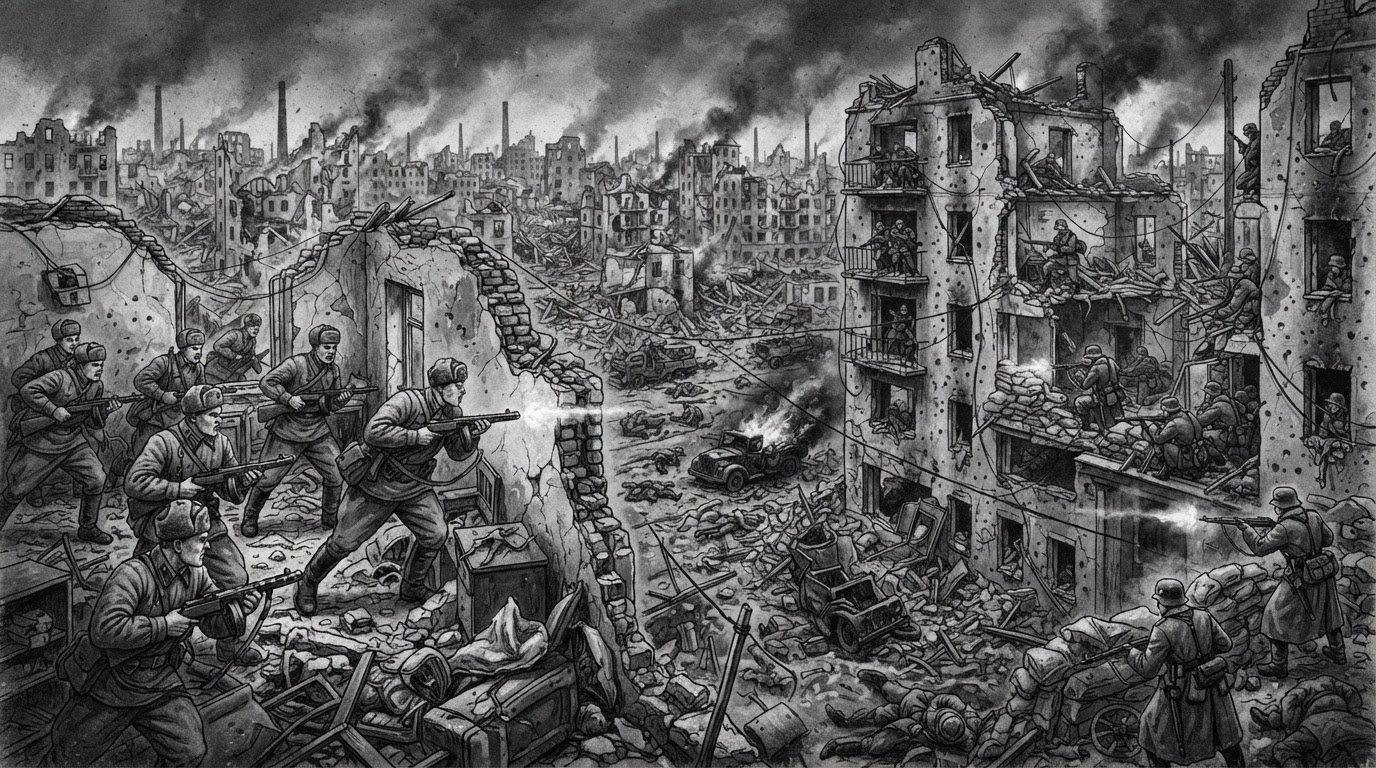
The Germans and their Axis allies charged through Ukraine into southern Russia. By late summer, they'd reached the city of Stalingrad, but their momentum stopped as they struggled to secure the city in the face of house-to-house fighting.
That summer too, the Japanese suffered a catastrophic defeat. The Americans had broken the Japanese naval codes, which allowed them to ambush the Japanese fleet off Midway Island. US naval dive bombers destroyed four Japanese aircraft carriers, ripping the heart out of the Japanese Navy. The tide had turned.
The tide also turned in Africa as well. An impressive Axis advance had taken their forces deep into Egypt, threatening the entire British position in the Middle East. But the British attacked at El Alamein in October and forced the Axis back. It was the start of a long retreat.
Days later, the Americans arrived in the Western theater for the first time in the war. They and the British landed in Morocco and Algeria, threatening to crush the Axis between them and the British Army advancing from Egypt.
In November 1942, the Soviets launched a massive counterattack on the German troops at Stalingrad. Within days, they were surrounded. The Germans held out desperately, but by February 1943, the final remnant surrendered. It was a devastating defeat.
The Allied Offensives of 1943
In 1943, the Allies really turned the screws. In the skies of Europe, fleets of bombers smashed German cities and factories night after night. A daring raid in May saw British bombers strike at German dams to disrupt hydroelectric and water supplies in the industrial region of the Ruhr.
In the Soviet Union, the Germans attempted one last big offensive. They attacked the Soviets around the city of Kursk, but the British had broken German codes and gave Stalin detailed intelligence. The Soviets built massive defenses, which took a terrible toll on the Germans, and then struck back at them, sending them reeling back. The Germans would know only retreats from this point forward.
In the Atlantic, British, American, Canadian, other Allied ships and planes developed techniques to overcome the threat of German submarines. In a series of battles, Allied ships sunk German submarines in such large numbers, the German admirals suspended all operations. They would never again enjoy the upper hand.
In the spring of 1943, Axis troops surrendered in North Africa.
And in July, the invasion of Italy began with landings in Sicily, the first Allied boots on the home turf of an Axis power. Later that month, the fascist leader Mussolini was ousted from power and arrested. The Allies then invaded the Italian mainland in early September. Italy agreed to surrender, but German forces in Italy seized control and ensured that the Allies would have to fight their way right up the Italian Peninsula.
In the Pacific, the Americans were on the offensive. They hopped from island to island in two main thrusts. There was a southern drive, in which New Guinea and its surrounding islands would be captured. Then there was a thrust up through the Central Pacific, with attacks on the Gilbert and Marshall Islands. The Axis were on the retreat. They now had no chance of winning the war.
The Accelerating Holocaust
As the situation worsened for the Germans, their genocidal campaign against Europe's Jews and other groups accelerated. Millions of Jews were killed in industrial murder camps across Germany's shrinking empire.
Allied Advances in 1944
The walls really closed in on the Axis powers in 1944. The Soviets launched offensive after offensive, millions of men surging forward, driving the Axis forces before them. Vast numbers of people were now locked into bloody, destructive, awful fighting. By the end of the year, the Soviets were on German soil.
In the Pacific, the USA inflicted defeat after defeat on the Japanese. Most of their navy was wiped out in massive battles, like the Philippine Sea and the Leyte Gulf. They captured island after island. Saipan, Tinian, Guam all fell. From these islands, American bombers could now reach the Japanese home islands and unleash terrible destruction.
The Japanese attempted to strike at America. They released balloons with explosives tied onto them. One of them killed six civilians in Oregon, the only Americans killed in the continental US by Axis powers during the Second World War.
The Japanese also tried to invade India, but were held at battles at Kohima and Imphal before falling back.
D Day and the Liberation of France
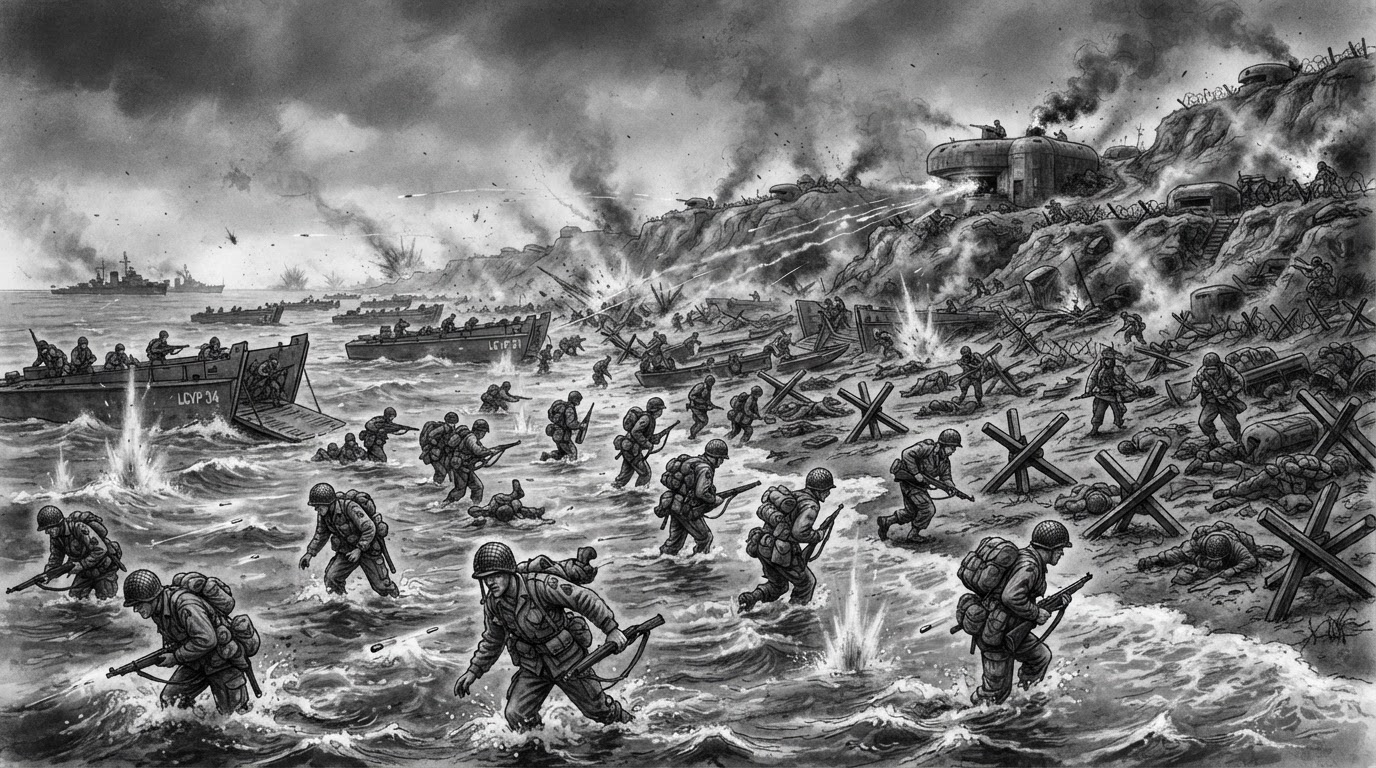
The Americans, British, Canadians, and their allies launched their invasion of Western Europe on the 6th of June, 1944, D-Day. In just 24 hours, around 150,000 men were landed in Normandy. Some dropped from aircraft, but the majority coming across the channel in 7,000 ships and boats and storming up the beaches.
Hours of savage fighting were needed to get off some of the beaches, as the German defenders unleashed a storm of machine gun fire from concrete bunkers. But by the end of the day, the Allies had penetrated this defensive wall and cleared the beaches, and huge numbers of men and vehicles would land in the coming days.
German reinforcements rushed to Normandy, and a brutal attritional battle followed. It wasn't until early August that the Allies defeated the German forces comprehensively, and they raced across northern France, liberating Paris at the end of the month.
Arnhem and the Battle of the Bulge
It seemed like the end of the war might be near. The Allies launched an ambitious attempt to seize the bridge across the Rhine at Arnhem, but the Germans were not defeated yet. They fought back and frustrated the plan. The war would drag on through another terrible winter.
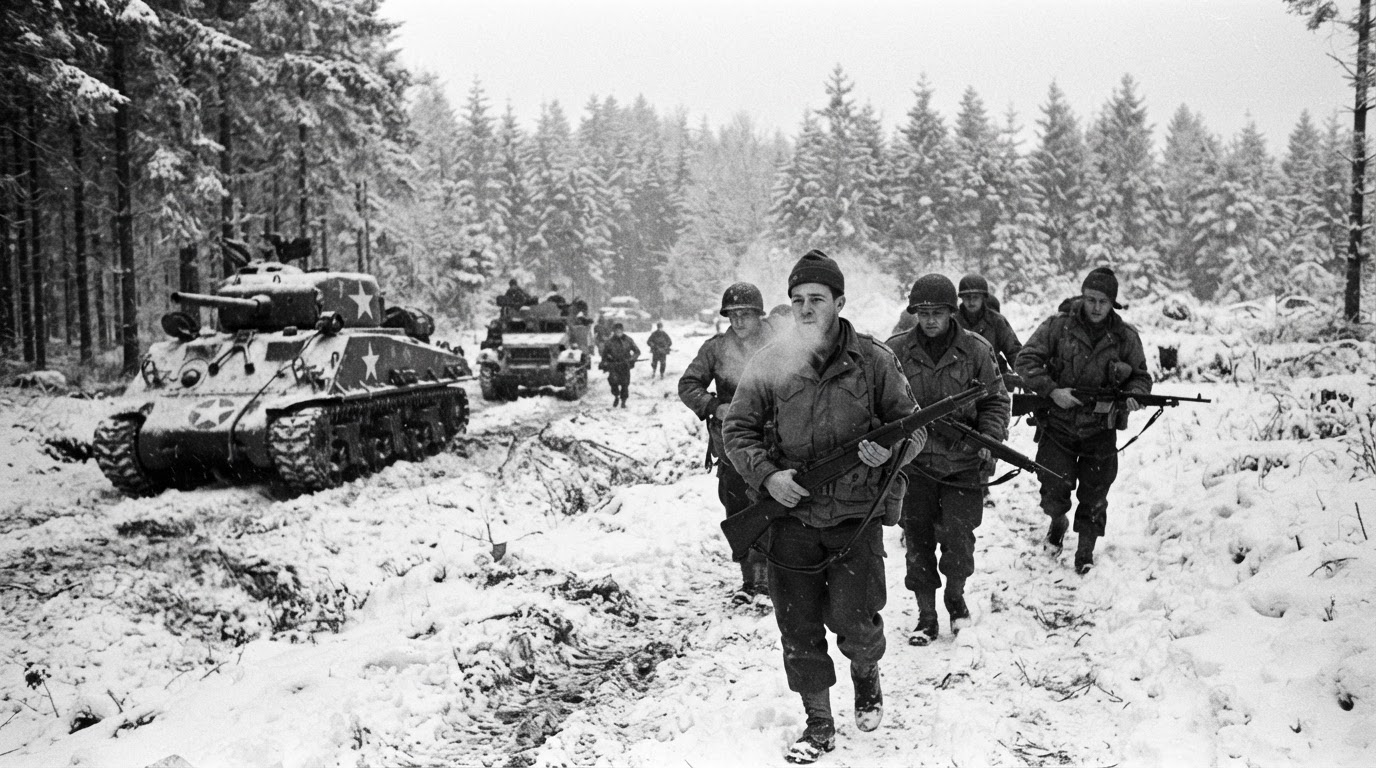
And at midwinter, Hitler would launch his last offensive. With snow thick on the ground, the Germans struck at Allied troops in Luxembourg and Belgium. They bent back the Allied line into a bulge, but could not break through. Massive reinforcements were rushed to the region, and this Battle of the Bulge ended as another German defeat. They'd lost men, tanks, and fuel they could not afford.
The Final Defeat of Germany
It was all over in 1945, but the Axis fought hard to the end, causing huge unnecessary hardship, trauma, and loss of life. As the snows melted in the spring of 1945, the Allies swept through Northern Italy, finally completing the liberation.
On their western front, the Germans blew up one of their biggest dams, causing flooding to slow the Allied advance. But in March, the Western Allies gained footholds on the east side of the mighty River Rhine and advanced across Germany. By April, they were just 50 miles from Berlin.
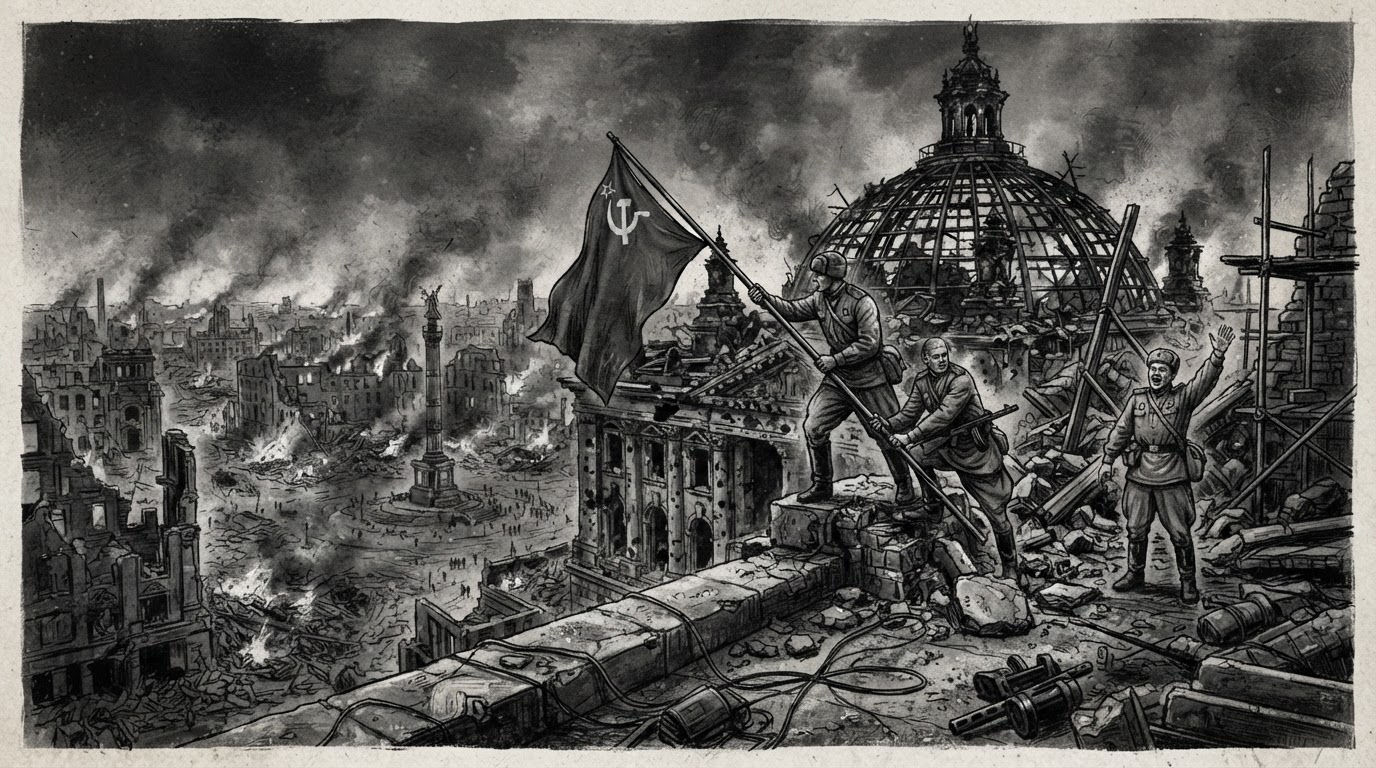
In the east, the Soviets rampaged across Poland and East Germany. Nearly two and a half million men proved far too much for the German defenders. Stalin was desperate to get to Berlin, the enemy's capital first, and he pushed his generals to beat the Western Allies to it. They succeeded.
Berlin was surrounded by Soviet troops by late April. On the 30th of April, Hitler married his longtime partner, Eva Braun, then killed her and committed suicide. The Third Reich's short-lived second Führer, Admiral Dönitz, surrendered unconditionally a week later on the 7th of May.
“43 million had died. Two-thirds of Europe's Jewish population had been murdered. Cities had been erased, treasures destroyed. A continent lay in ruins.”
The war in the West was over. 43 million had died. Two-thirds of Europe's Jewish population had been murdered. Cities had been erased, treasures destroyed. A continent lay in ruins.
The Atomic Bombs and the Surrender of Japan
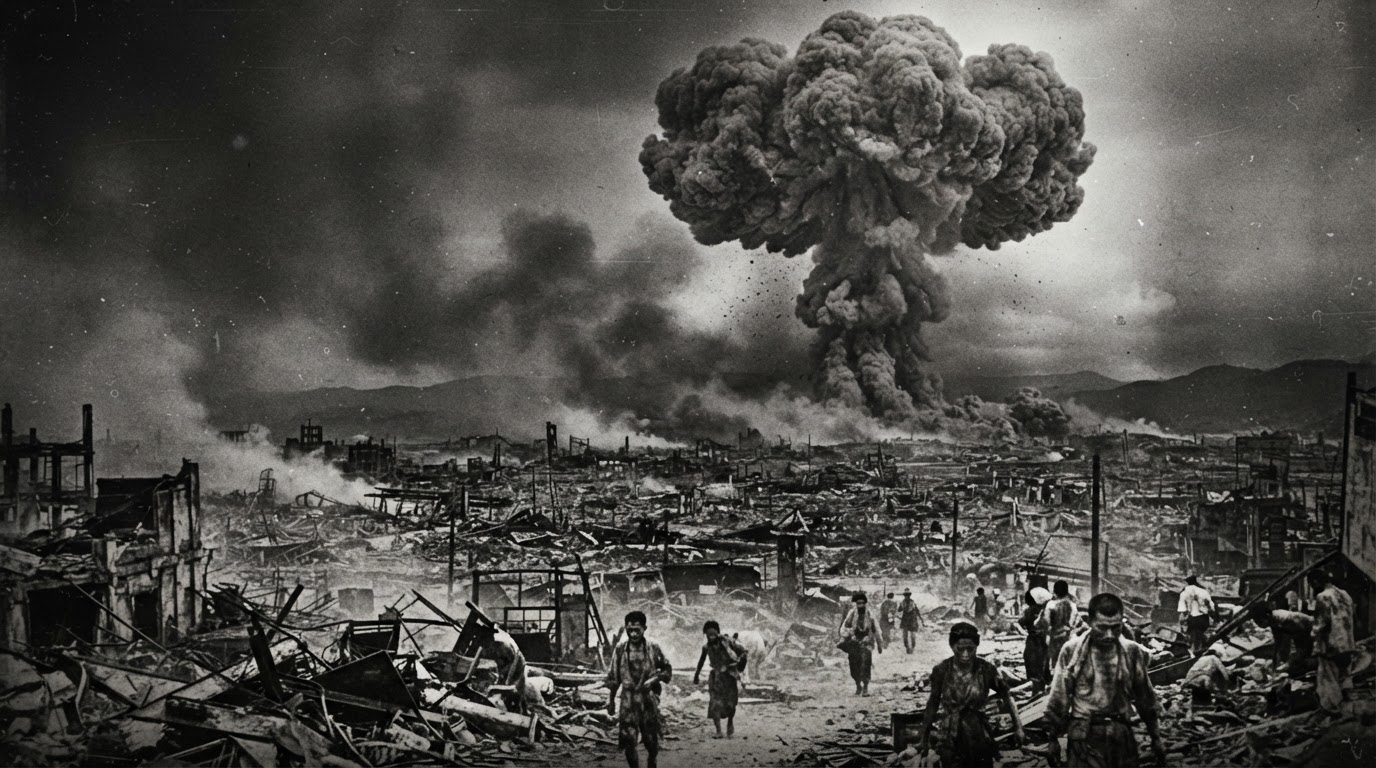
Japan remained in the fight for the moment. Its cities were incinerated, its empire humbled. American forces moved ever closer to the home islands. They captured islands like Iwo Jima and Okinawa after horrific fighting, which saw suicidal, yet hopeless Japanese defense.
Plans were made to invade Japan itself. But then, the USA stunned the world. A single plane dropped the most powerful weapon in history, a miracle weapon, the atomic bomb.
A top-secret, massive industrial and scientific effort had been underway in America to harness the power of the atom and create a bomb of hitherto unimaginable strength. In July 1945, there had been a successful test, which had turned a patch of New Mexico desert into glass.
In August, the new American president, Truman, who had succeeded after the death of Roosevelt in April, took the decision to drop the bomb on Japan to force their unconditional surrender. On the 6th of August, a single bomb was dropped on Hiroshima, followed by a second bomb three days later on Nagasaki. Hundreds of thousands of people were killed or suffered horrific injuries in the two strikes.
At the same time, the Soviet Union finally entered the war in the Pacific. The day after Hiroshima, Stalin launched a massive offensive against Japanese forces in Northern China. Bowing to the inevitable, the Japanese government surrendered. The official ceremony took place on the 2nd of September 1945 on an American battleship in Tokyo Bay.
A World Transformed by War
The Second World War was over. The world was transformed. In Europe, the eastern part of the continent was now under Soviet communist occupation. Germany was divided in two, the east occupied by the Soviets, the west by the Western democracies.
Nuclear-armed America was now a global superpower, totally replacing the British and the French empires, which were weakened by the exertions and the expense of war.
In Asia, Japan was occupied and rebuilt by the Americans.
Korea was divided, like Germany, between the democracies who controlled the south and Soviet forces who installed a communist regime in the north.
Vietnam had thrown off the French imperial yoke during the war and began its independent struggle as the French arrived back to take control. China was devastated by the war, and the communist forces there redoubled their efforts to seize power. By 1949, mainland China was in the grip of the Chinese Communist Party.
“In so many ways, we are still living in a world forged by World War II.”
In so many ways, we are still living in a world forged by World War II.
More from the Front
 World War
World War II Part One: How the Conflict Became a Global War
From the invasion of Poland to Pearl Harbor — the first years of the biggest, bloodiest war in history, fought across every continent and in the skies, seas, and trenches of a world on fire.
 Military Tech
Air Power in the War in Ukraine — Part 1: How Drones and Glide Bombs Changed the War
From the era of the Reaper to industrial-scale quadcopters and Soviet glide bombs — how cheap, clever engineering reshaped the skies over Ukraine and overturned the assumptions of modern air warfare.
 Military Tech
Air Power in the War in Ukraine — Part 2: How Ukraine Defends Its Skies and Carries the Air War Into Russia
From cell-phone Shahed detection networks to strikes on Russian oil refineries and Wildberries warehouses — how Ukraine turned cheap drones into a strategic campaign that reached deep inside Russia.