

Understanding the War in Ukraine — Part 2: Why Disputes Alone Do Not Explain War
An analysis from the opening months of the 2022 invasion — territory, energy, and autonomy are at best half-causes of war. To understand why fighting happens at all, we need a bargaining friction that blocks a negotiated settlement.
Perhaps the most important finding in the research on war is that substantive disputes, such as territory, energy, and autonomy, do not fully explain the conflict between Russia and Ukraine. At best, they are collectively half causes of war.
The Territorial Bargaining Puzzle
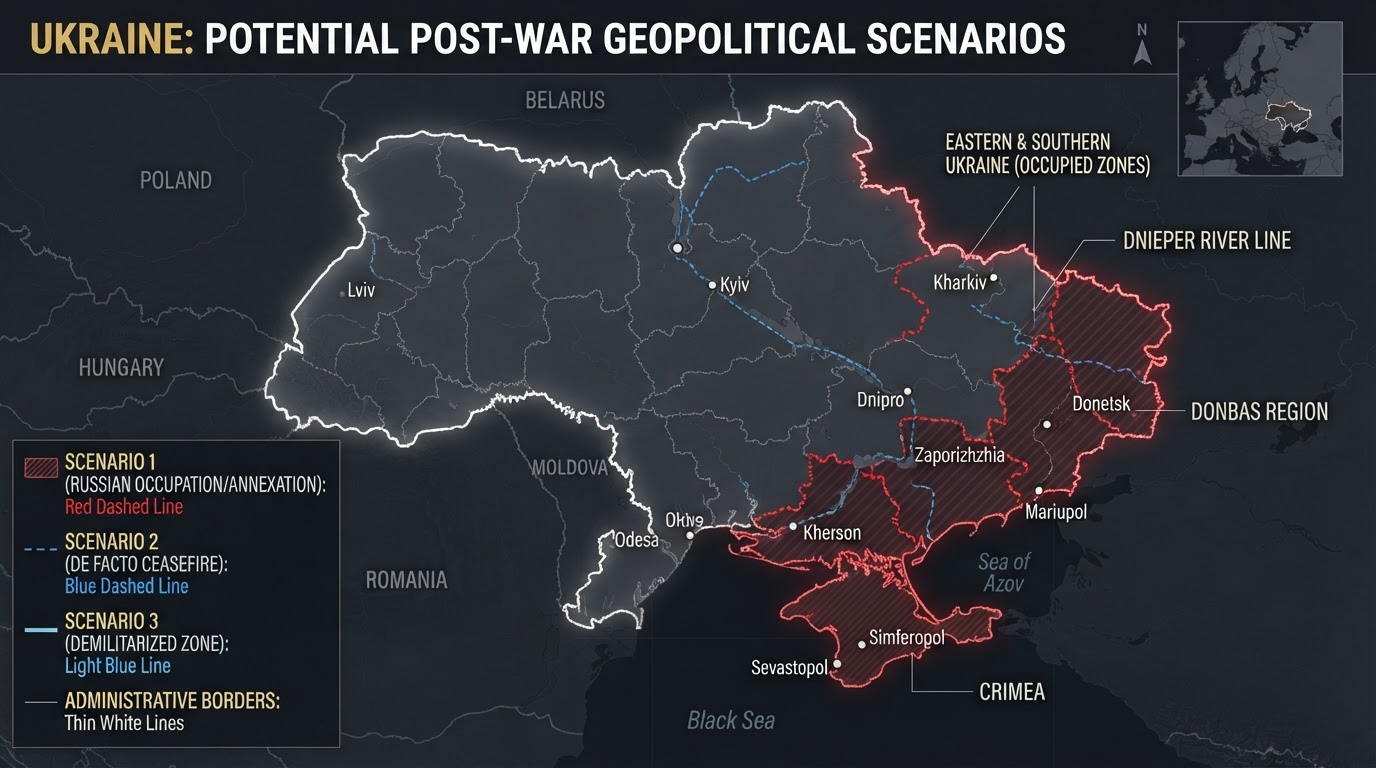
Take the territorial explanation as an example. If Ukraine and Russia fight a war to a complete military conclusion, there are many different possible post-conflict borders. One possible outcome would leave territory to the west under Ukrainian control and territory to the east under Russian control. Or maybe Russia will turn things around and capture a whole lot more land.
Maybe things will stay roughly like they are, leaving only partial gains for Russia. Maybe Ukraine's counterattacks will be extremely successful, and Ukraine will reestablish something close to the pre-war line of control. And maybe there's a small chance that Ukraine could even recapture Crimea.
If we take these and the other possible outcomes and weigh them by their relative likelihoods, we can calculate an average expected outcome. Think about what would happen if the parties simply implemented that territorial division now. By definition, neither country could hold more territory in expectation by fighting a war instead. And by implementing it, no one else has to die, no more money has to be spent on tanks, and we can go back to some semblance of normalcy in Europe.
There is some wiggle room on these settlements because Ukraine also bears costs from fighting. To account for them, we need to convert Ukraine's value of lost life and monetary inefficiencies into square kilometers of land. That seems strange, but governments make these kinds of comparisons all the time.
Tons of agencies do this within the United States government alone, and for them, the estimate is $10 million per person.
We can do the same for Russia's costs of war. Each side would accept some territorial compromise to avoid those costs. Any division within the resulting range is mutually preferable to war.
Sharing Energy Profits
While it is easy to explain this in terms of a territorial dispute, the same logic applies to the other topics. Take energy reserves as another example. There is a total amount of profit that could be made from the fuel in question. A war might determine how that value is divided, but it will also destroy some of those profits through death and lost investment opportunities. The amount left to divide would therefore be smaller.
If Russia is really threatened by a glut of European energy, why not create a joint company that could drill the wells and share larger profits for everyone? That might sound weird, but it has historical precedent.
The Kuwait Saudi Arabia Example
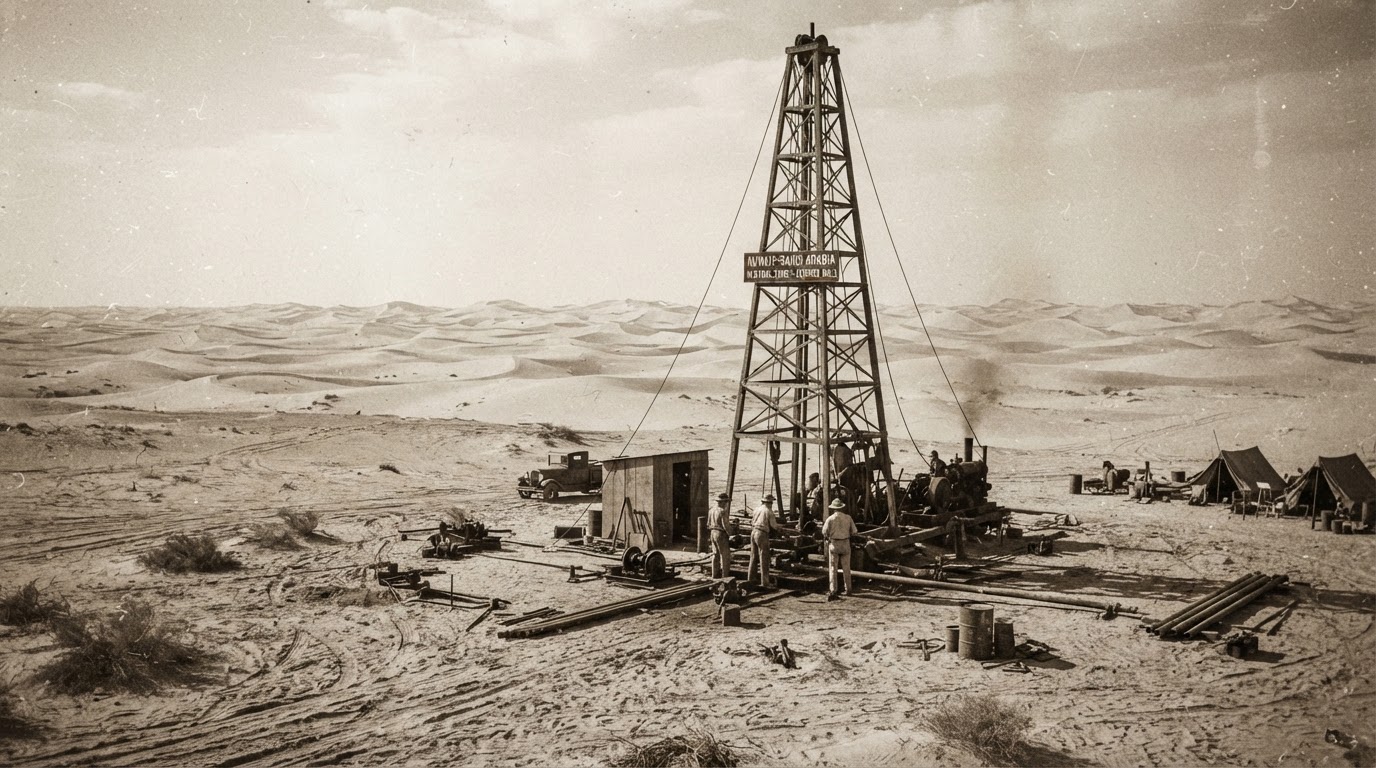
In the 1920s, Percy Cox, a British high commissioner in the area, drew a somewhat arbitrary neutral zone between Kuwait and Saudi Arabia. This was not much of an issue until 1938, when oil was discovered in Kuwait, suggesting that the neutral zone may be valuable.
The situation had the perfect makings for a conflict, with each potentially claiming rights to the possible deposits. But that's not what happened. Instead, the companies formed a joint venture to extract the oil and split the revenues from it.
And even though Kuwait and Saudi Arabia divided the neutral zone itself in 1965, giving us today's borders, oil revenues are still divided according to the earlier agreement.
Autonomy as a Negotiated Settlement

This kind of solution also works with autonomy. Simply calculate what the expected level of autonomy would be given a war, and implement that. Indeed, doing this is extremely common worldwide.
China has Hong Kong and Macau, two of the most famous ones, as well as 100 others, including Tibet. The United States also has Puerto Rico. Autonomy agreements are why civil wars are not as common as they would be otherwise.
What a Complete Explanation Requires
“In theory, a range of settlements exists that leaves both countries better off than had they fought a war.”
This is why war is puzzling. In theory, a range of settlements exists that leaves both countries better off than had they fought a war.
That's a large reason why wars are rare. The average probability that a given country starts a war against another given country in any given year isn't 20% or 10% or 5%, or even 1%. It is just 0.31%. That does happen every now and then, as with Russia and Ukraine.
But if we want to understand why any war happens, including this one, we need to explain why the parties could not reach one of those negotiated settlements instead.
In other words, we need to think of this as a two-step process. First, we need something that they are both willing to fight over, and second, we need something that you might call a bargaining friction, something that prevents them from reaching one of those negotiated settlements. To get war, we need both an issue worth fighting over and a bargaining friction that prevents a settlement.
Understanding the War in Ukraine — Part 3: Why Russia and Ukraine Failed to Reach a Deal
Continue the Series
More from this multi-part investigation. Read the parts in order for the full picture.
 Analysis
Understanding the War in Ukraine — Part 1: The Disputes Behind the War
An analysis from the opening months of the 2022 invasion — seven substantive issues that help explain what Russia and Ukraine are fighting over, from separatist regions and a land bridge to Crimea to energy, water, and the denazification claim.
Read part Analysis
Understanding the War in Ukraine — Part 3: Why Russia and Ukraine Failed to Reach a Deal
An analysis from the opening months of the 2022 invasion — to get war, we need both an issue worth fighting over and a bargaining friction that blocks a settlement. Preventive war, preemptive war, miscalculation, and political survival each help explain why no deal was reached.
Read part Analysis
Understanding the War in Ukraine — Part 4: How Wars End and What That Means for Ukraine
An analysis from the opening months of the 2022 invasion — from military defeat and changing leadership to the removal of a power shift and the slow learning process of convergence, the causes of the war point toward very different ways it might end.
Read partMore from the Front
 Military Tech
Air Power in the War in Ukraine — Part 1: How Drones and Glide Bombs Changed the War
From the era of the Reaper to industrial-scale quadcopters and Soviet glide bombs — how cheap, clever engineering reshaped the skies over Ukraine and overturned the assumptions of modern air warfare.
 Military Tech
Air Power in the War in Ukraine — Part 2: How Ukraine Defends Its Skies and Carries the Air War Into Russia
From cell-phone Shahed detection networks to strikes on Russian oil refineries and Wildberries warehouses — how Ukraine turned cheap drones into a strategic campaign that reached deep inside Russia.
 Historical
The Rise and Fall of the Soviet Economy — Part 1: From Serfdom to Revolution
While the West crashed in 1929, the Soviet Union boomed — industrial output up 50% in five years, near-zero unemployment. But the roots of that miracle, and its eventual collapse, reach back to 14th-century feudalism, the Black Death, and a revolution that replaced one extractive elite with another.