
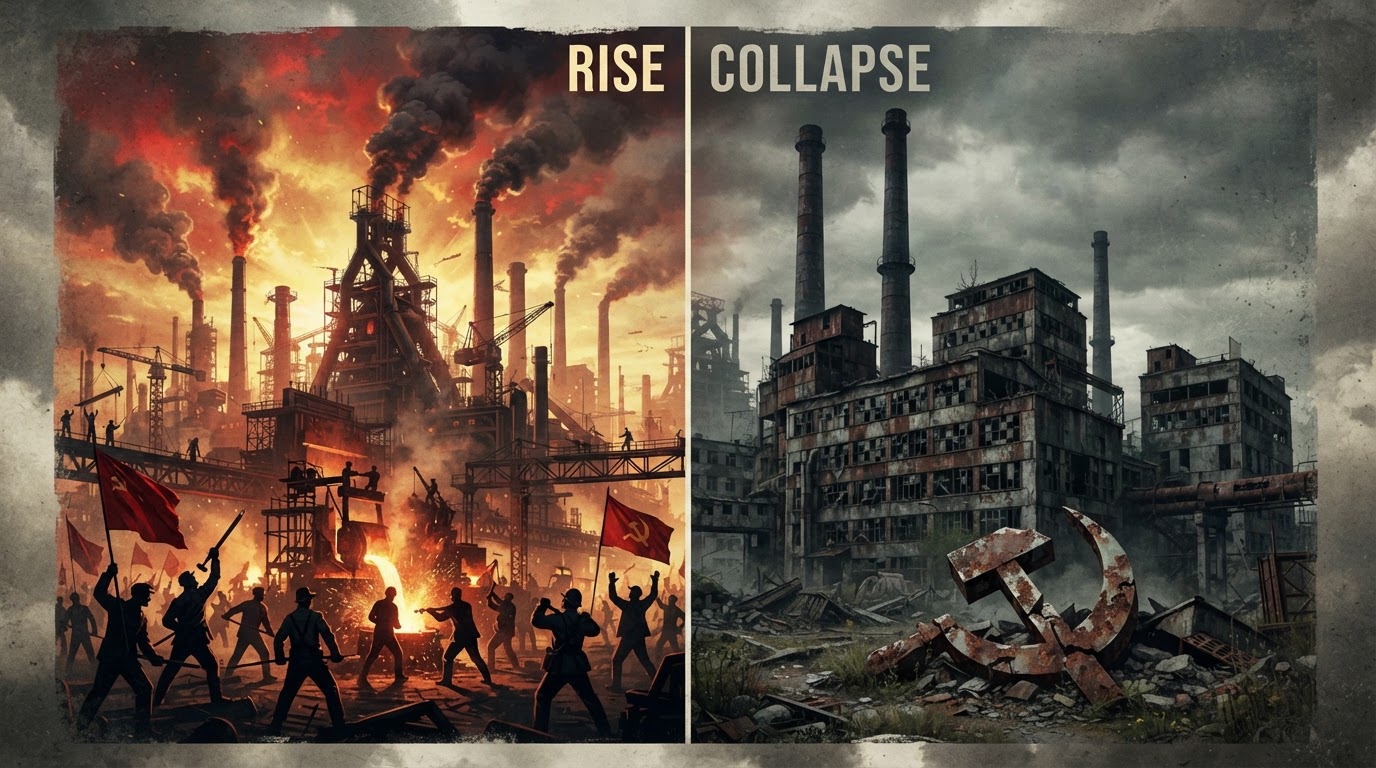
The Rise and Fall of the Soviet Economy — Part 2: How It Rose So Fast and Why It Collapsed
The Soviet economy grew rapidly by directing labor and resources into heavy industry. But its problems with incentives, information, and innovation made that growth unsustainable — and the seeds of collapse were planted before the nation even existed.
The Soviet economy grew rapidly by directing labor and resources into heavy industry. But its problems with incentives, information, and innovation made that growth unsustainable. The system began taking shape during the civil war, before the Soviet Union was formally created.
From War Communism to the New Economic Policy
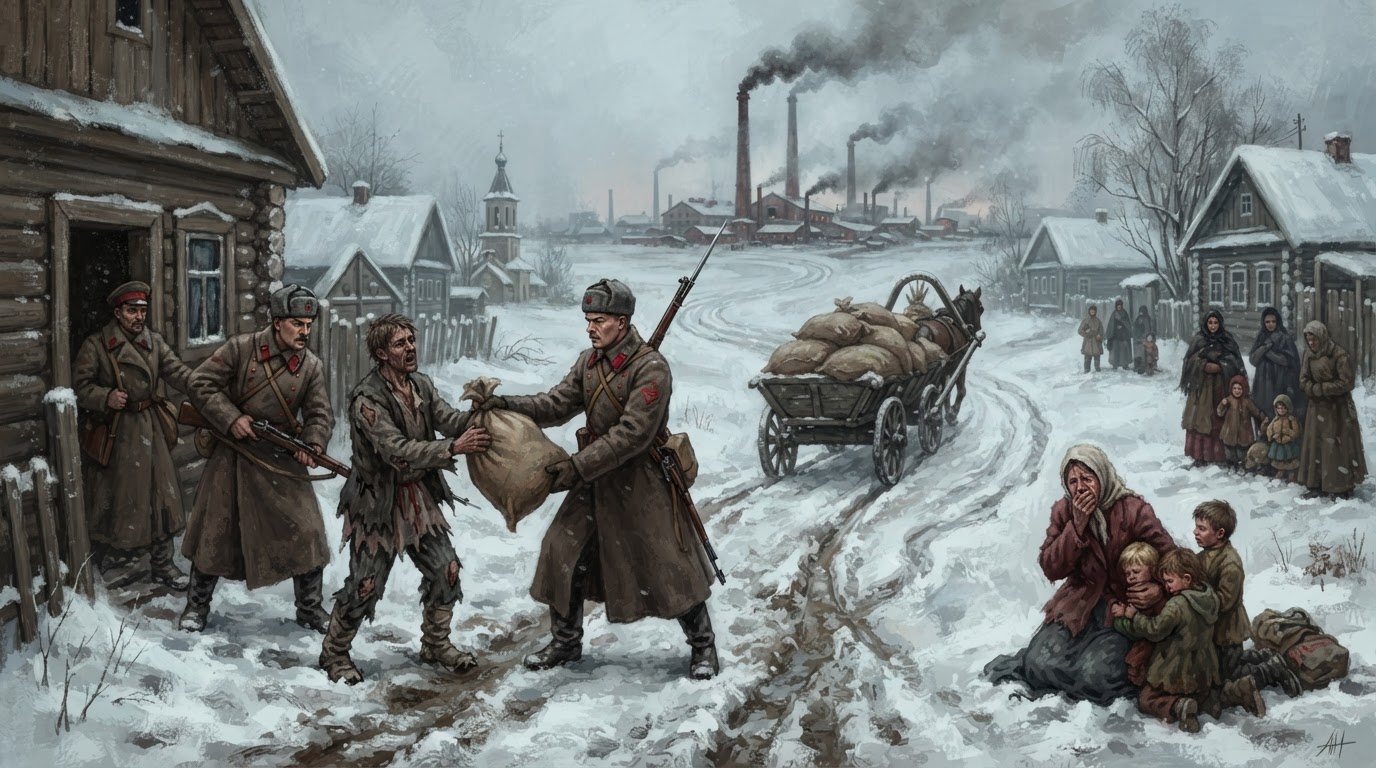
In 1918, during the civil war, the first real display of the communist economy was put into place, called war communism. All industries were nationalized, and all economic processes were to be controlled by the state. Because of the desperate state of the economy, the Bolshevik Red Army was unable to get the weapons and food needed to win the war. Food and grain were seized from the rural peasants, and all industry was allocated toward military manufacturing.
By 1921, the New Economic Policy was instituted because war communism had dramatically reduced agricultural output and support among peasants. The NEP from 1921 to 1928 made agriculture and small businesses private again to stabilize food supply. The economy began to recover, but mostly as a result of rebuilding after complete collapse. In 1924, Lenin died of a stroke, and shortly after, Stalin took control as head of the Communist Party.
How the Five Year Plans Worked
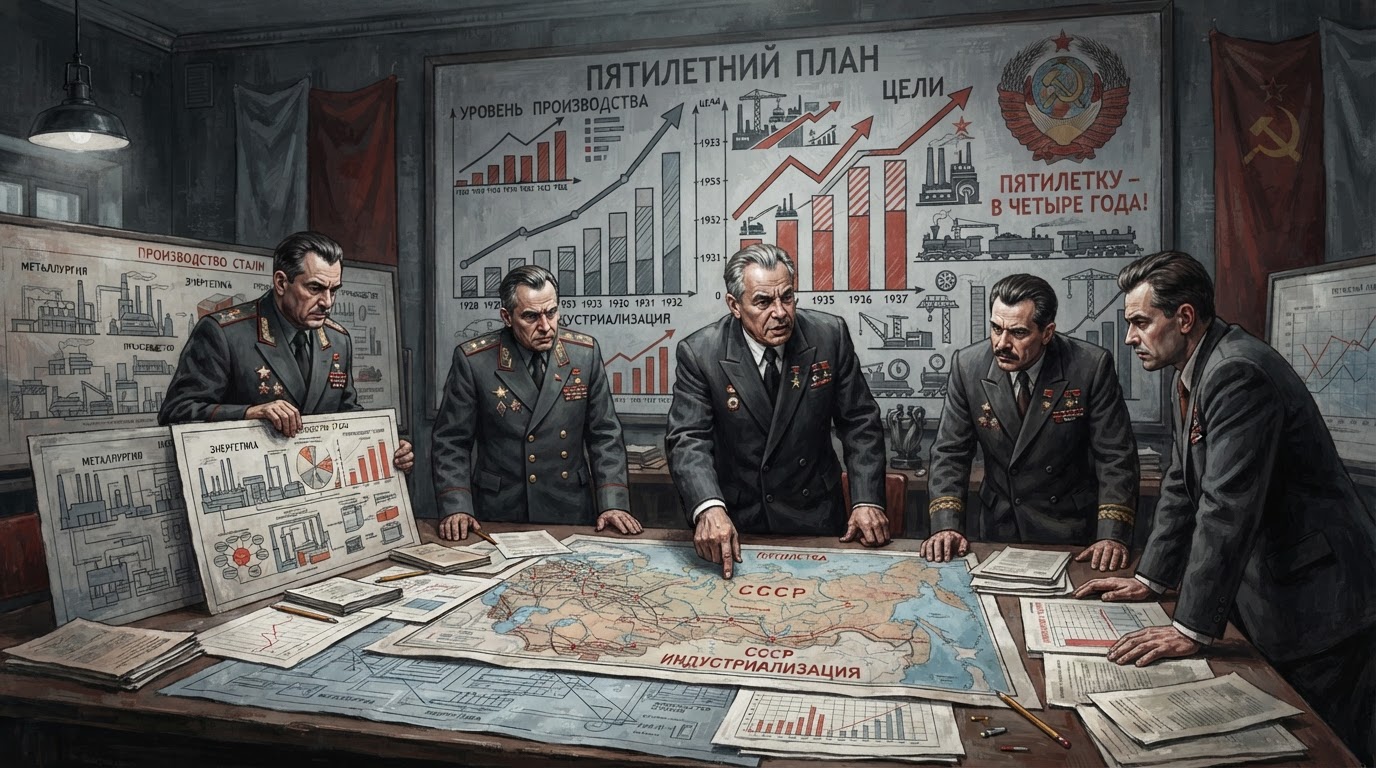
In 1928, the first of the five-year plans was set into motion, which nationalized all production once again. By this point, the entire Soviet economy was entirely commanded from above, meaning that every input and every output from every factory, every farm, every enterprise, every store, every price, all aspects of the Soviet economy were dictated by the government.
Stalin and the innermost party officials in the Politburo would decide the general direction of the economy. Then, through a series of government agencies, an extremely intricate and detailed plan would be laid out. After a series of minor negotiations with managers of the individual farms and factories, the five-year plan was put into law.
The first major initiative of Stalin was to radically grow the heavy industry, which included steel and military manufacturing, in a desperate attempt to catch up economically to the other European powers. Stalin deeply feared that another war would come and that being so behind in industrial development, the Soviet Union wouldn't be able to stand a chance.
“We are 50 or 100 years behind the advanced countries. We must make up this gap in 10 years. Either we do this, or they will crush us.”
In an accurate and chilling speech given by Stalin at the first Workers' Conference in 1931, he stated, “We are 50 or 100 years behind the advanced countries. We must make up this gap in 10 years. Either we do this, or they will crush us.” It would be exactly 10 years later when the Germans launched the largest land invasion in history into the Soviet Union.
Collectivization and the Cost of Industrial Growth
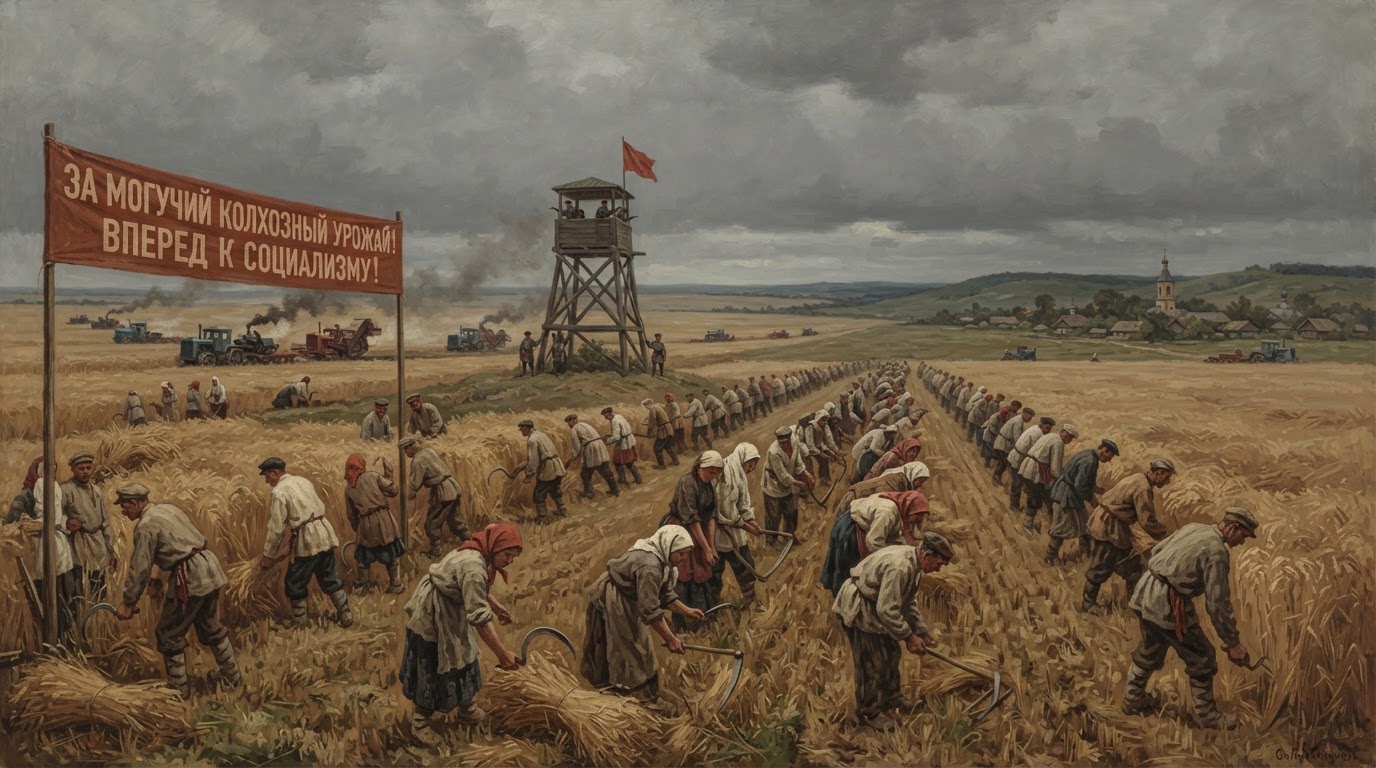
The way in which this plan of rapid industrialization was to be carried out was to dramatically tax agriculture and ship massive amounts of food, labor, and supplies to the factories in the cities.
In 1928, roughly 85% of the entire Soviet population was rural peasants, whose backward, traditional way of doing things caused farming output to be very unproductive. Taxation of these small, scattered village communes was also notoriously inefficient.
Stalin's way to deal with these problems was to force all the peasant farmers onto state-run or communal farms, which lumped hundreds or thousands together to work for the state. This process was known as collectivization, and it would directly lead to the deaths of approximately 12 million people. Almost all the food produced was shipped to the cities to aid in the main goal of industrializing the heavy industries. Taxation and the redistribution of food became easier.
However, the inefficiencies were further exacerbated by the lack of incentives, since farmers' output had no bearing on how much they were paid. The agricultural sector continued to be a serious thorn in the Soviet economy for the rest of its history, and it highlights the first major problem with the Soviet economic system, that of incentives.
Why Work Incentives Failed
In a capitalist society, you have total freedom to change your job and work anywhere else that will hire you. If you work smarter or harder or longer, you provide extra benefits to your employer. Not wanting to risk losing you to another employer, they will reward you with increased pay or benefits. Thus, there is a built-in incentive toward doing more of your job or better.
In the communist Soviet Union, there was little, if any, incentive to do so, since your wage was almost always locked to a specific rate. Even when later attempts to provide more incentives were rolled out by the government, the extra money workers would receive would be of little use.
Since the Soviet economy was dictated from above, to keep the population content, prices were fixed and kept low. Output and prices were therefore not correlated with one another like they are in capitalist societies. That meant that the need for goods at prices set was much greater than the actual production of those items. This meant that items were almost always out of stock, and when they weren't, they would quickly sell out. Heavy industry was also persistently emphasized more than consumer goods manufacturing. As a result, workers could not make use of the extra money afforded to them for doing a better job. Thus, incentives in the Soviet Union did not function well and productivity per person suffered.
Rapid Growth Through More Inputs
Despite this, the economy kept on steaming ahead. Between the time period of Stalin's first five-year plan in 1928 and the start of World War II, the Soviet economy grew by 5.8% per year, almost doubling in size during a time in which Western economies stagnated.
This was done by forcing the allocation of people from less productive industries toward more productive ones. By utilizing the massive peasant population working in highly inefficient village farms and moving them to highly productive heavy industry and construction, massive gains in economic activity were accomplished. Even if workers themselves were not very productive, increased output could be accomplished simply by dramatically increasing inputs. Making more steel simply meant building more steel factories and giving each more iron and workers.
Why Production Targets Encouraged Waste
The Soviet economy grew rapidly. However, the quality of that growth was very poor. The actions of the enterprise managers running the individual farms and factories show why.
When a five-year plan was being created, the last step included negotiations between heads of industry and the enterprise managers about how much input was needed for the planned output. Since the enterprise managers' only concern was to reach the planned output, they did not care about being cost-effective and thus always asked for as many inputs as they could get away with.
One way the Soviet planners tried to increase productivity was to demand more output this year than last year with the same amount of inputs. The way they incentivized managers to do this was by basing managers' pay on meeting the target output and giving a bonus for going over. However, managers were smart and almost always the actual outputs were either directly above the target or much below. This was for one major reason. While the managers would receive a bonus for producing more, they were also concerned about next year's pay. By producing well over the target this year, the planners would just make that output the target for next year, making the ability to get next year's pay that much harder.
So if the target was achievable, the manager would stop producing when they reached it, or if it was out of reach, there was no reason to work for nothing, so they produced as little as they could get away with, hoping next year's target would be lowered.
Guaranteed Jobs and Unreliable Supplies
Inputs for a factory also included the total number of employees. Supply chains were also notoriously unreliable and sporadic. This meant that for much of the time, there were too many workers with little to no work to be done. However, when supplies came, the excess labor was needed to pull through quotas.
Therefore, enterprise managers would ask for as many employees as possible, never wanting to fire any workers, and even if they did, it was often difficult to do so since jobs were legally guaranteed in the Soviet economy. This meant that the average factory in the Soviet Union would have as many as twice the amount of workers as a comparatively similar one in the United States. So while unemployment was effectively zero, which is better than any capitalist society then and now, it was because of law and inefficiency rather than a byproduct of a more productive system.
Why Better Equipment Went Unused
To make matters worse for productivity, when given new equipment that would eventually make the factory more productive, it would often end up going unused. This again, was because of a lack of incentive by the enterprise managers to increase productivity. The enterprise manager would not profit off of this increased productivity, and he would personally risk not reaching target outputs this year since time would be needed to retrain and integrate the new equipment into the manufacturing line. Therefore, productivity gains were slow and stunted.
The Limits of Central Planning
Most of these incentive issues stemmed from another key issue, that of limited information. When planning out, in its entirety, an economy of an industrialized nation, running things as efficiently as a market economy requires complete and total information, which the Soviet planners did not have. Unproductive and wasteful industries persisted as incentives were unable to be utilized by the planners to increase efficiency.
The Innovation Problem
The last, and arguably most important failure of the Soviet economy was a lack of innovation. In the capitalist world, ever since property rights were established and maintained, there was an immense incentive to create a new invention or more productive manufacturing process because you could patent the idea and make a lot of money. Again, in the Soviet Union, with fixed wages, limited range of items to buy, and the fear of this in some way or another coming back to harm you, there were few general incentives for Soviets to innovate.
Innovation is what drives growth in developed economies, and so without organic innovation, the Soviet Union attempted to import innovation by buying advanced machinery to be utilized and to copy. This included the purchase of an entire factory when the Soviets contracted Fiat to build a high-tech people's car factory for them. However, this cost a lot, and the Soviets did not like relying on the West for anything, especially innovation.
Oil Exports and Slowing Growth
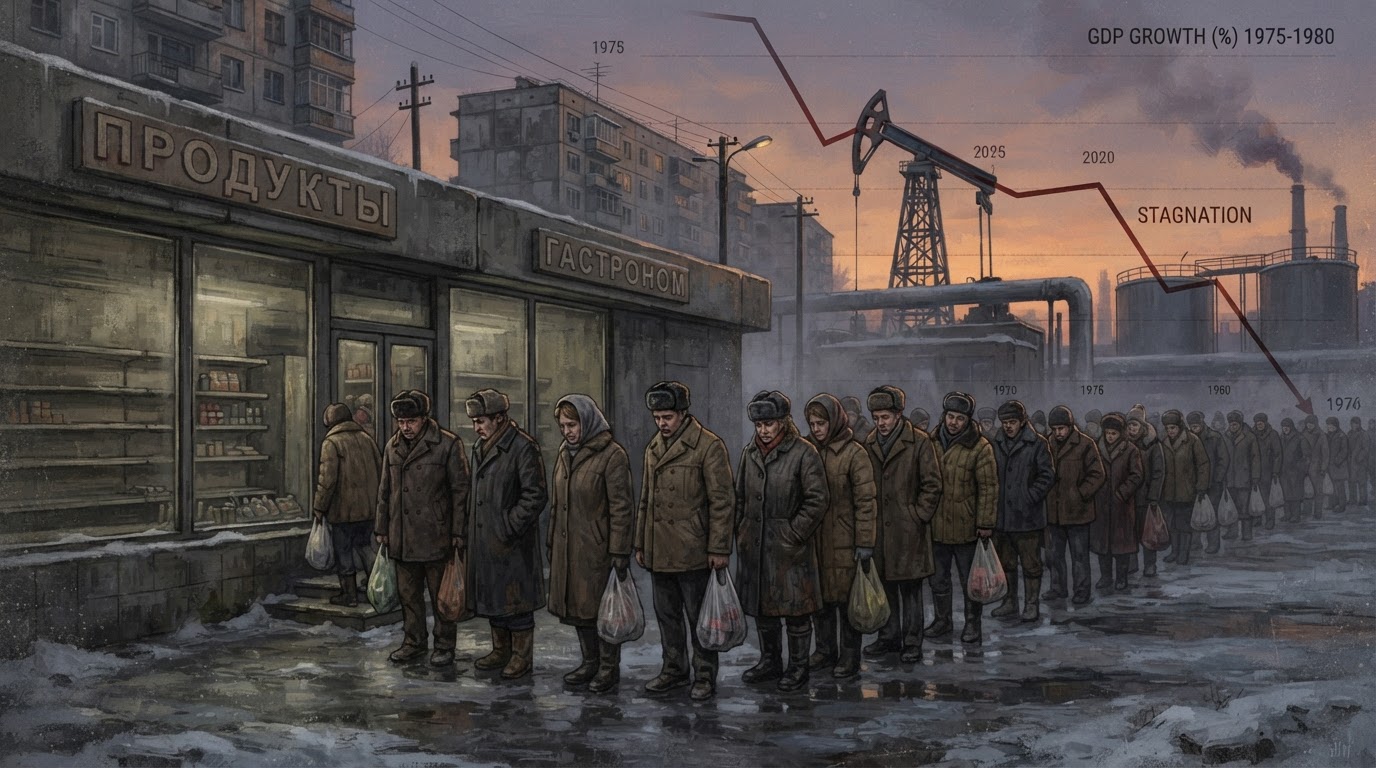
An inefficient farming sector also created the need for mass food importation, and the costs piled up quickly. Luckily, the Soviet Union was blessed with immense natural resources, specifically oil. So when oil prices skyrocketed in the 1970s, they could offset a lot of this importation cost by just exporting oil.
However, as oil reserves in Western Russia started to dry up and oil prices returned to normal, the importation costs again mounted and the economy stagnated.
It was also at this point when the Soviet Union could no longer keep dramatically increasing inputs, as most of the population had now been moved from low productive industries to high productive industries, which ultimately was the main source of economic growth for the Soviet Union.
Growth by the late 1970s slowed to just 2%, lower than that of the developed West. The only significant gains came from allocating massive amounts of capital toward the military. However, this was not enough, and the gap between the Soviet economy and those of NATO started to grow once again. The growth that kept citizens content about having little freedoms started to wane, and the massively overweight political system of the Soviet Union put it on an irreversible track toward economic stagnation and eventually collapse.
Political Power and the Resistance to Reform
However, the seeds of the Soviet economic collapse had been planted before the nation even existed. Unlike the revolutions in Western Europe and the United States and their slow march toward greater rights and freedoms, the Bolsheviks that took control were not a broad coalition and thus they became tyrannical. Left with unchecked power, they did not form new inclusive systems, but rather made new extractive ones with themselves at the top.
By the 1960s, when the ability to just dramatically increase inputs for growth had ceased, and it was time for the government and economy to change, to allow for innovation and productivity gains, the change never happened because those in charge never allowed it to happen.
Just like how the elites of the Russian Empire resisted the creative destruction of industrialization, so too did the elites of the Communist Party, as they resisted giving up any political or economic power that would've enabled these positive changes. This was because they knew doing so would reduce their personal power, wealth, and potentially even their lives.
By the time Mikhail Gorbachev instituted real democratic reforms, it was already too late. The system was already cracking at the seams because of economic instability, and by letting go of some political power, the system collapsed in on itself and the Soviet Union ceased to exist.
Why the Early Growth Could Not Last
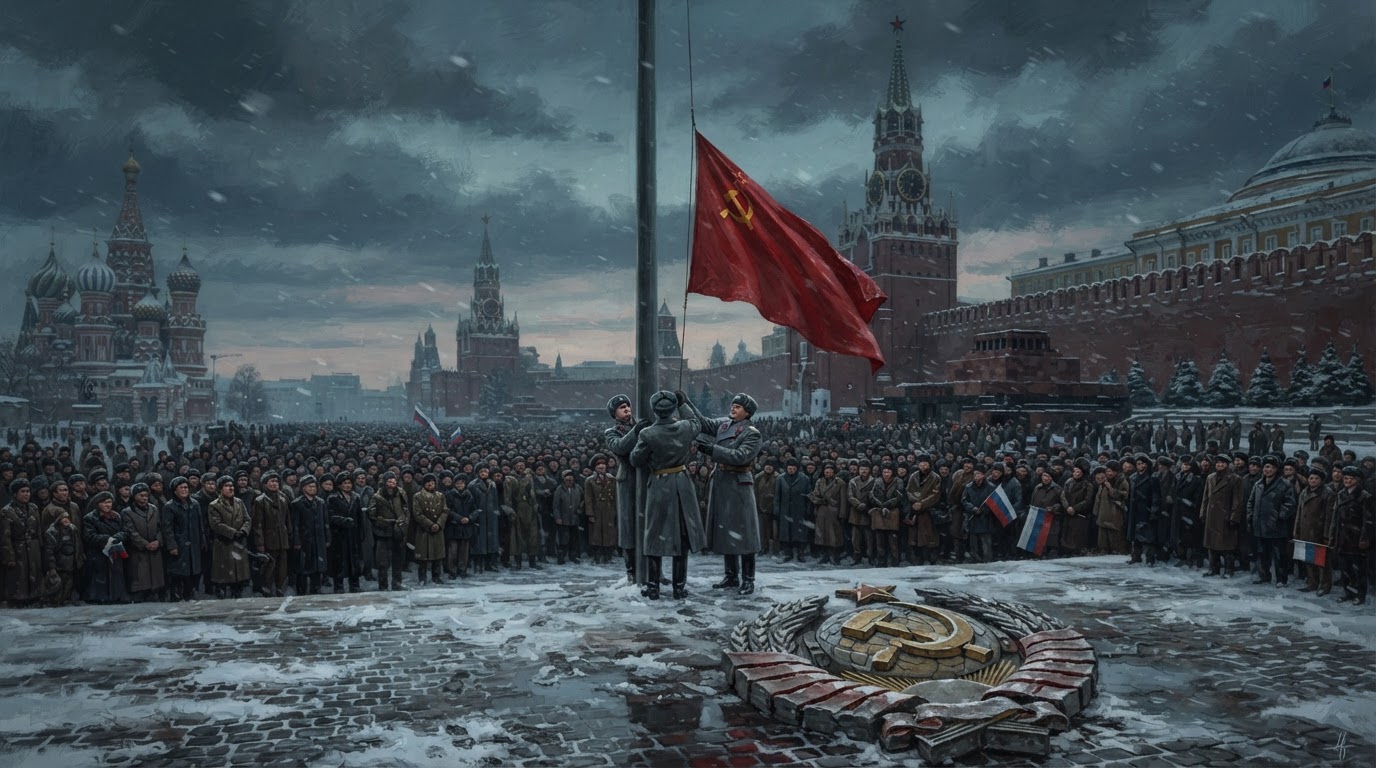
The story of the Soviet Union was ultimately one about its economy. The unprecedented and rapid growth that stunned the world was ultimately unsustainable and riddled with too many inefficiencies.
But ultimately, the story of the Soviet economic system was one that warns against the perils of tyrannical governments that only care about self-preservation. The incredible growth of the Soviet Union early on was not about increasing the living standards of its people, but rather to protect those in power. Therefore, the Soviet Union's collapse was determined before it even became an official country.
Continue the Series
More from this multi-part investigation. Read the parts in order for the full picture.
More from the Front
 Historical
How Korea Became Divided Into North and South
For centuries Korea was one independent, unified country. A century of foreign competition, Japanese colonial rule, and a Cold War line drawn at the 38th parallel tore it in two — and over 70 years later it has still not been put back together.
 Historical
How Russia Became So Big and Culturally Diverse
From a small Slavic society on the flat grasslands to a 17-million-square-kilometer empire across 11 time zones — the fur trade, the Mongols, and a relentless search for natural borders built the largest country on Earth.
 Military Tech
Air Power in the War in Ukraine — Part 1: How Drones and Glide Bombs Changed the War
From the era of the Reaper to industrial-scale quadcopters and Soviet glide bombs — how cheap, clever engineering reshaped the skies over Ukraine and overturned the assumptions of modern air warfare.