
World War II Part One: How the Conflict Became a Global War
From the invasion of Poland to Pearl Harbor — the first years of the biggest, bloodiest war in history, fought across every continent and in the skies, seas, and trenches of a world on fire.
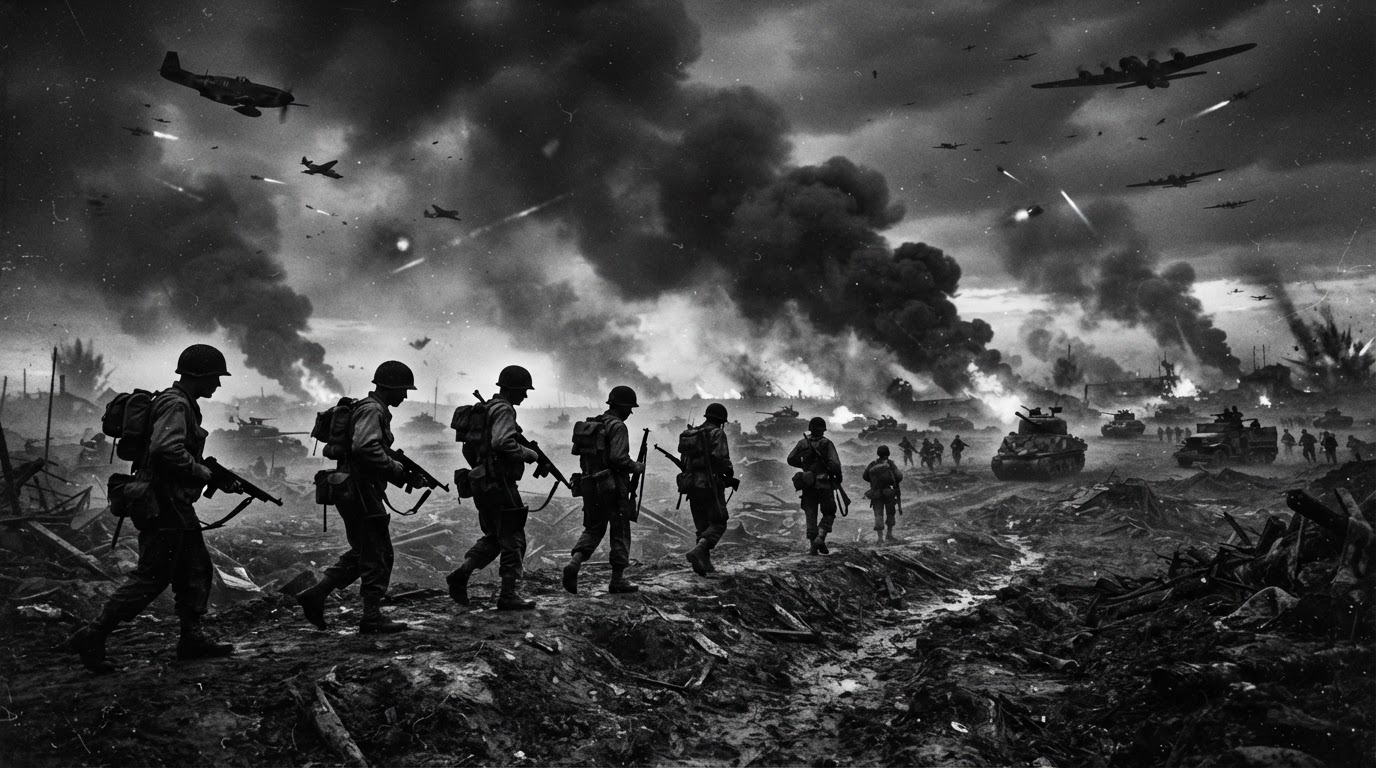
The Second World War was the biggest, most destructive, bloodiest war in history. Every continent was touched by the war. Yes, even the Antarctic. There was military activity in China, France, Hawaii, Iceland, Somalia, Sri Lanka, the Arctic, and far beyond. It was fought in trenches, on horseback, in the air, under the seas. It was fought for the first time ever in space and with nuclear weapons.
World War II changed the world. The European empires of Britain, France, Holland, and others never recovered. The rest of the 20th century would be dominated by the superpowers, the USA and the Soviet Union.
In Asia, the war led eventually to the victory of the Chinese Communist Party. It also caused the partition of Korea into two zones and the birth of India as an independent country.
When World War II Began
The start date of World War II depends on your point of view. World War II was caused by the desire for empire, for territory, for power, for wealth and resources. Three dictatorships, Germany, Italy, and Japan, known as the Axis powers, had spent the 1930s expanding their empires. Germany in Europe, Japan in Northern China, Italy in Africa.
Japan and China had been locked in a huge struggle since 1937 at least. Some people think this should count as the start of the war.
The Americans were actually dragged into this Pacific region war in December 1941 when Japan attacked the American Navy in Pearl Harbor, Hawaii. So it started for the USA in 1941.
Europeans, Canadians, Australians, Indians, and anyone else in the European empires, which at that time was nearly everyone, count the start of the war from September 1939. At the start of that month, Adolf Hitler, the German dictator, invaded Poland. At that point, lots of countries declared war on Germany, and the Second World War in Europe was underway.
When the war ended, that's a little clearer. Germany and Japan were catastrophically defeated and occupied in 1945.
Hitler and the Invasion of Poland
In Europe, Adolf Hitler's Nazi party had seized power in Germany. He'd done away with democracy. He was a dictator. He has started the persecution of political opponents, of Jews, of other minorities. He is building concentration camps.
His aim, expanding Germany. He wanted to seize back all the territory that Germany had lost after it had been defeated in the First World War in 1918.
So in 1938, he seized Austria, then parts of Czechoslovakia, but he wanted more. He wanted an empire in the East, the rich farmlands of Ukraine, the oil of the Caucasus. He dreamed of a vast German empire.
So he's grabbing bits of Europe that he claims have always really been part of Germany. He's returning Germany to greatness, and his next target is Poland. Western Poland used to be part of Germany until defeat in the First World War. Hitler thinks it should be part of Germany again.
So he does a deal with the communist dictator, Joseph Stalin, in Russia, or the USSR, as it was properly known at the time. And they decide they're going to invade Poland and split it between them.
On the 1st of September 1939, German troops invade. Hitler thought Britain and France would let him do it. They'd reluctantly agreed to allow him to snap up Austria and parts of Czechoslovakia over the previous couple of years.
But this was a step too far. They declared war on Germany. Hitler has got himself another World War. “What now?” He asked his foreign minister.
With Britain and France come some mighty empires. Canada, India, Nigeria, South Africa, New Zealand, Australia, and lots beside, all now in the fight.
The Early War in Europe and the Atlantic
Pretty quickly, Germany and the Soviets divide up Poland. The British and French aren't much help. The French do launch a little invasion of Western Germany, but only advance a couple of miles. Their heart wasn't in it. They withdraw once German troops flooded back, flush from their victory in Poland.
The Soviets have less success with an invasion of Finland, which ends in an embarrassing defeat. Although the following year, they try again and do take a bit of territory.
On the oceans, German submarines and ships try to destroy Britain's trade and cut off supplies. A German U-boat, or submarine, sinks a passenger ship, the Athenia, within hours of the war starting. This is known as the Battle of the Atlantic, and it will rumble on until the last days of the Second World War.
Further afield, any German naval ship on the high seas is hunted down and destroyed. A British force sank the German cruiser, Admiral Graf Spee, in the Battle of the River Plate off the coast of South America.
Back in Europe, though, there was a standoff, both sides eyeballing each other across the French/German border. In Britain at this time, more people were killed in road traffic accidents because streetlights were blacked out than members of the armed forces were killed in combat. But that would change.
The Invasion of Denmark and Norway
In April 1940, both the Allies and the Germans decided to invade Norway to secure its precious resources.
The iron ore, which was exported to Germany through the Norwegian port of Narvik, was essential for German steel production.
The Germans moved north through Denmark, conquering it in the space of hours. They also sent a fleet to invade Norway, which managed to avoid the British Navy, partly due to bad weather.
The Allies attempted to move troops into Norway to bolster Norwegians, but the Germans were too strong. By the end of May, the final Allied troops were evacuated, along with the Norwegian royal family.
This was very embarrassing for the British and French Allies, and after huge criticism in Parliament of the way the war was being run, the British government collapsed. In came a new prime minister. Winston Churchill.
The Fall of France and the Dunkirk Evacuation
He didn't have long to ease himself into the job. The very day he went to see the King and move into Downing Street, the Germans launched the invasion of Western Europe. A massive German force crossed into Luxembourg, Holland, Belgium, and France.
What followed was one of the most dramatic upsets in the history of war. The Germans used tanks, aircraft, and vehicles to surge through enemy territory, surrounding and surprising.
While the Allies moved to counter the German troops marching through Belgium as they had in the First World War, the Germans completely surprised them with another thrust through the woody, hilly Ardennes region, which most planners had thought was impassable.
This thrust caught everyone off balance, and within just 10 days, the Germans were at the English Channel. All the Allied troops that had marched north into Belgium to stop the Germans were now cut off from the rest of their forces in France. The British and French had been sliced in half.
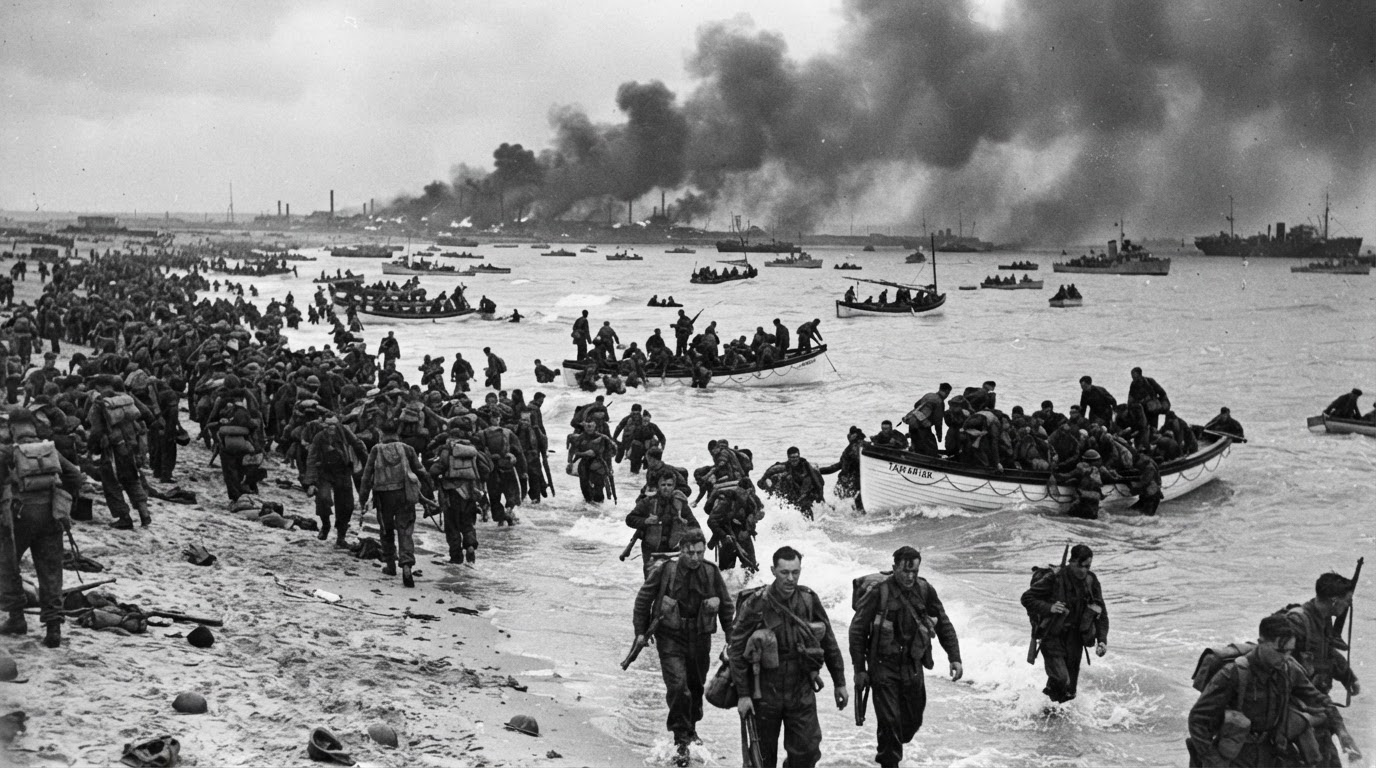
The surrounded forces in Belgium had no choice. They had to head to the coast and hope the Royal Navy would rescue them. The Allies retreated to a defensive perimeter around the town of Dunkirk.
The Navy frantically organized ships to go to their rescue, including eventually little boats, river craft, barges, and yachts, which could pick soldiers up directly from the beach rather than rely on limited port facilities, many of which had been ruined by German bombing.
The British hoped to evacuate 45,000 men in the two days before the Germans captured Dunkirk. But Hitler called his forces to a halt. He was concerned that his tanks and men were stretched and needed to consolidate. The Germans were worried also the ground around Dunkirk was too boggy for heavy tanks.
This gave the British a precious window. Over a week, an astonishing 340,000 Allied soldiers were rescued. Some called it a miracle. Britain had rescued its army, even if they'd left nearly all their heavy weapons behind.
Hitler's Axis partner, Italy, thought the writing was on the wall and chose this moment to jump into the war. Italian troops launched an invasion of Southern France.
After Dunkirk, German forces were free to turn south and concentrate on the rest of the French army. Within weeks, France fell. Hitler visited Paris.
Germany now dominated Western and Central Europe. Inspired by Winston Churchill, the British and their empire beyond the seas made the firm decision not to give in.
The Battle of Britain and the Blitz
Hitler had a British problem. He needed to make peace with Britain or defeat Britain totally, or they'd make a nuisance of themselves when Hitler turned east to fulfill his real dream, that huge empire stretching off into the Russian steppes.
So Hitler told his army to draw up plans to invade, while he used his air force to try and force Britain to the negotiating table.
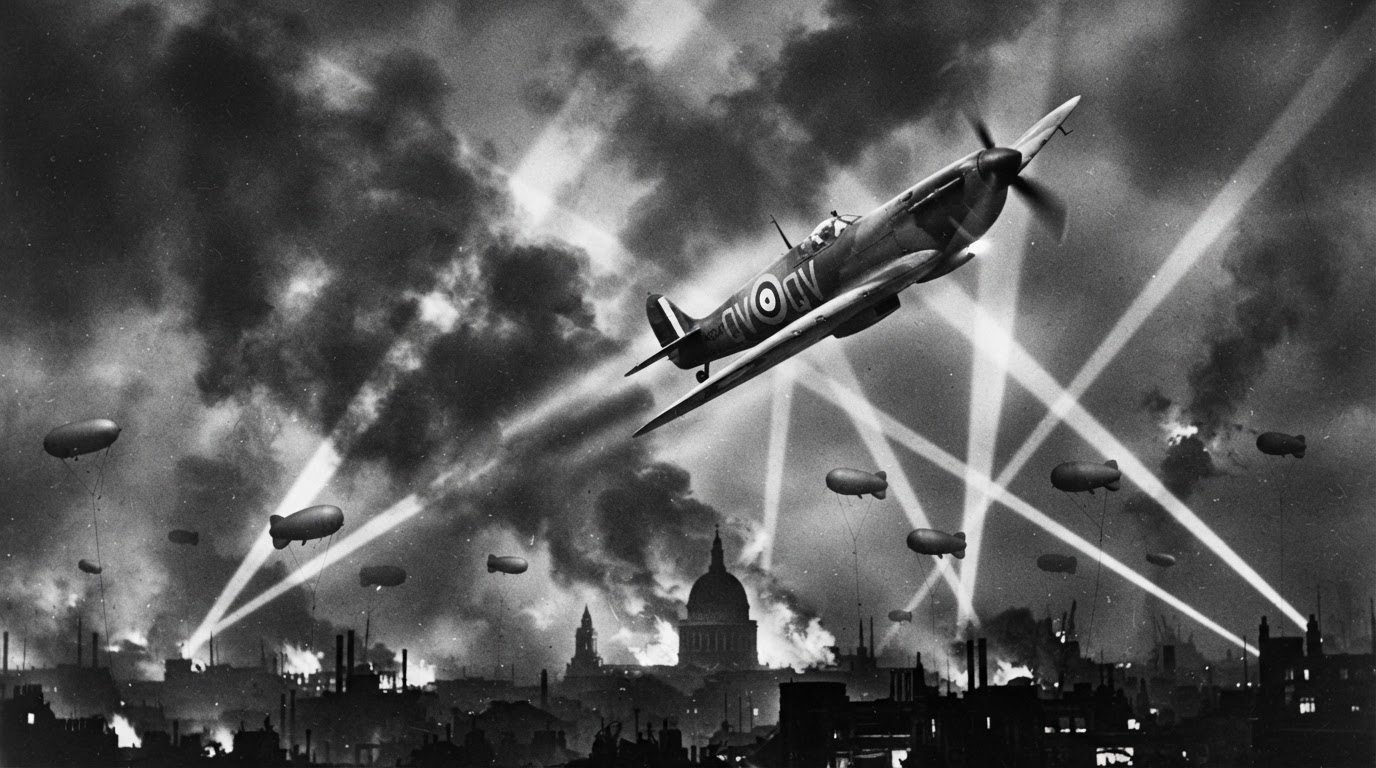
What followed was the Battle of Britain, the first battle fought in history predominantly in the skies. German bombers flew over Britain, striking military targets. They focused at first on the Royal Air Force, trying to knock them out so Germans could control the skies and force the British government to yield through bombing.
But the RAF proved tenacious. German raids were pounced on by RAF Hurricane and Spitfire fighters. German bombers were shot down in unsustainable numbers.
The RAF had invented an ingenious system to identify and attack German raids. Pioneering radar was used to spot German aircraft. The information was then passed to groups of fighter aircraft who could dash up into the sky and shoot them down.
As the summer went on, the RAF seemed unbreakable. The Germans switched tactics and started pounding London, hoping to force the British to change their minds and sue for peace. It was the start of what Brits call the Blitz, the systematic bombing of civilians in cities by the Germans.
But by the middle of September, it was clear that the Germans had been defeated in the air. The RAF was still a formidable presence, and the bombing of London was taking far too high a toll on German aircraft and crew.
Hitler admitted he would not be able to knock Britain out of the war. He certainly couldn't launch an invasion with the RAF undefeated and the Royal Navy ready to pounce on any German invasion fleet.
Germany switched to bombing British cities at night, but the invasion plans were shelved.
Fighting in the Mediterranean and the Balkans
While Britain had been fighting for survival, it also had to fight the Italians in the Mediterranean, where their empires rubbed up alongside each other in North and East Africa. The British seized Italian Ethiopia, but the fighting in Libya and Egypt would prove much tougher.
1941 would be a big year. As fighting between the Axis and the British seesawed in North Africa, the Italian invasion of Greece, which they'd launched right at the end of 1940, was going badly wrong.
The Italians were forced into humiliating retreats. They turned to Hitler to bail them out. Well, he couldn't stand by and let his allies embarrass him. So he invaded Southeast Europe, overrunning Yugoslavia and Greece pretty quickly.
But that wasted valuable time and resources for the Axis, because that summer they had a big plan, the invasion of the Soviet Union. One of history's most terrible struggles was about to begin.
The Invasion of the Soviet Union
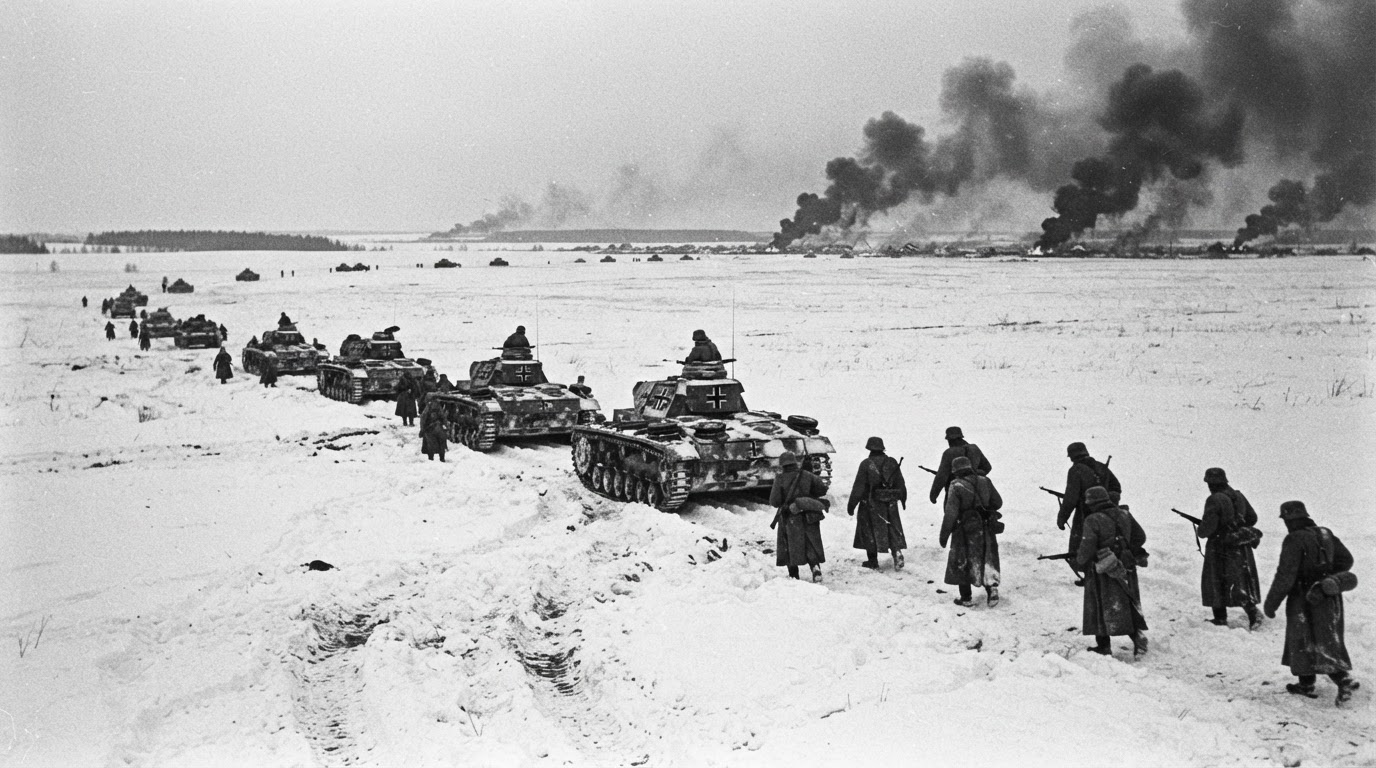
In June, Hitler shocked his former ally, Stalin, by launching the most massive invasion in history. Nearly four million men, 3,500 tanks, over 8,000 other vehicles, and thousands of aircraft, plus over half a million horses.
The Soviets were completely outclassed. Millions of men were killed or captured and sent to camps, where most of them starved to death. Even Stalin's son was among the prisoners who would perish.
By December, German spearheads were at the outskirts of Moscow. But ferocious Soviet resistance and shocking cold weather stopped them in their tracks, and the Soviets launched a counterattack that was even able to push them back.
“By kicking in the front door, the whole rotten structure will come crashing down.”
Hitler had believed, as he put it, that by kicking in the front door, the whole rotten structure would come crashing down. Instead, the Soviets had retreated, but they hadn't collapsed. They were still in the fight. The stage was set for a long, terrible struggle.
Pearl Harbor and the Global War
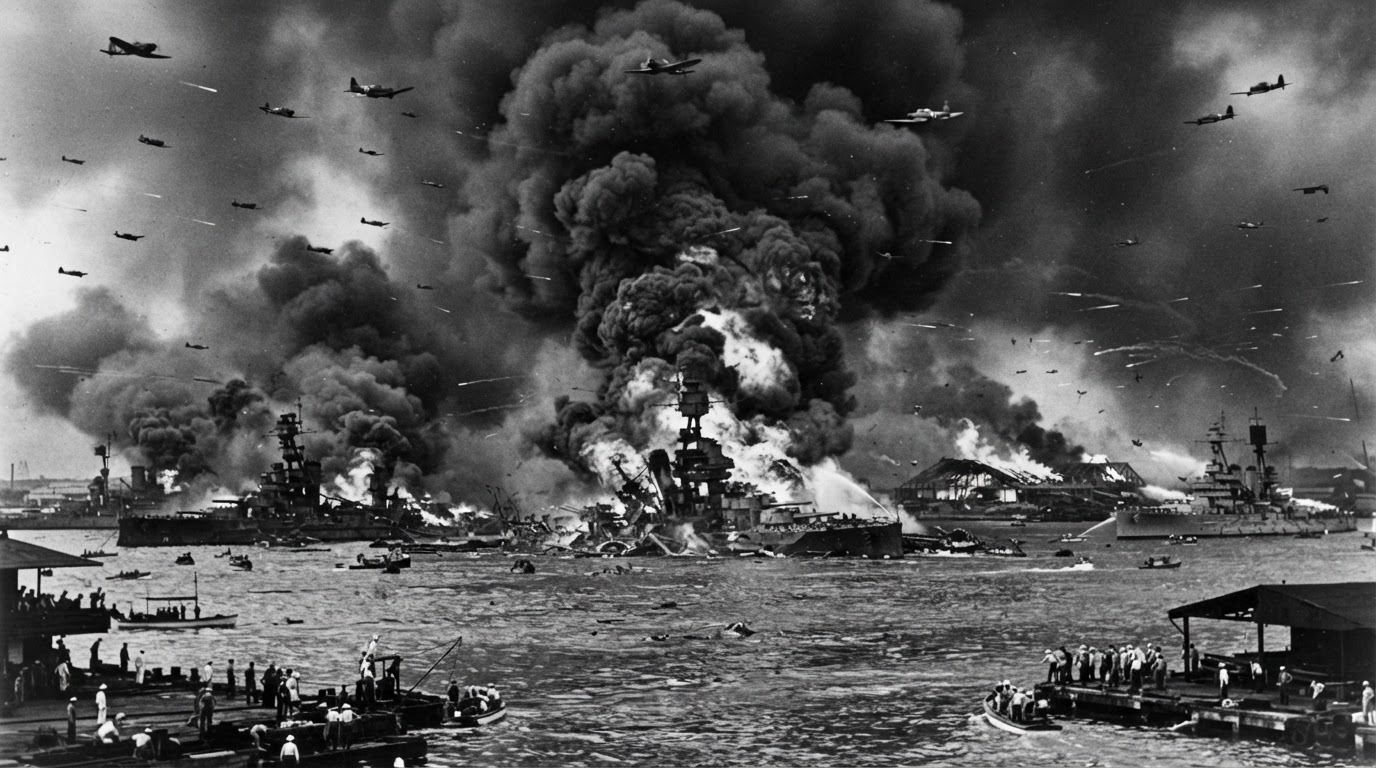
While the Germans were falling just short of taking Stalin's capital, thousands of miles away, another surprise attack was about to take place.
Japan was struggling to win its war in China. They needed raw materials, rubber, and oil. These could be found in Southeast Asia, places like Malaysia.
The Japanese thought the United States would stop them from invading these territories, so they decided to strike first. Knock out the American Navy in the Pacific, then they could seize all the territory they liked.
So, in early December 1941, six Japanese aircraft carriers headed for Hawaii.
On the 7th of December 1941, the Japanese struck. Bombs and torpedoes rained down on the US Pacific Fleet headquarters at Pearl Harbor on Hawaii. Eight battleships were sunk or damaged. 2,500 Americans were killed.
President Roosevelt called it a day of infamy and declared war on Japan. Then, remarkably, Adolf Hitler declared war on America. The USA was in the war with both Japan and Germany. The war in Europe and the war in Asia was now a global one.
The Japanese didn't just attack the Americans. They also put into plan their attempt to secure the resources of Southeast Asia. At the same time those bombs were falling on Pearl Harbor, the Japanese invaded British-controlled Malaya, then Indonesia, and the Philippines.
Within months, all of them would fall to Japan. 1942 would be the decisive year.
More from the Front
 World War
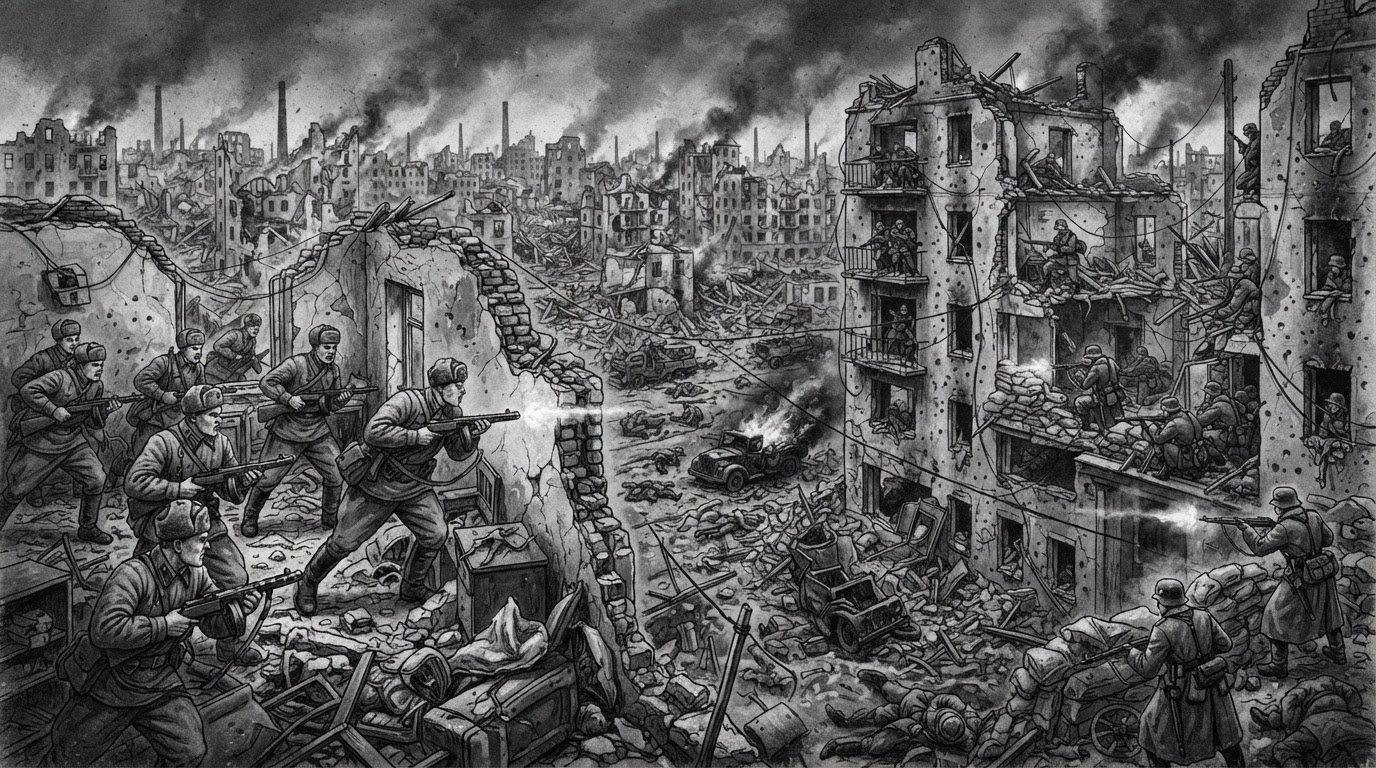
World War II Part Two: The Turning Points and the Road to Victory
From Stalingrad and El Alamein to D-Day, the atomic bomb, and the fall of Berlin — how the tide turned against the Axis and a devastated world was remade.
 Military Tech
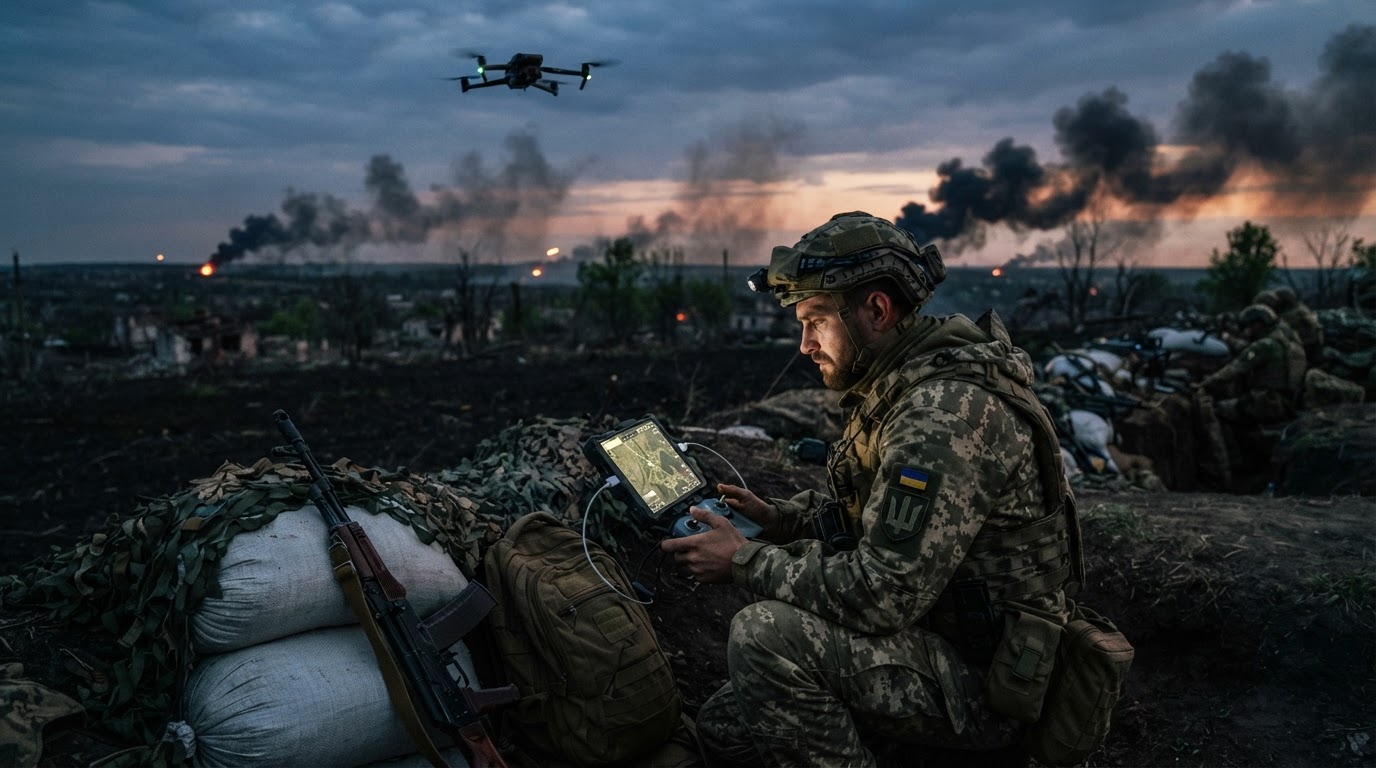
Air Power in the War in Ukraine — Part 1: How Drones and Glide Bombs Changed the War
From the era of the Reaper to industrial-scale quadcopters and Soviet glide bombs — how cheap, clever engineering reshaped the skies over Ukraine and overturned the assumptions of modern air warfare.
 Military Tech
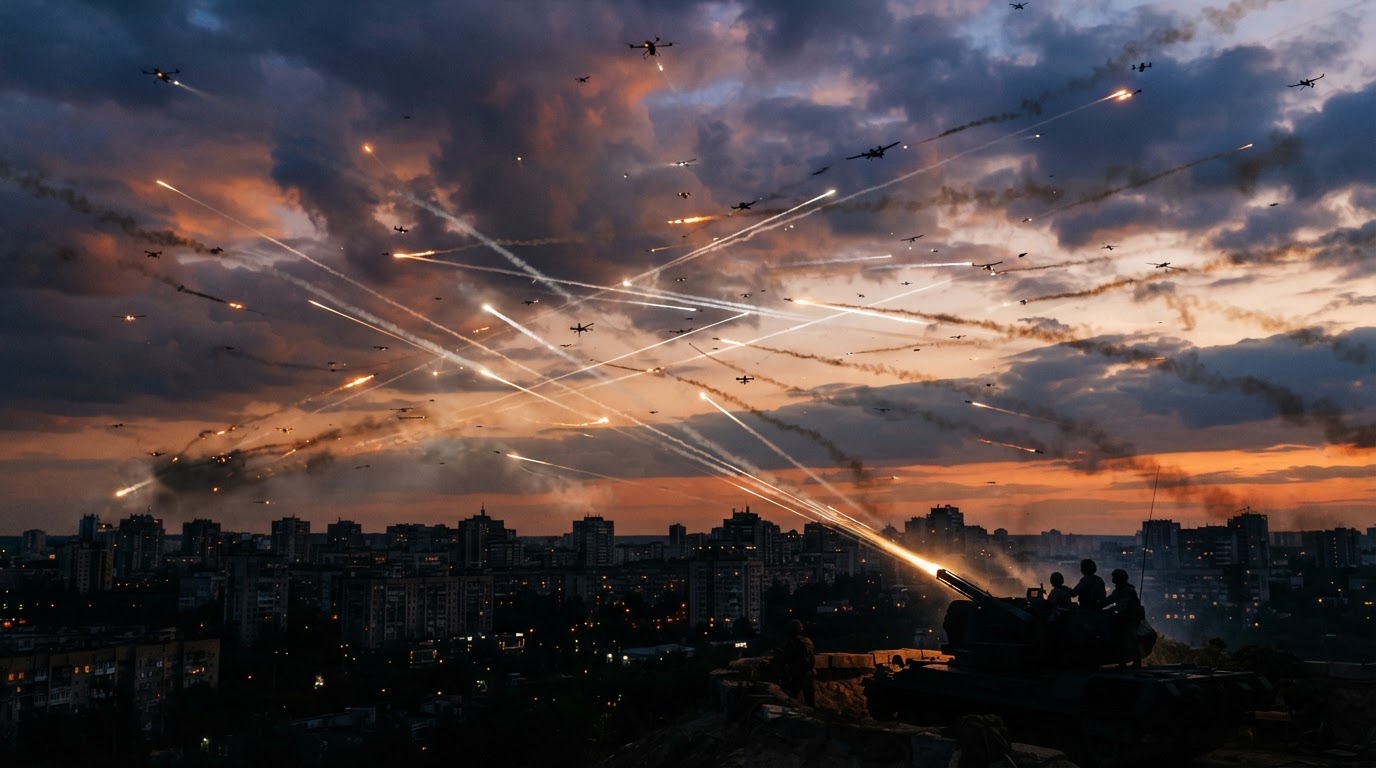
Air Power in the War in Ukraine — Part 2: How Ukraine Defends Its Skies and Carries the Air War Into Russia
From cell-phone Shahed detection networks to strikes on Russian oil refineries and Wildberries warehouses — how Ukraine turned cheap drones into a strategic campaign that reached deep inside Russia.