
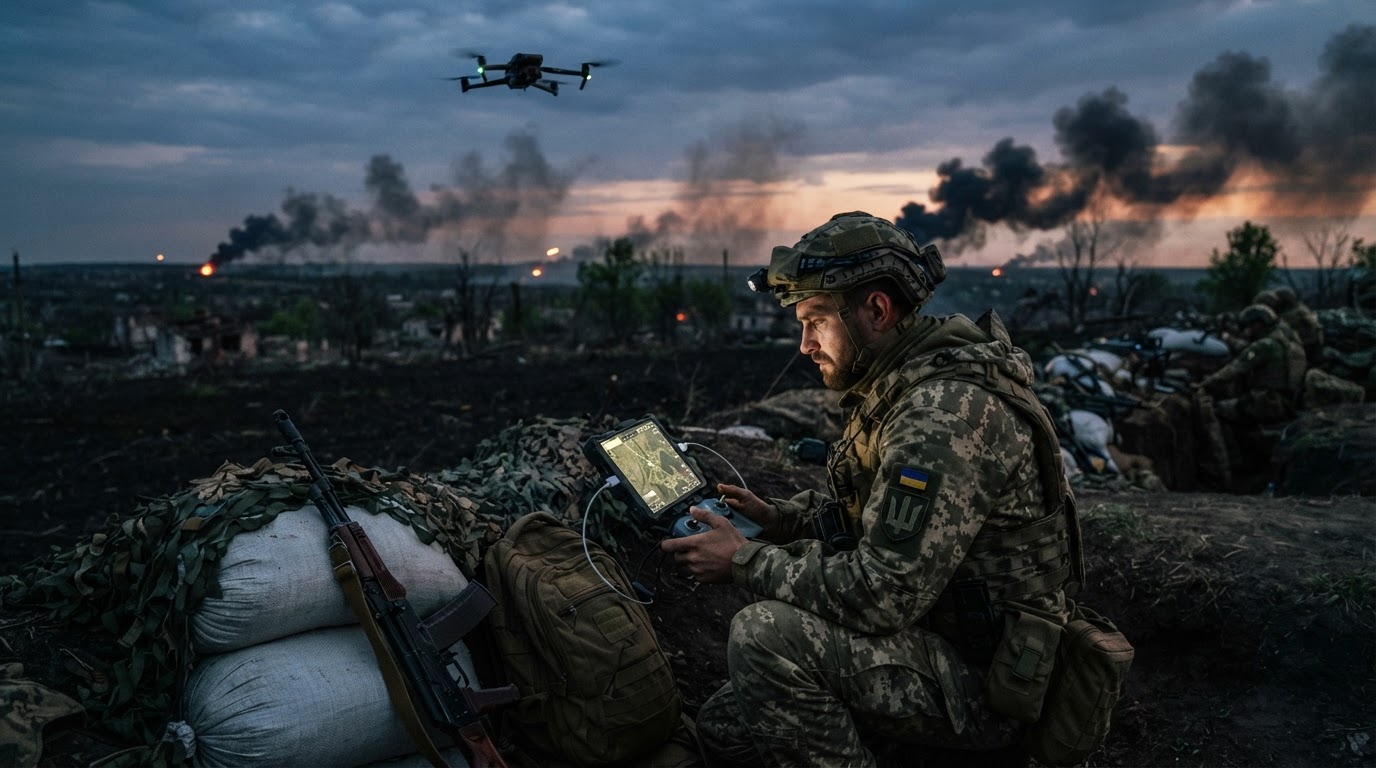
Air Power in the War in Ukraine — Part 1: How Drones and Glide Bombs Changed the War
From the era of the Reaper to industrial-scale quadcopters and Soviet glide bombs — how cheap, clever engineering reshaped the skies over Ukraine and overturned the assumptions of modern air warfare.
On February 24th, 2022, as Russian troops amassed along and then poured over the borders of Ukraine, observers bet that we would soon see a Russian tricolor fly over the presidential palace in Kyiv. But that is not what happened. Far from it. Ukraine took the war to Russia, and less than five years later, Zelensky was declaring that he will decide whether Moscow's airports are allowed to be open.
But we did not get there overnight. Ukraine had to survive some precarious moments before it could assert itself on the international stage, and the result was no miracle either. It was the product of smart bets and clever engineering. The evolution of air power in the war was shaped by those choices.
The Era of the Reaper
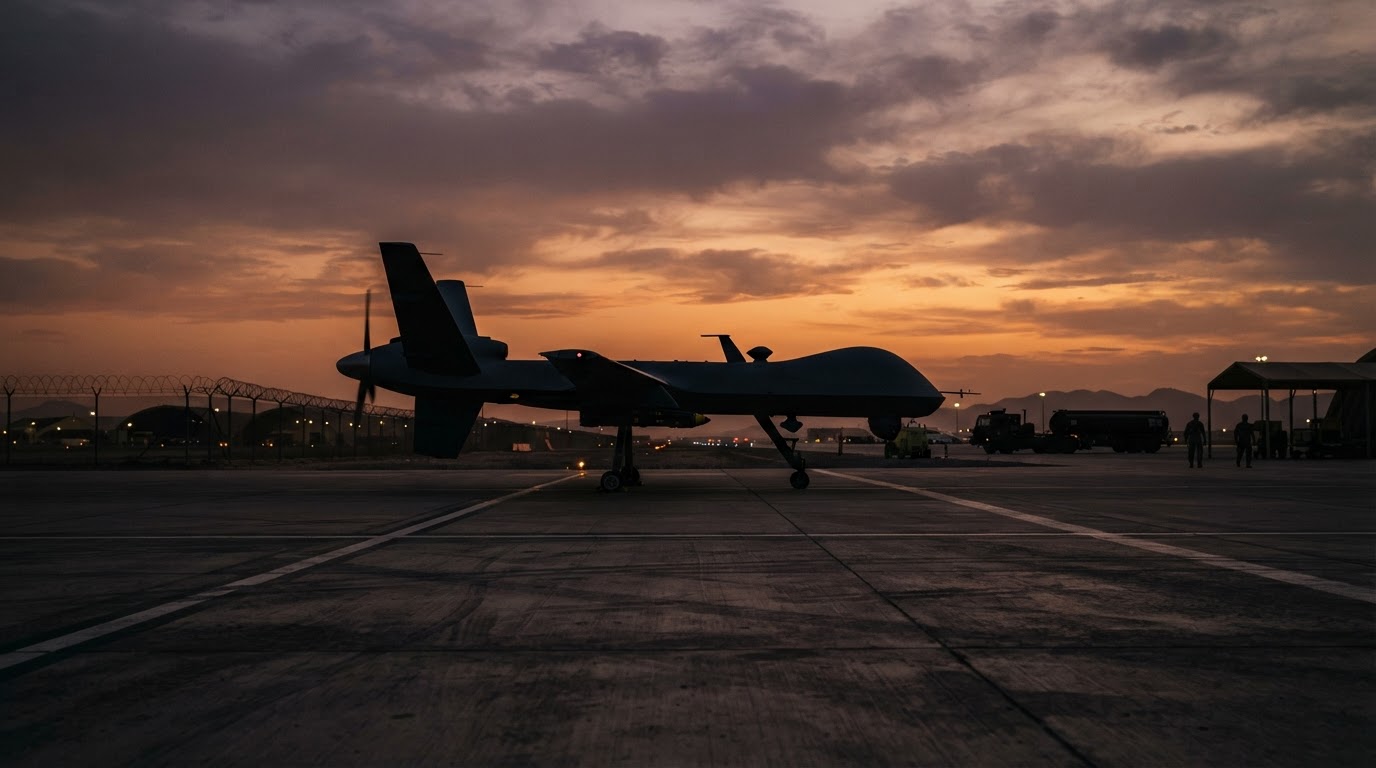
The prevalence of drones makes it easy to forget what the technology looked like before the invasion of Ukraine began. Once upon a time, the best-known drones used in war were sophisticated systems, born out of US casualty sensitivity and designed to replicate what manned aircraft did, just without a pilot in the pilot seat. The Reaper became the Cadillac of drone warfare. However, as soon as you remove life support from the equation, you get a bunch of other benefits. Now there is more weight available for munitions. There is less need to defend the airframe itself. All you're putting at stake is a bunch of metal and electronics, which makes even more room available for weapons.
Issues with combat fatigue disappear. Airmen, using that term loosely, can pilot the craft in shifts. This also meant the aircraft needed to spend fewer dead hours transiting back and forth from the base to the area of operations, leading to less fuel waste. Conversations among the pilot, commanding officer, and legal advisors became easier because they could all now sit in the same room. Notably, this effect was offset by how many more missions could be flown, leading to an increase in the total number of legal problems, even if per-strike issues declined.
Overall, combat piloting turned into a 9-to-5 style job where pilots could deploy wherever was necessary for their shifts and still make it home in time for dinner. This centralization further allowed the United States to cut support staff closer to the combat zone and instead focus on drone maintenance and repair.
Why Expensive Drones Were Vulnerable in Contested Airspace
The other notable difference from this era is that drones were purpose-built for the mid-2000s warfare that the United States faced. Its opponents in Afghanistan and Iraq were relatively weak, so designers could further scale back the Reaper's defenses. As a result, they were not cut out for a conventional war with contested airspace. Yes, they were relatively cheap compared to traditional exquisite airframes, so they were expendable. That said, at around $30 to $40 million per drone, they were far from disposable. It just was not a major crisis if the United States lost one.
The Early Military Use of Commercial Quadcopters
Running parallel to these developments was the early use of quadcopters in combat. This dates to the Libyan Civil War, when insurgents took commercially available quadcopters and used them for intelligence, surveillance, and reconnaissance missions. ISIS began adopting the same strategy. By the mid-2010s, though, the group was engineering a way to attach grenades to quadcopters and equip them with a release mechanism, effectively the prototype for the models of drones that define the line of control today.
The key difference is that they were not pervasive. Quadcopter interactions may have been routine, but you did not have to plan every war action around loitering munitions. The problem that these groups faced was the inability to produce drones at scale. The quadcopters used were hobby models with minor modifications to suit them for combat. There was neither the industrial capacity nor the supply chains in place to produce them at scale. Hence, they were a novelty, at least at the time.
Why Russia Failed to Establish Air Superiority
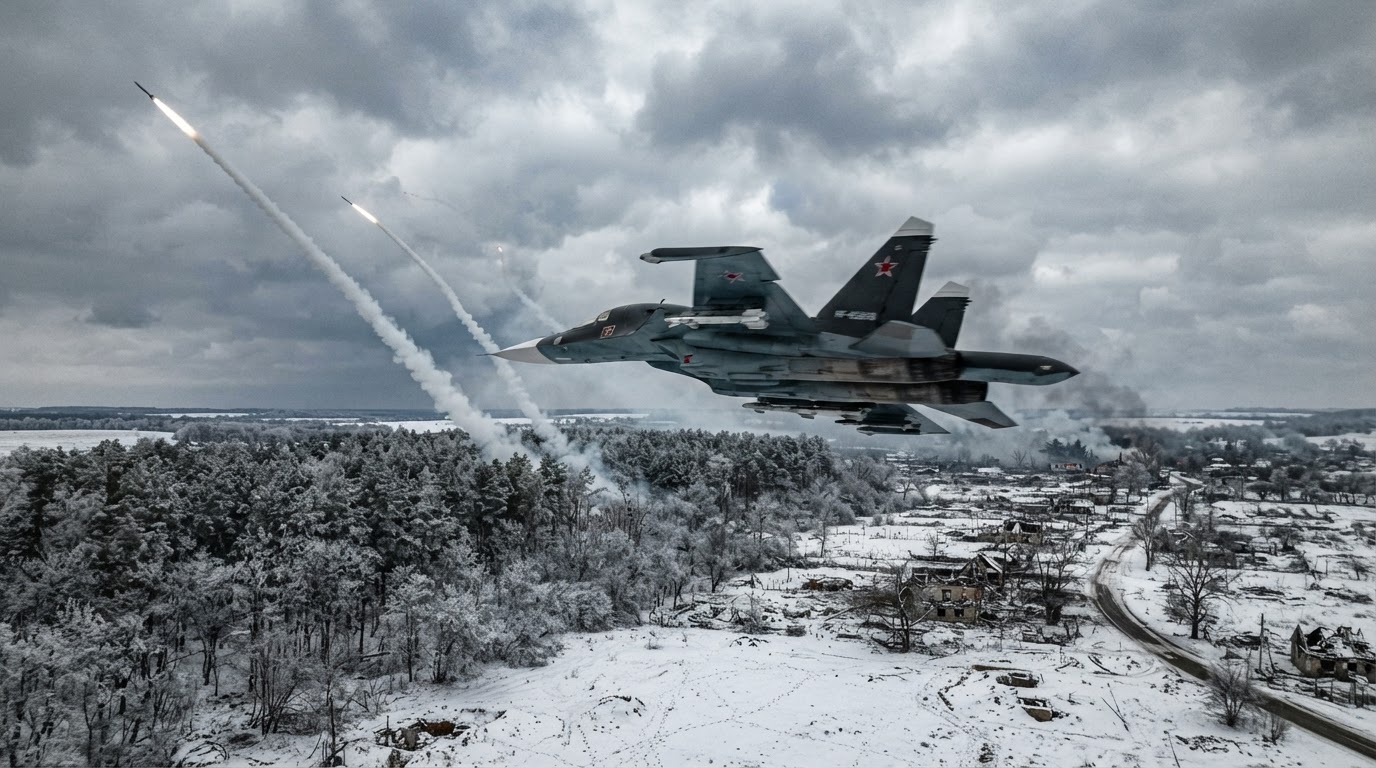
The modern world of drone combat emerged during the war, but at the start of the invasion, no one was thinking about it. Indeed, when Russian troops began pouring across the border, the Kremlin's game plan mirrored what the traditional US or NATO game plan looks like. Establish air superiority by destroying anti-aircraft systems, pick apart the remainder of high-value targets from the safety of the skies, and let the boots on the ground handle the finer-grained aspects of the war.
It did not turn out that way. The US intelligence community knew that the invasion was imminent. It did not fully succeed in convincing Ukraine to fully prepare. Kyiv was reluctant to immediately assume a war footing before the war actually broke out. But one critical thing that the Ukrainian military did do was shift around its air defenses. In the opening hours of the invasion, Russian missiles hit their GPS targets properly. However, the coordinates were empty, and the effort was wasted.
Ukraine's air defenses were all elsewhere. But not realizing that, the Russian Air Force then treated the situation as though it had air superiority. It did not. Legacy Soviet systems like the S300 and Buk picked apart the unprepared Russian fighters. Commanders attempted to compensate by having the fighters drop to lower altitudes to evade radar systems. Yet all that did was put those frames in range of US MANPADS, one of the few systems that the United States authorized for delivery to Ukraine prior to the invasion.
By April, Russia had basically conceded the skies and stopped flying manned missions over Ukraine.
The Soviet Bomb Stockpile and the Glide Bomb Solution
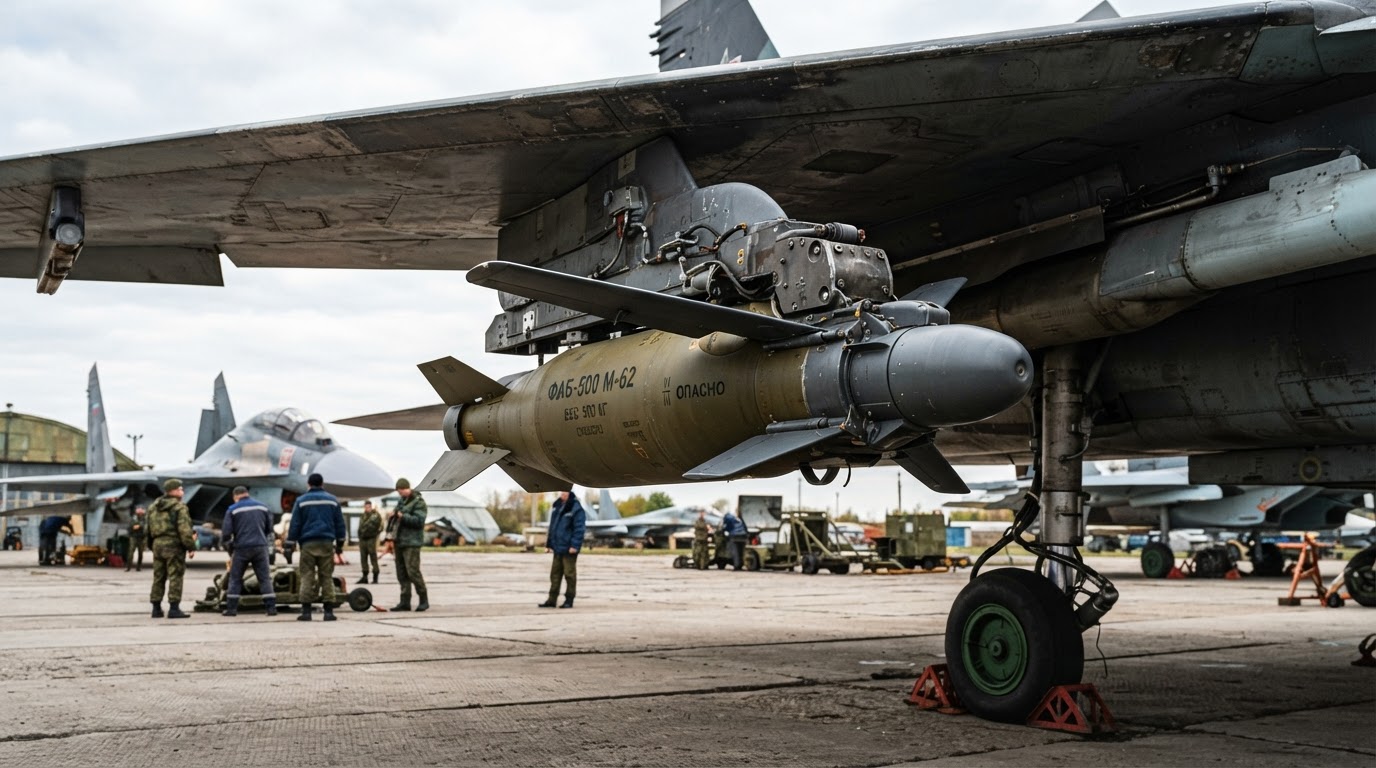
The roots of Russia's glide-bomb solution reach back to the 1960s, when the world was concerned about a thermonuclear apocalypse. As a part of the Soviet force posture at the time, the Soviet premier oversaw absurdly large productions of FAB-500 bombs. FAB stood for high-capacity aerial bomb. But fast-forwarding to 2022, they presented an interesting engineering problem for Russia. There was effectively an unlimited supply of these and closely related bombs still in the Russian inventory, thanks to some questionable Soviet investment decisions.
Yet they were simultaneously worthless as is. Dumb and gravity-fed, they needed to be dropped over their targets. That presented an inherent problem when Russian planes stopped crossing into hostile territory. Long ago, the United States also had this problem, an overabundance of dumb bombs left over from the Cold War. One of the solutions was the development of the JDAM extended-range guide kit. It basically converts the bomb into a GPS-guided munition. Attach a couple of wings and drop it from a plane, and suddenly you get 70 kilometers of range.
Well, back in the former Soviet Union, Russia duplicated that idea with the UMPK conversion kit. Unlike the more modular bomb designs that JDAM kits attach to, FAB-500s are rigid, so the end product looks like a science fair project wrapped around a bomb. But you do not get bonus points for style in war. The system works. An airfoil and a guidance system still leave you with a smart bomb.
Thus, the solution became having Russian fighter jets fly high up, safely on the Russian side of the border. Drop a glide bomb from that safety, then let gravity and the airfoil generate the desired distance for the bomb. It is not as good as what Russia intended at the start of the war, but it is cheaper and comes with a lot less risk. And the end product puts them at a similar level as GMLRS missiles that HIMARS can launch, allowing them to fill equivalent counter logistics roles.
In early 2023, Russia began experimenting with them on the battlefield. Over the summer, they became commonplace. Glide bombs remain a scourge to Ukraine's frontline logistics and cities close to the line of control.
How Quadcopters Reached Industrial Scale
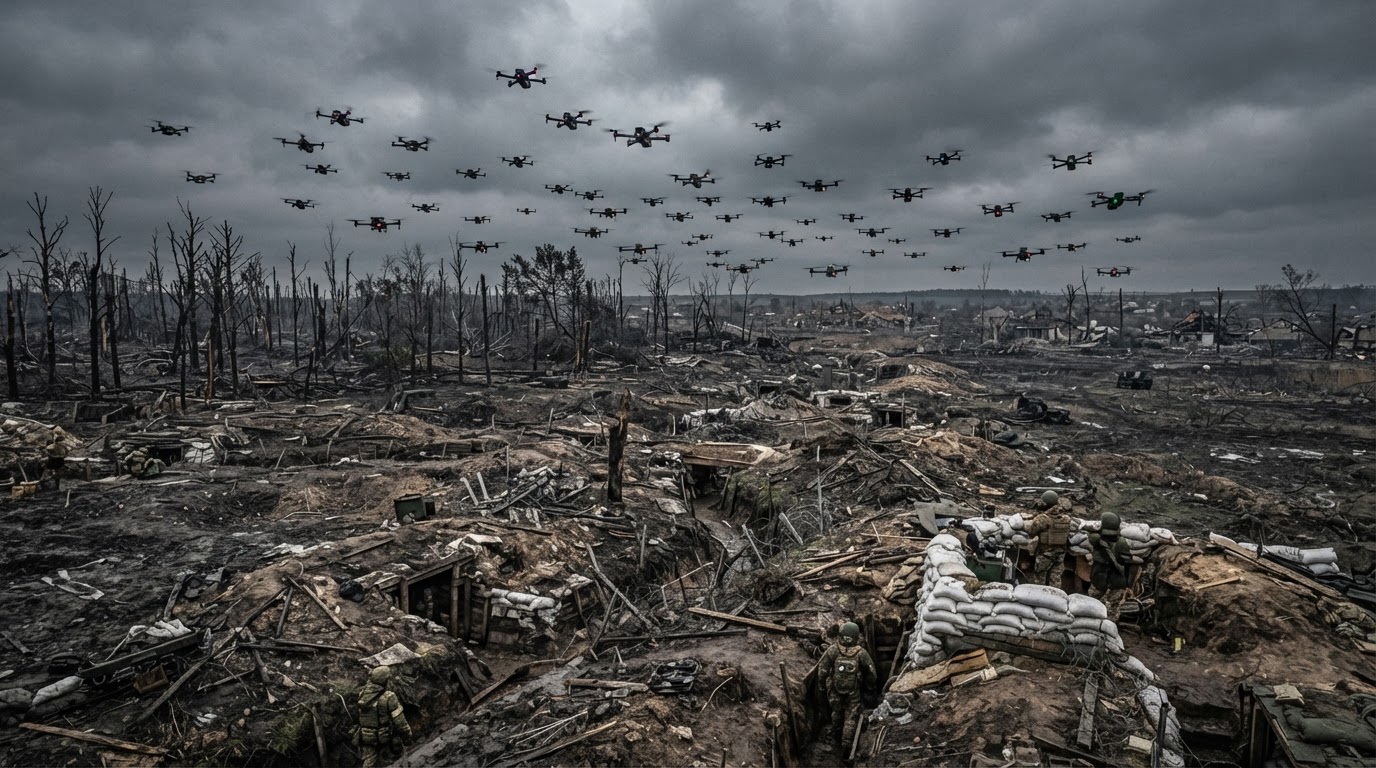
Back on the front lines, quadcopters were becoming a defining feature of the modern battlefield. Taking cues from those earlier conflicts in the Middle East, Ukraine experimented with them from the beginning. But most of the applications were developed by hobbyists on the front lines, with some clever ideas for ad hoc missions. It took until the middle of 2023 for quadcopters to become ubiquitous on the Ukrainian side, with Russia following by the end of the year.
In 2024, we reached a point of industrial saturation. Everyone understood the utility of loitering quadcopters on the front lines, and the assembly lines away from the front shifted toward producing them at scale. And unlike exquisite weapon systems, it was possible to accelerate production in short order.
A Battlefield Reshaped by Small Drones
Everything about the front bent to the humble quadcopter. The era of neatly defined trenches and a no man's land separating the two parties was over. In its place, a gray zone soup emerged where it became possible that Russians had snuck west of Ukrainians, and Ukrainians had snuck east of Russians. Heavy armor disappeared from the battlefield. With the front lines freezing, it became too easy for a few thousand dollars of drones to waste millions of dollars of tanks.
Other traditional battlefield logics flipped. With everyone dismounted, tree lines became advantageous for those going on the offensive, as they offered a place to hide, until the other side burned them down or winter left their leaves barren. Heavy rain also became advantageous, with drones struggling to operate under those weather conditions.
Fiber Optic Drones and Electronic Warfare
Electronic warfare also drove the development of fiber optic drones. Jamming equipment would prevent opposing radio-controlled drones from entering your zone. So drones with long fiber optic cords would first seek out the jammers, and then open up the sky to the rest of the quadcopter fleet. Forests along the gray zone started to look like they had been infested by spiders due to the web of fiber optic cables left over.
In Operation Spider Web, Ukraine smuggled quadcopters next to far-flung Russian air bases and laid waste to billions of dollars of equipment in a single afternoon.
The Role of Chinese Components
China benefited from the shift. Sure, the end production of these quadcopters predominantly occurred in Russia and Ukraine. However, the component parts tended to originate from China, both for Russian and Ukrainian production lines. Beijing found a way to profit no matter which side was winning, setting up its industrial infrastructure for a potential future confrontation with the West.
Why Russia Turned to Shahed Drones
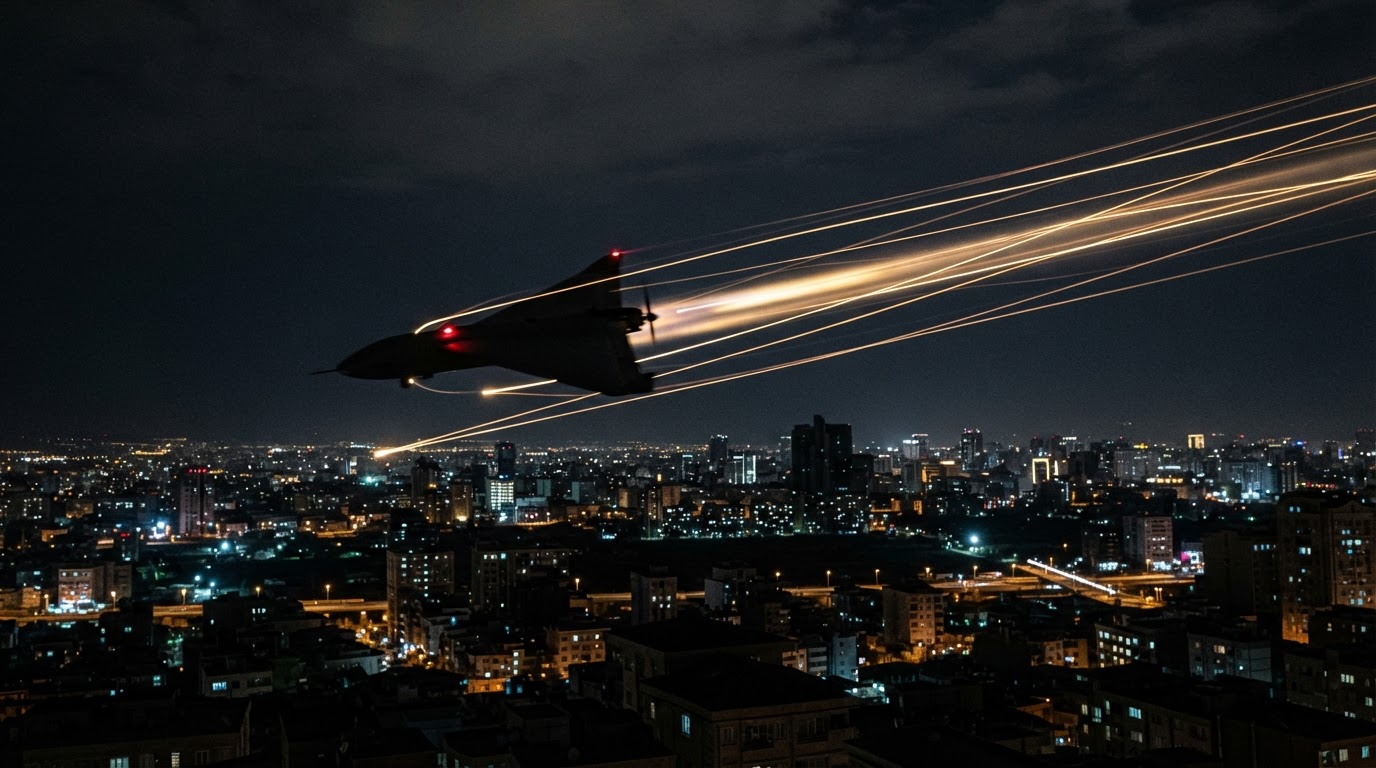
Russia was also pursuing another initiative at higher altitudes. Following the failures of Russia's manned aircraft at the beginning of the invasion, Moscow sought solutions beyond the aforementioned glide bombs. The standard 70-kilometer or so range of a glide bomb was useful for striking targets near the front lines. But they could not go much further. The entire point was to launch from the safety of Russian skies, and so flying near the line of contact put Russian airframes in danger. And indeed, Ukraine would still score kills every now and then like that.
Maintaining crew safety meant that much of the bomb's 70-kilometer range was lost traversing Russian territory. The solution there came from a decade earlier. In the 2010s, Iran developed the Shahed drone, which was pretty much the antithesis of the luxury drones that the United States favored at the time. Shaheds married a shoestring budget and minimum reliance on international supply chains. The result was a kamikaze aircraft capable of going more than 1,000 kilometers and delivering a payload of at least 10 kilograms, and often closer to 50 kilograms. It was exactly what Russia was looking for.
The freedom from international supply chains was critical because the West froze out Russia from the moment that the invasion began. The low cost would become critical as the war progressed, and the Kremlin began feeling a tighter economic squeeze.
From Iranian Supply to Russian Production
US intelligence first detected a meeting between Russian and Iranian officials in the summer of 2022 to negotiate a direct transfer of Shaheds. By the end of the year, Russia signed a licensing agreement to localize production, essentially opening up the world of the Shahed to Russia's industrial might. Well, that was easier said than done. It took more than a half a year to get the first assembly lines up and running, with Iran still producing key components to enforce its licensing provisions.
Russia then spent another year trying to localize everything and refine the Shahed's design for its purposes in Ukraine. It was August 2024 before Russia had clearly reached an industrial scale. At that point, Shaheds became a fixture over Ukraine's night skies.
Air Power in the War in Ukraine — Part 2: How Ukraine Defends Its Skies and Carries the Air War Into Russia
Continue the Series
More from this multi-part investigation. Read the parts in order for the full picture.
More from the Front
 Analysis
Understanding the War in Ukraine — Part 1: The Disputes Behind the War
An analysis from the opening months of the 2022 invasion — seven substantive issues that help explain what Russia and Ukraine are fighting over, from separatist regions and a land bridge to Crimea to energy, water, and the denazification claim.
 Analysis
Understanding the War in Ukraine — Part 2: Why Disputes Alone Do Not Explain War
An analysis from the opening months of the 2022 invasion — territory, energy, and autonomy are at best half-causes of war. To understand why fighting happens at all, we need a bargaining friction that blocks a negotiated settlement.
 Analysis
Understanding the War in Ukraine — Part 3: Why Russia and Ukraine Failed to Reach a Deal
An analysis from the opening months of the 2022 invasion — to get war, we need both an issue worth fighting over and a bargaining friction that blocks a settlement. Preventive war, preemptive war, miscalculation, and political survival each help explain why no deal was reached.