
Understanding the War in Ukraine — Part 3: Why Russia and Ukraine Failed to Reach a Deal
An analysis from the opening months of the 2022 invasion — to get war, we need both an issue worth fighting over and a bargaining friction that blocks a settlement. Preventive war, preemptive war, miscalculation, and political survival each help explain why no deal was reached.
To understand why Russia and Ukraine went to war, we need both an issue they were willing to fight over and a bargaining friction that prevented a negotiated settlement. If we have one without the other, we do not get war.
Preventive War and a Changing Balance of Power
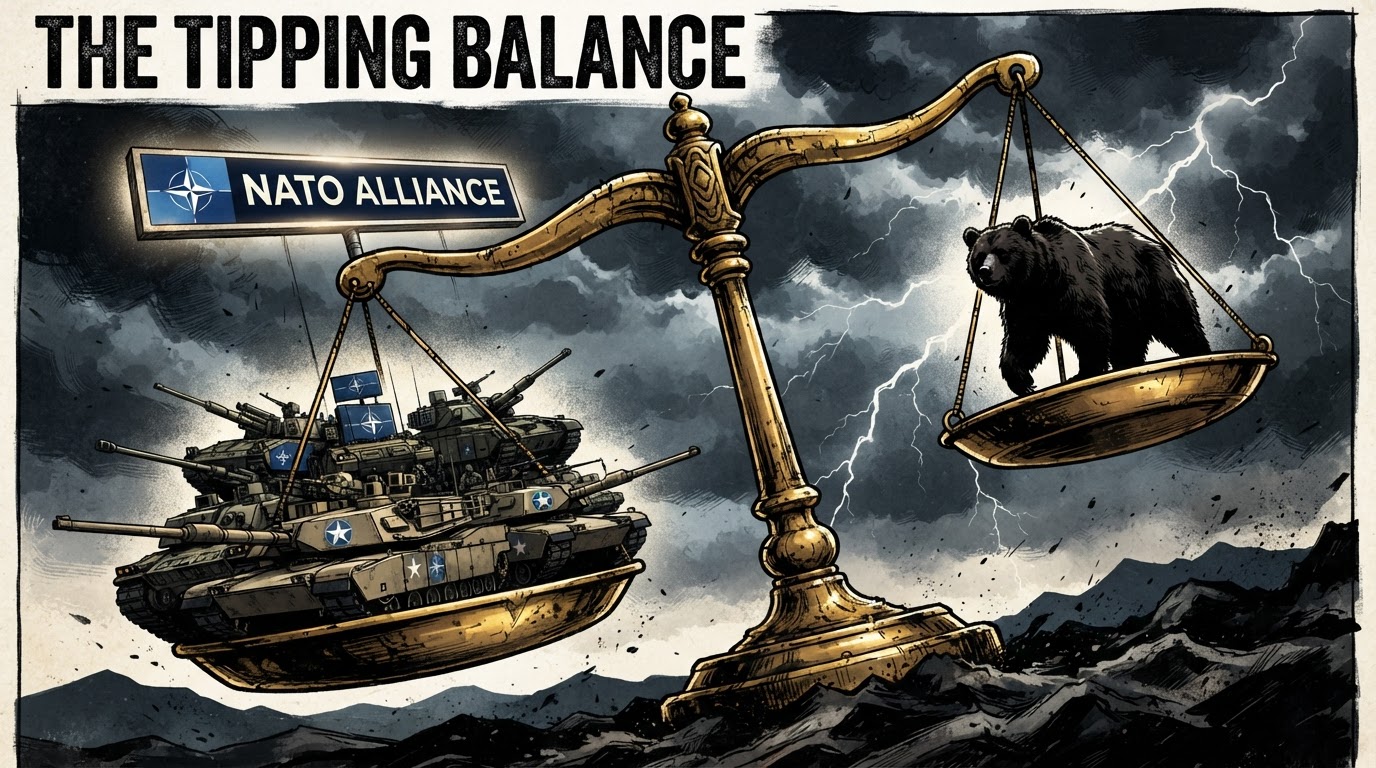
Preventive war is the most understood source of bargaining failure in this conflict.
The short version of this explanation, as Putin tells it, is that Ukraine was improving its ties to NATO. If Ukraine were to join and successfully integrate with NATO, it would benefit from the alliance's military strength. That would make coercing Ukraine more difficult in the future. Thus, Putin had to strike while the opportunity presented itself.
Under this explanation, Russia expects a better outcome from fighting now, after accounting for the costs, than it could obtain in a future settlement after Ukraine joins NATO. The shift in the balance of power makes fighting under today's more favorable military conditions preferable to accepting tomorrow's weaker bargaining position.
This would appear to be the second time in recent memory that this has happened. Back in 2008, Georgia was making similar overtures. Then Russia invaded to convince NATO that further integration was too risky.
Putin has also suggested, most recently during his May 9th, 2022, Victory Day speech, that Kyiv declared it could attain nuclear weapons. If true, this would have a similar effect on the balance of power. However, while Ukraine has the technical capacity to build nuclear weapons, they are nowhere close to doing so, nor are they taking steps to change that.
That aside, the shift from a potential alliance partnership is good enough by itself to constitute a bargaining problem.
The Different Logic of Preemptive War
Preemptive war is a different argument that Putin put forth in his May 9th, 2022, Victory Day speech. He said military infrastructure was being built up, the threat grew every day, and Russia had launched a preemptive strike.
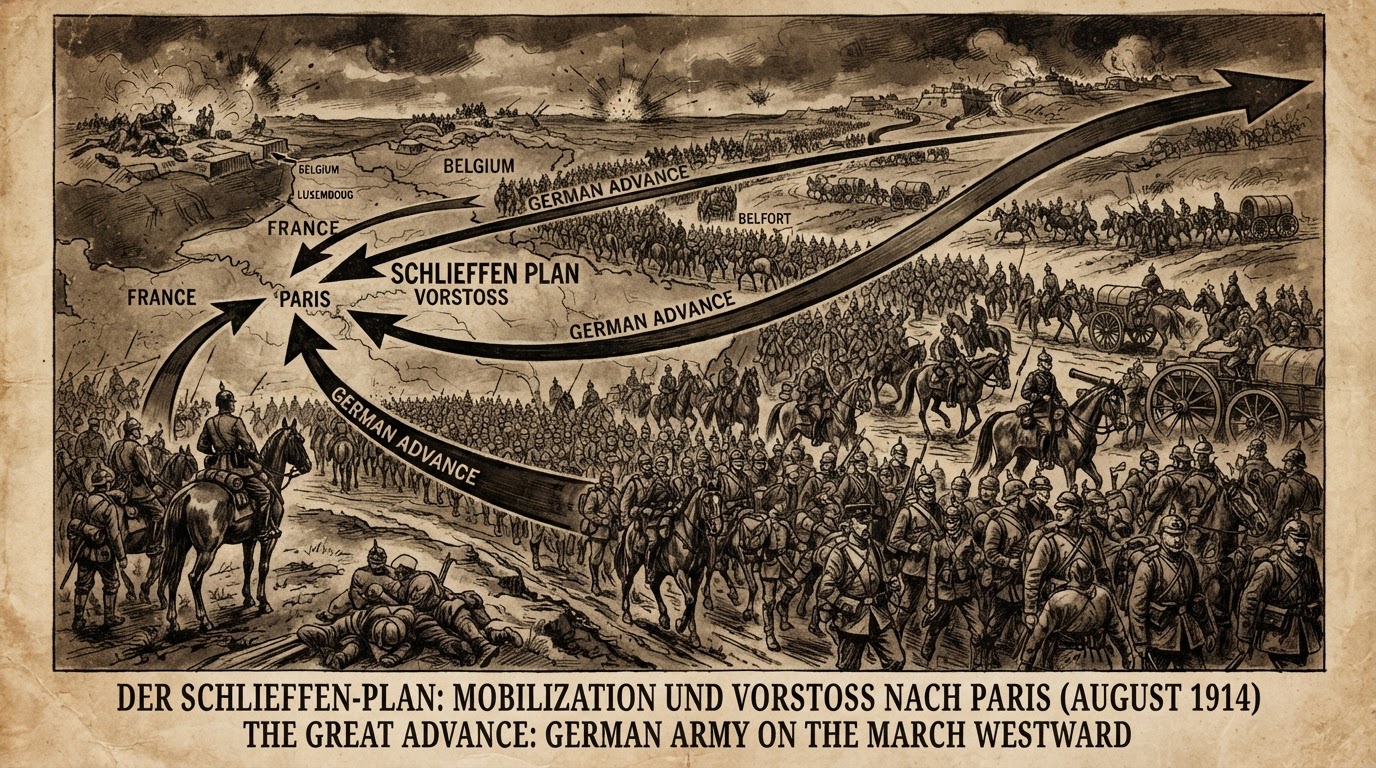
There is some subtlety here. Although preventive and preemptive war sound similar, they are different. A preventive war is fought to forestall a long-term shift in the balance of power, like when the United States invaded Iraq, ostensibly to stop Saddam Hussein from developing nuclear weapons. A preemptive war, like what motivated the start of World War I, is fought to exploit first strike advantages and deny them to your opponent.
If striking first creates a large military advantage, the balance of power depends on which side initiates the war. That advantage might be large compared with each side's costs of war. Russia's minimum acceptable settlement, based on striking first, could then be incompatible with Ukraine's minimum acceptable settlement, also based on striking first. With no mutually acceptable division, the parties are destined to fight. This is the classic game theoretic problem known as a prisoner's dilemma.
Such preemptive wars are rare historically. The most well-known is the aforementioned World War I and the cult of the offensive. Following the assassination of Franz Ferdinand, European leaders worried that whoever struck first would have a decisive advantage. This was the origin of the infamous Schlieffen Plan, named for German Field Marshal Alfred von Schlieffen.
Another example is the 1967 Arab-Israeli War, also known as the Six-Day War. Here, Egypt began moving troops into the Sinai Peninsula. Israel, convinced that an attack was imminent, took the initiative.
Finally, China took great pains to silently move into North Korea, catching the United States by surprise in the Korean War. This stopped what might have otherwise been a complete military victory for the southern coalition.
The rarity of such events continues through today because there is not much evidence that Russia was trying to exploit a first strike advantage here. It's also hard to square a first strike advantage existing when a war was already going on in the Donbas, which Russia was an unofficial participant in.
Nevertheless, it is understandable why Putin would want to frame things in this way. Under international law, preventive war is illegal. Preemptive war, on the other hand, is legal. The framing is best thought of as a public relations stunt rather than a convincing explanation for the war.
Miscalculation and Conflicting Expectations
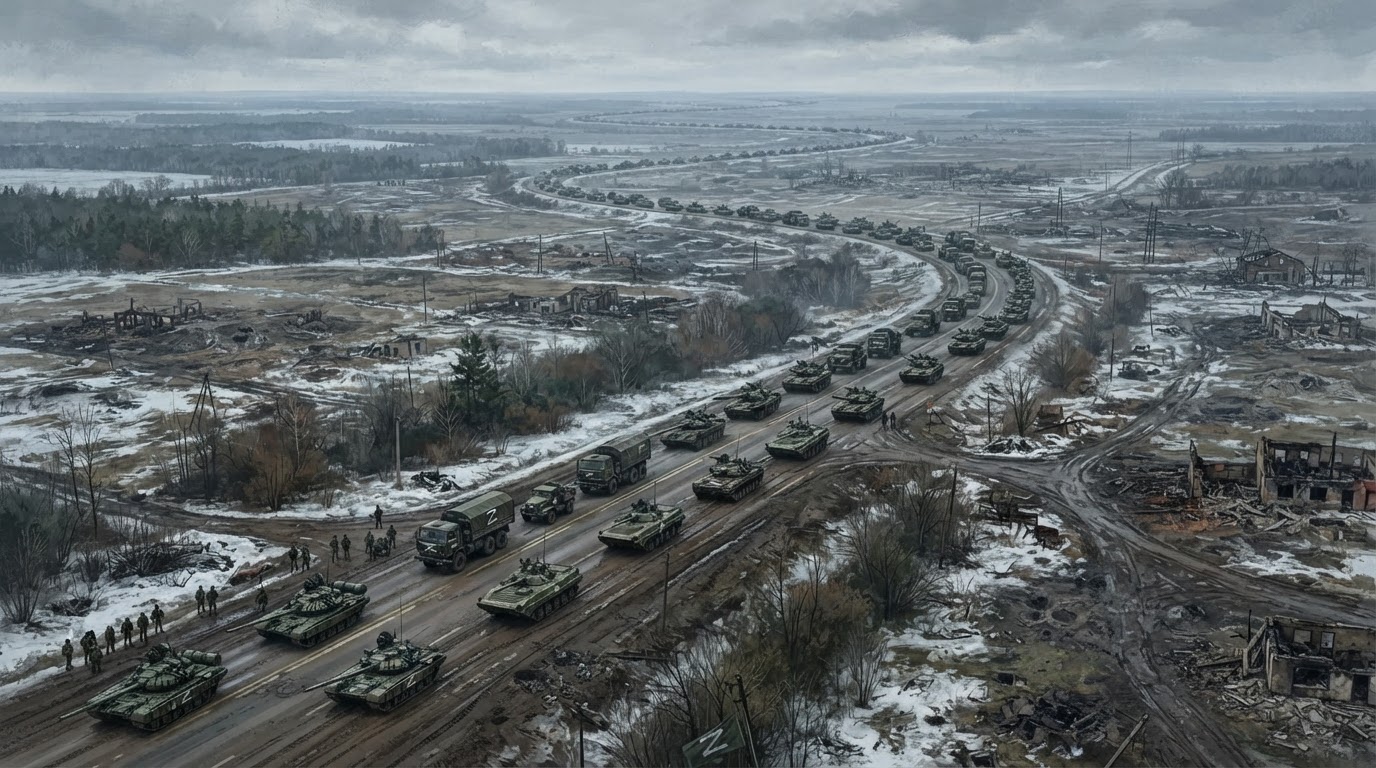
Putin also appears to have miscalculated in several ways. Perhaps the most obvious of these is the ease by which Putin thought Russia could steamroll Ukraine.
The number of Russian forces deployed to Ukraine is estimated to be around 200,000. The standard rule of thumb is that an attacking side needs a 3:1 manpower superiority to overcome the advantages the defense has from fighting from entrenched positions. Ukraine has about 200,000 armed forces. That's a 1:1 ratio and nowhere near what you would want it to be.
Occupations are a little bit trickier than this. Although there is no similar consensus on rules of thumb for occupation forces, a good minimum is one soldier for every 100 inhabitants. However, Ukraine has a population of more than 40 million people. That's just one for every 200.
The gap appears to be because Putin believed that Ukraine would fold easily, many of its citizens would welcome their Russian liberators, and Zelensky would be easily removed as an unpopular leader. Instead, Ukraine has shown tremendous resolve, and Zelensky has become a figure to rally behind.
If Russia thought the military balance was relatively favorable to it, it would drive a hard bargain and demand a settlement reflecting that advantage. But if Ukraine knew that the actual military balance was more favorable to Ukraine than Russia believed, it would reject that proposal and fight instead. The two sides would disagree about the minimum settlement each should accept.
Strategic Decisions Can Still Lead to War
Preventive war, preemptive war, and miscalculation as causes for war fall under a class known as rational unitary actor explanations. They have a long history of study within the field of international relations. We describe them as rational because the states can be fully strategic and still find themselves in war. They are unitary actor-based because we think of the states as single entities and not represented by biased leaders.
These prerequisites indicate two more places to look, even after removing first strike advantages as a convincing explanation. One is irrationality.
Why Irrationality Is an Unconvincing Explanation
I find this to be uncompelling, and to be honest, a lazy take on the war. The basic argument for irrationality is twofold. First, Putin's desire to take over Ukraine does not make sense. Second, the war has gone so poorly for Putin that the only possible explanation for this is that there is something going wrong in his head.
Let's take those two points one at a time. You and I may agree that fighting a nakedly territorial conflict in the 21st century is an interesting choice and may be something better left to the days of the world wars. But there is a huge difference between having abnormal preferences and being crazy. There's no accounting for taste.
Meanwhile, it is weird to think that Putin, someone who had been so calculating to ascend to the presidency of Russia, and who since taking office, has carefully maintained power despite institutional rules that should have made that difficult, would somehow turn out to be irrational all along. Sure, it could be a new development, but his age of 69 in 2022 was not that old.
And in any case, the poor strategy implemented is more readily explained by the political environment around him. He has been isolated during the pandemic, and as an autocratic leader more generally, it is difficult to convince those around you to give true information and not just tell you what you want to hear. That's a recipe for a war via miscalculation, rationally occurring, but still looking silly in retrospect.
Regardless, the irrational argument overlooks a critical piece of evidence. Putin's decision to invade has been very popular at home. Before the war, Putin's approval sat at 67.2%. After the war began, Putin received a classic rally-round-the-flag bump to 81.6%. And the odds are those numbers are legitimate despite the difficulty of polling citizens of autocratic governments.
To be clear, those numbers may eventually drag down. But for now, this actually looks like a pretty good plan for Putin on the domestic front.
Personal Benefits and Political Survival
Putin's personal benefits provide another possible explanation. This is more than just saying that Putin does not internalize the costs of war like the rest of his citizens. Even if he were sitting in the Kremlin and suffering nothing from the cost of conflict, that still just takes Russia's costs of war to zero. As long as Ukraine views the war as costly, there is still room to negotiate.
Instead, the best argument here is that the war has helped Putin consolidate power. The rally-round-the-flag effect causing a 14-point boost in Putin's poll numbers would certainly help in that regard.
It's possible that Putin felt pressure from a domestic challenger and wanted to exploit a rally-round-the-flag effect to make a coup look less attractive. Alternatively, if the potential challengers were from the military, simply sending them to the front lines at worst keeps them out of Moscow, and at best, from Putin's perspective anyway, they may never return home, and that has happened quite a bit already.
This is pure speculation, of course, and it's the type of thing we are unlikely to know about until well after the war ends.
Regardless, when those personal benefits are large, the negative costs of war can make conflict efficient and eliminate any room to negotiate.
Eliminating irrationality as a possibility leaves us with six substantive issues and three bargaining frictions. The key point is that we need at least one substantive issue and one bargaining friction. Otherwise, we do not get a war. And it may very well be the case that multiple of these factors were at play. Further parsing which of these was the driving force behind the war will be difficult to do until the history books are written.
Understanding the War in Ukraine — Part 4: How Wars End and What That Means for Ukraine
Continue the Series
More from this multi-part investigation. Read the parts in order for the full picture.
 Analysis
Understanding the War in Ukraine — Part 1: The Disputes Behind the War
An analysis from the opening months of the 2022 invasion — seven substantive issues that help explain what Russia and Ukraine are fighting over, from separatist regions and a land bridge to Crimea to energy, water, and the denazification claim.
Read part Analysis
Understanding the War in Ukraine — Part 2: Why Disputes Alone Do Not Explain War
An analysis from the opening months of the 2022 invasion — territory, energy, and autonomy are at best half-causes of war. To understand why fighting happens at all, we need a bargaining friction that blocks a negotiated settlement.
Read part Analysis
Understanding the War in Ukraine — Part 4: How Wars End and What That Means for Ukraine
An analysis from the opening months of the 2022 invasion — from military defeat and changing leadership to the removal of a power shift and the slow learning process of convergence, the causes of the war point toward very different ways it might end.
Read partMore from the Front
 Military Tech
Air Power in the War in Ukraine — Part 1: How Drones and Glide Bombs Changed the War
From the era of the Reaper to industrial-scale quadcopters and Soviet glide bombs — how cheap, clever engineering reshaped the skies over Ukraine and overturned the assumptions of modern air warfare.
 Military Tech
Air Power in the War in Ukraine — Part 2: How Ukraine Defends Its Skies and Carries the Air War Into Russia
From cell-phone Shahed detection networks to strikes on Russian oil refineries and Wildberries warehouses — how Ukraine turned cheap drones into a strategic campaign that reached deep inside Russia.
 Historical
The Rise and Fall of the Soviet Economy — Part 1: From Serfdom to Revolution
While the West crashed in 1929, the Soviet Union boomed — industrial output up 50% in five years, near-zero unemployment. But the roots of that miracle, and its eventual collapse, reach back to 14th-century feudalism, the Black Death, and a revolution that replaced one extractive elite with another.