
The Rise and Fall of the Soviet Economy — Part 1: From Serfdom to Revolution
While the West crashed in 1929, the Soviet Union boomed — industrial output up 50% in five years, near-zero unemployment. But the roots of that miracle, and its eventual collapse, reach back to 14th-century feudalism, the Black Death, and a revolution that replaced one extractive elite with another.
During the 1920s, almost every major economy was booming. The Roaring '20s was a decade defined by its opulence, opportunity, and hope for the future. With the end of the First World War in 1917, the global economy was supercharged and led by American industrial growth, which then boasted almost half of the world's total output.
From 1920 to 1929, the US economy grew by a massive 42%, spurred on by the widespread adoption of mass production and the introduction of electricity. The UK and France rebuilt and maintained their powerful colonial empires, and even Germany was starting to see a major economic rebound by 1923. However, the economic euphoria came to a screeching halt.
The Crash and the Soviet Exception
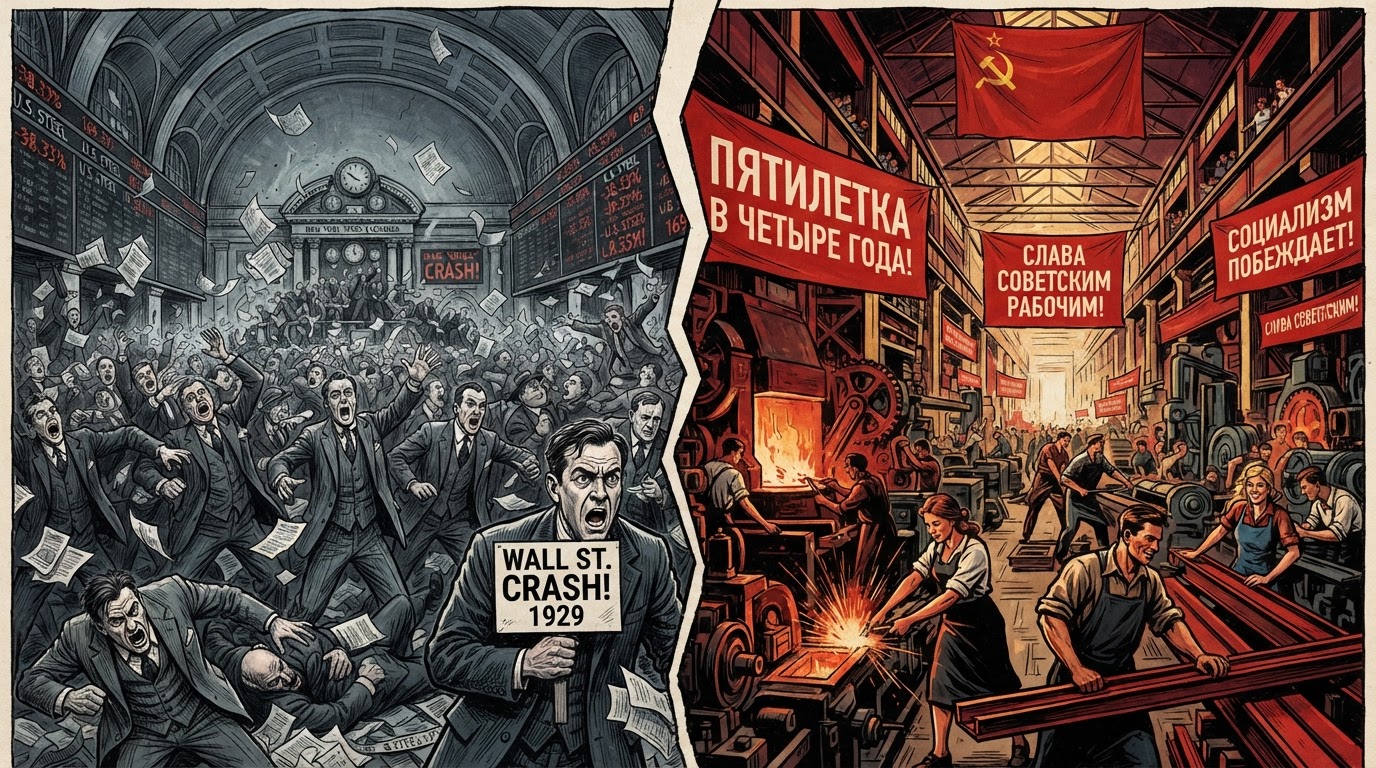
Panic gripped the stock market. Sixteen and a half million shares were sold in a single day, hopelessly, desperately, at any price. The market crash of 1929 and subsequent Great Depression steamrollered the global economy. US industrial production plummeted by 47%, and unemployment soared to 20%, decimating the growth of the prior decade. Every major economy experienced incredible contractions to their outputs, incomes, and workforces, with one exception.
Largely cut off from global economic banking and trade, as well as not being subject to demand shocks, the Soviet Union was a single country that didn't just get through the Great Depression, but thrived. Rather than contracting, the Soviet economy continued its dramatic economic and industrial boom, increasing its total industrial output between 1929 and 1934 by a whopping 50%, all while maintaining effectively zero unemployment.
In light of such a major economic downturn and contrast, some Western economists praised the Soviet communist system, with some going as far as to claim its superiority over Western capitalism.
In just a span of 40 years, the Soviet Union went from being a backwards, impoverished, agricultural monarchy to being the defeater of fascism, the first to launch a satellite and man into orbit, and the largest sole proprietor of weapons of mass destruction ever. The Soviet Union catapulted itself onto the world stage as just one of the two remaining superpowers, wielding the largest military and second largest economy.
However, as quickly as it arose, the Soviet Union collapsed as a result of its crumbling economy. How did the once envied Soviet economy end up in ruins, leaving a bloodied print on human history?
The Feudal Roots of an Extractive Economy
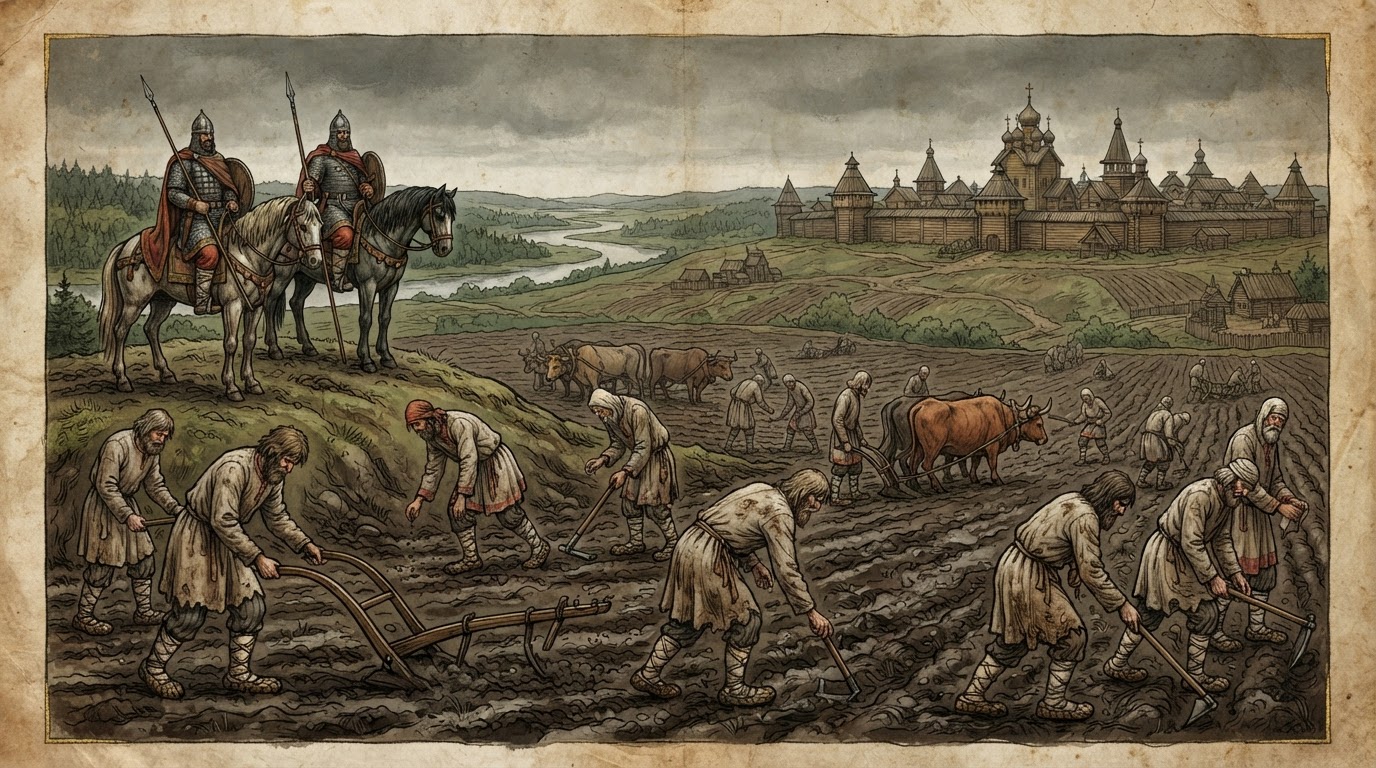
Understanding the Soviet economy and the path it ultimately took begins with the forces and conditions that caused it to arise in Russia. Those roots reach back to the 14th century. Following the fall of the Roman Empire, the dominant form of European governments was feudalism.
Feudalism was a system in which a king would personally own all the land in the country. To maintain control and security, the king would then divide up the land and distribute it to a class of lords. In return for the land, the lords would then provide military forces for the king when needed. The lords would then make use of their holdings by forcing the vast peasant population to pay for living and working on the land by paying heavy taxes and performing extensive unpaid labor. This was called serfdom, and the peasants, known as serfs, were tied to the land, meaning they were not allowed to move away without the lord's consent.
This system was designed to exploit the vast lower class and have the small amounts of wealth produced to trickle upwards to the elites. A system that acts in this way is known as an extractive economic system, and it is held in place by an extractive political system. The political system, in this case, was simple. The only people with control to change things in the country were the small group of lords and kings. Therefore, it was nearly impossible for the peasants' situation to improve, since the elites had a vested interest for things to stay the same, and for a long time they did.
How the Black Death Changed the Balance of Power
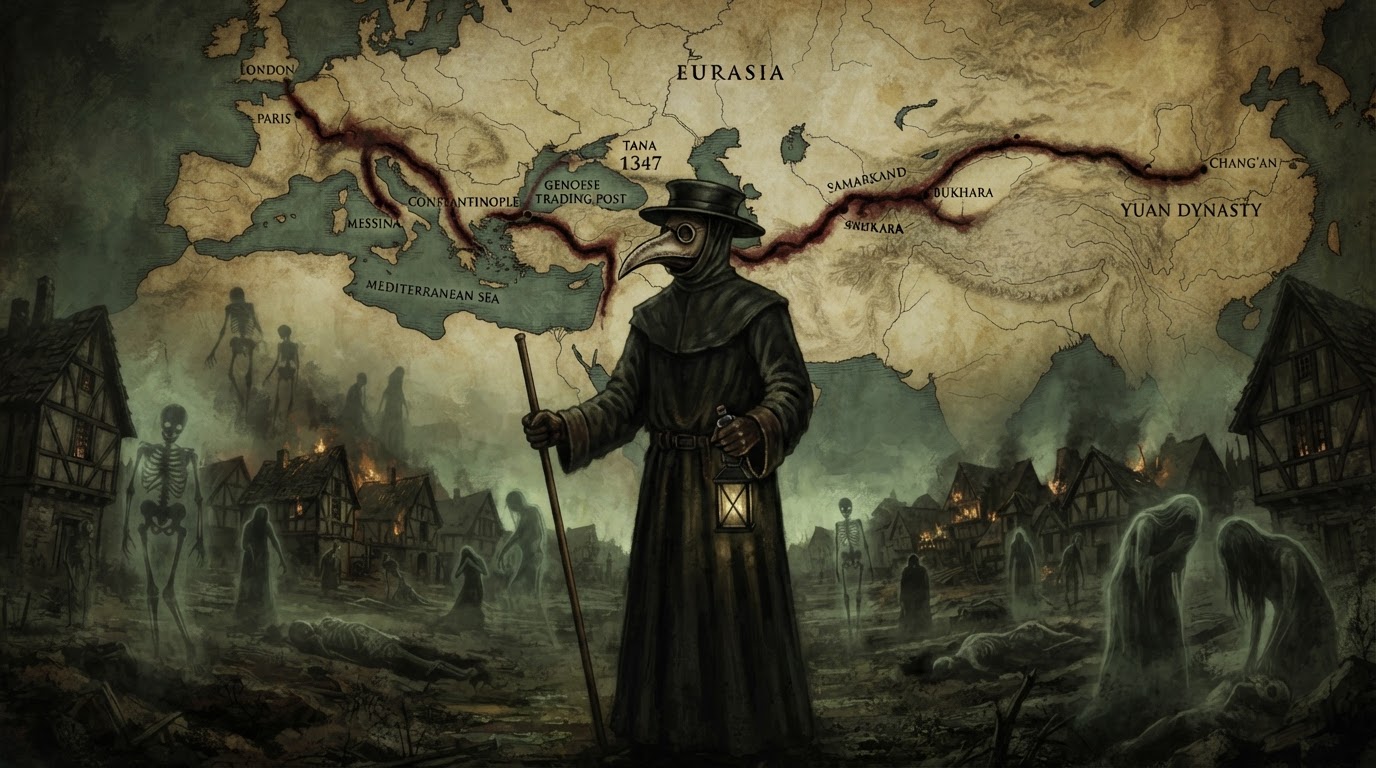
However, in the year 1346, in the port city of Tana, where the Don River meets the Black Sea in modern-day Russia, the first known European case of bubonic plague, or Black Death, appeared. Having been spread from China via the Silk Road, the plague quickly swept across Europe, killing nearly 50% of the population anywhere it went.
The extreme loss of life of the peasant population shook the foundations of the feudal system to its core. With a new massive scarcity of labor, suddenly the value of peasant labor had skyrocketed, and thus the power to bargain.
Faced with a shortage of workers, desperate lords across Europe started to try and steal one another's peasants by promising to require no extensive work and/or reduce taxes. This resulted eventually in a near, or in some places, total abolishment of unpaid labor, significantly increasing peasants' living conditions, wealth, and eventually power to demand further changes.
By 1351, the English government, in an attempt to maintain the power and wealth of the elites, instituted a statute that punished peasants with prison time if they moved from their current lord's land. This would have the effect of fixing wages and unpaid labor requirements to pre-plague levels.
Not willing to see their newfound freedoms go away, this culminated in the 1381 peasant rebellion in England, which saw the rebels taking London. Eventually, the rebellion was put down by the king. However, there was never another attempt to enforce the statute.
The Slow Shift Toward More Inclusive Institutions
This happened all over Western Europe, effectively creating a new, more inclusive labor market. Opposite to an extractive economic system, an inclusive one does not rely on the desires of the upper class but on the equilibrium of markets. Therefore, wages cannot be artificially lowered, but rather workers are paid based on their value to their employer. For Western European peasants after the plague, the system was by no means inclusive. It was, however, less extractive than before. This small gain in wealth caused a small gain in power to act and organize in the future.
Over time, this compounded until, when the time was right, a broad coalition of workers, soldiers, businessmen, and others could then rise up to make demands or even remake the system to be more inclusive. When a coalition is sufficiently broad, it makes it so no one single group is able to make a power grab to cement themselves as the new elite, becoming equally as tyrannical as the old ones.
Eventually, this led to secure property rights, a crucially important foundational element for the Industrial Revolution, which supercharged national economies and living standards for all that lived in them. This was the story of economic development in Western Europe. However, it contrasted drastically with Eastern Europe.
Why Eastern Europe Followed a Different Path
Unlike their Western counterparts, the peasants in the East were more spread out, lived in smaller villages, and were less organized while their lords controlled larger and more powerful swaths of land.
In response to the labor scarcity caused by the bubonic plague, the Eastern lords snapped up more lands and added to their holdings, while also clamping down on the peasant population even more harshly. Since the Eastern peasants were less powerful, their rebellions either didn't happen or failed miserably. They didn't see any new freedoms afforded to them, but rather had even more taken from them.
This was further exacerbated by the 16th century when Western demand for agricultural products like livestock and wheat produced in the East grew rapidly. With this increased demand, the lords saw it in their best interest to place even tighter controls on the peasants, demanding more unpaid labor and levying even more taxes.
The gap in wealth, power, and freedoms between the peasants in the West and East grew large. This fundamental divide in Europe compounded over the centuries. While in the West, the lower classes were eventually able to overthrow absolute monarchies and replace them with much more inclusive constitutional ones, or even republics, the Eastern kingdoms stayed almost exactly the same or even became more extractive.
Industrialization and the Power of New Ideas
First in the British Isles, then in the US, and later in Western continental Europe, the Industrial Revolution began in the mid-18th century. Spurred on by fair legal systems and property rights on intellectual property, people could now profit off of discovering new inventions and processes without fear of someone robbing them of their ideas. This caused an explosion of new patents, inventions, and systems which dramatically increased the productivities and efficiencies of industries and economies. For the first time in history, sustained economic growth occurred, and the living standards of all increased exponentially.
By the turn of the 20th century, powerful industrial manufacturing bases were established in Britain, France, Germany, and the United States. However, the Industrial Revolution was faced with staunch opposition in the Eastern countries that still maintained absolute monarchies and extractive systems like that of the Russian Empire.
Why the Russian Empire Resisted Industrialization
In the year 1850, Russia comprised one seventh of the entire Earth's landmass, stretching from Germany all the way to Canada, yet its total economy was relatively small and its citizens still poor. There was a reason for this.
Russia was still based on the feudal system of the 14th century, meaning the king, known as the tsar, had near total control over his population, and the small nobility class exploited the poor by being in charge of the old traditional industries. The king and the elites feared the creative destruction that was brought on by industrialization.
Creative destruction refers to the process of new inventions or systems that upend old industries and replace them with more efficient and productive ones, thereby taking wealth and resources away from the established elite class, while also building a more powerful middle class that would be able to challenge the current system. Therefore, to keep control, the tsar actively stopped industrialization, effectively curtailing economic growth during the 18th, 19th, and early 20th century. As a result, the Russian Empire was an extremely backwards, impoverished state which had very little in the way of freedoms for the population.
Serfdom was finally abolished in the Russian Empire in 1861. However, it was replaced with a system that kept many of the same oppressions with little increase in quality of life. By this point, Russia was woefully behind the others in terms of heavy industry and military.
Before 1853, the entire Russian Empire had only a single railway. This only changed when the decisive defeat of the Crimean War showed that their lack of rail was a major security threat against their much more industrialized neighbors.
War and the Fall of the Tsar
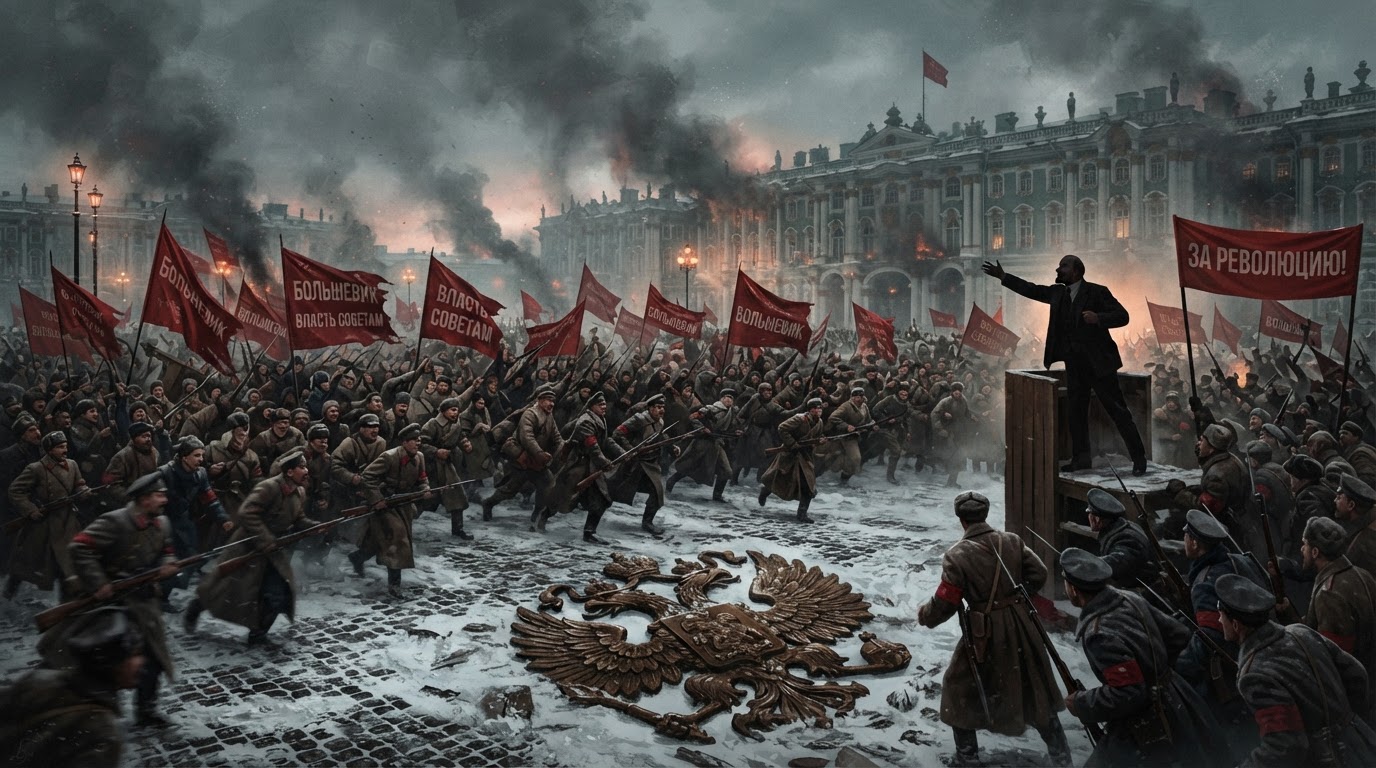
By 1914, the Russian society, outraged from centuries of oppression under a tyrannical monarchy, had been repeatedly revolting unsuccessfully in an attempt to gain the freedoms those in the West had enjoyed. With a particularly incompetent tsar, Nicholas II, and an embarrassing defeat against the Japanese in 1905, the seeds of revolution had been sown, and the entire system had grown unstable. Then, on August the 1st, 1914, Germany, because of obligations to defend Austria-Hungary after its invasion of Serbia, declared war on Russia.
By 1917, Russia was losing badly to the Germans. Its people were starving, its economy had collapsed, and its ruler, Nicholas II, had made some pretty terrible political decisions, like placing himself as the commander of the military while leaving his German wife in charge of the country.
Protests erupted in Petrograd, soldiers began a mutiny, and Vladimir Lenin, the exiled head of the Communist Bolshevik Party, was smuggled into the country by the Germans, who hoped he would cause further internal conflict, which he did.
Under enormous pressure, Tsar Nicholas II abdicated the throne, which had been held by his family for over 300 years. The country quickly became divided between the provisional government, held by the less radical revolutionaries, and the much more organized and radical communist Bolsheviks.
Eventually, the country broke into a bloody and grueling three-year-long civil war. By the end, Russia was in ruins, and the communists, under the command of Lenin, had taken and cemented control of the country, formally creating the Soviet Union shortly after.
The Revolution and a New Political Elite
The ideology of the communists was based on the ideas of the German philosopher Karl Marx. He believed a constant battle between capitalism and workers would ultimately result in a revolution for which the working class would seize the means of production and build a classless society where private property would be abolished and everyone would work for the common good.
The Russian Revolution, which was originally based on these ideas, was to replace the old extractive tsarist government with a more equal socialist one.
“The Bolsheviks were not a broad coalition of the working and lower class like the Western revolutions, but rather a small group of highly radicalized and organized Marxists.”
However, the party that took control, the Bolsheviks, were not a broad coalition of the working and lower class like the Western revolutions, but rather a small group of highly radicalized and organized Marxists. Therefore, there was no built-in mechanism to stop them from becoming tyrannical themselves like there had been in the West.
The first thing the Bolsheviks did was make themselves into a new class of political elites, much the same as the ones they had destroyed in the revolution. They disallowed anyone who disagreed with them from joining the party and sought to institute their socialist utopia through force.
The Rise and Fall of the Soviet Economy — Part 2: How It Rose So Fast and Why It Collapsed
Continue the Series
More from this multi-part investigation. Read the parts in order for the full picture.
More from the Front
 Historical
How Korea Became Divided Into North and South
For centuries Korea was one independent, unified country. A century of foreign competition, Japanese colonial rule, and a Cold War line drawn at the 38th parallel tore it in two — and over 70 years later it has still not been put back together.
 Historical
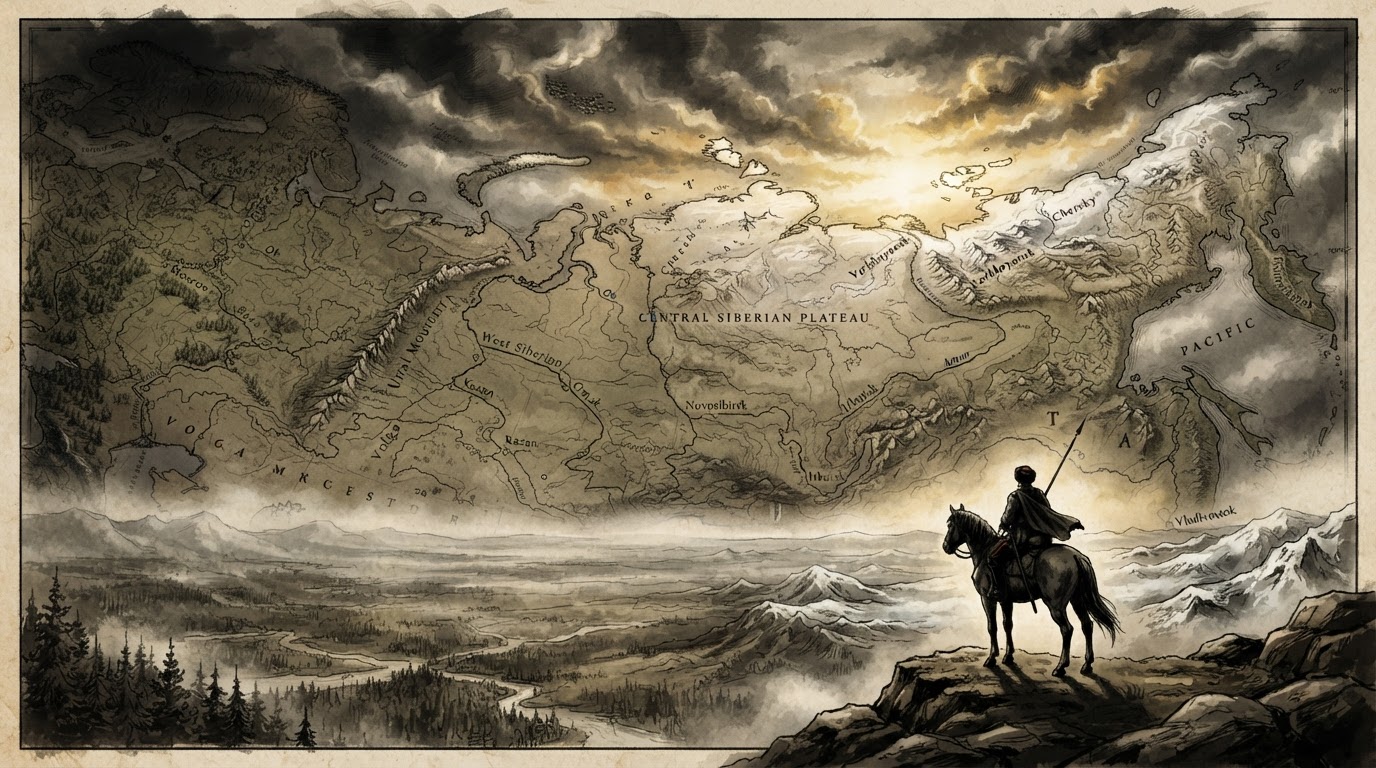
How Russia Became So Big and Culturally Diverse
From a small Slavic society on the flat grasslands to a 17-million-square-kilometer empire across 11 time zones — the fur trade, the Mongols, and a relentless search for natural borders built the largest country on Earth.
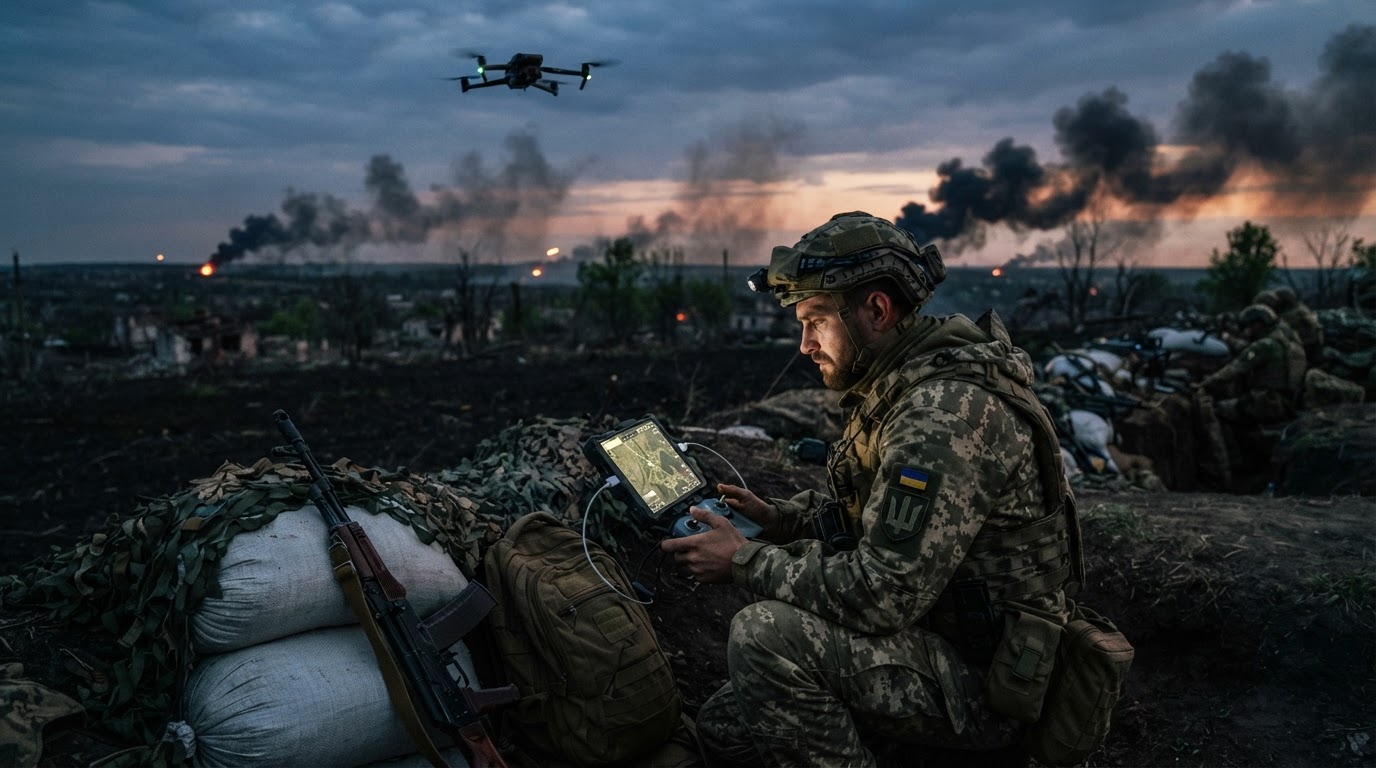 Military Tech
Air Power in the War in Ukraine — Part 1: How Drones and Glide Bombs Changed the War
From the era of the Reaper to industrial-scale quadcopters and Soviet glide bombs — how cheap, clever engineering reshaped the skies over Ukraine and overturned the assumptions of modern air warfare.