
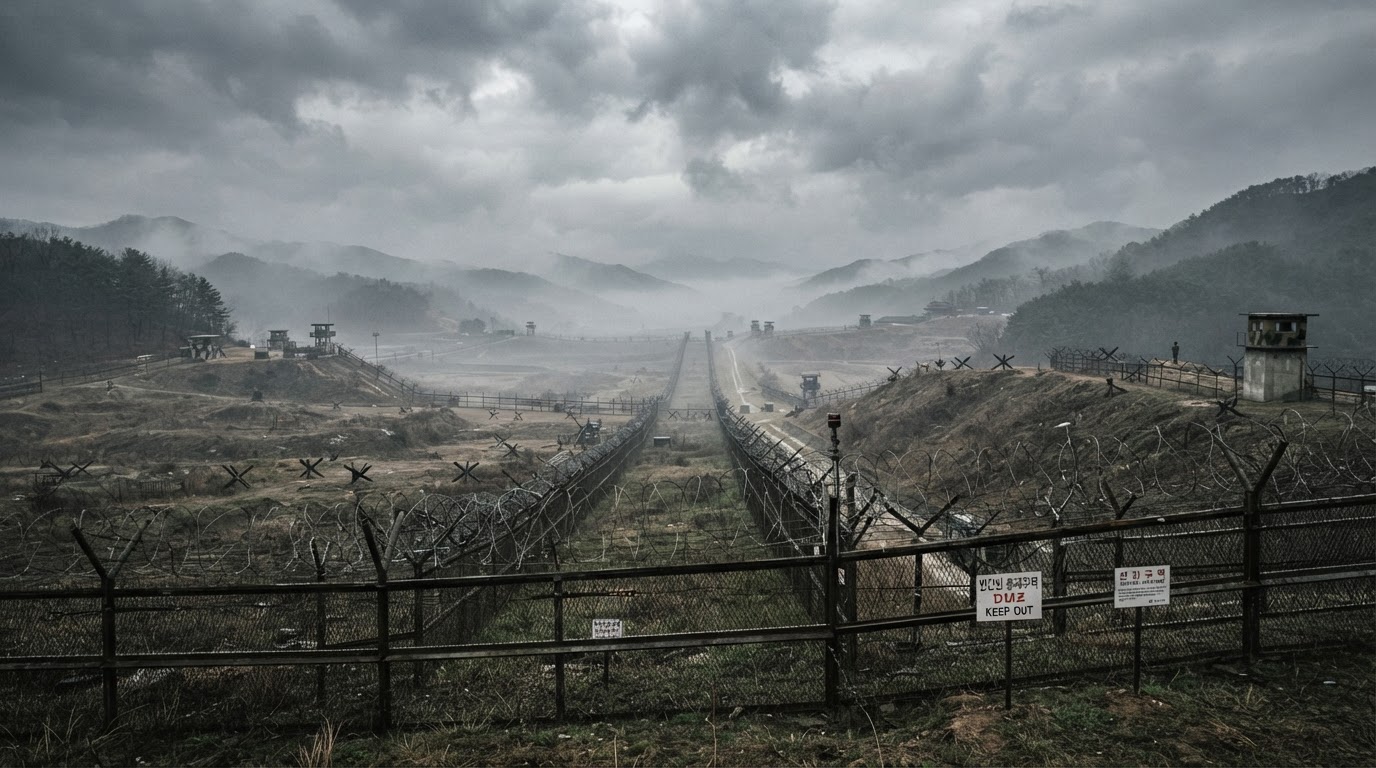
How Korea Became Divided Into North and South
For centuries Korea was one independent, unified country. A century of foreign competition, Japanese colonial rule, and a Cold War line drawn at the 38th parallel tore it in two — and over 70 years later it has still not been put back together.
Korea is a country divided. The South is known for K-pop stars, foods like kimchi, and technological innovations. In contrast, North Korea is considered a closed economy and is largely isolated from the rest of the world. How did one half of the country fall under a dictatorial leadership while the other embraced modernization and became a republic?
Foreign Powers Compete for Influence
For centuries, Korea was a single, independent, and unified country, but during the mid-1800s, external powers began vying for control of the region.
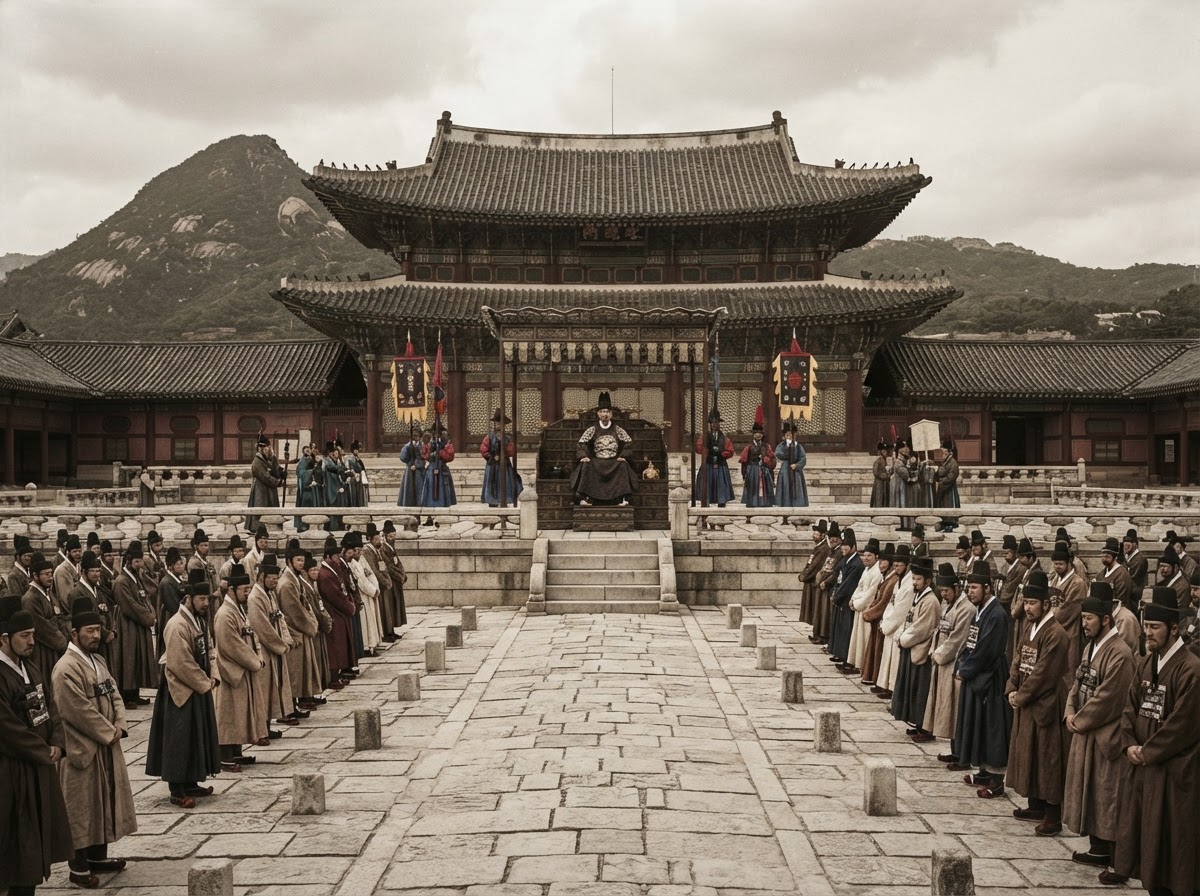
During the reign of Yi Ha-eung, known as Daewongun, who became a de facto ruler in the stead of his young son, King Gojong, foreign relations, especially with the West, were actively and violently rejected. Japan tried to build diplomatic relations with Korea, but these attempts were futile. However, when Daewongun relinquished his power in 1873, Japan took the opportunity to use warships to pressure Korea into signing a treaty of commerce and friendship, opening up several ports to Japanese trade.
As Korea had previously been a tributary to China, the growing Japanese influence in the country drew the attention of the rulers of Qing China. China soon stationed troops in Korea and began a period of Chinese interference. Korea was forced to sign a trade agreement favoring Chinese merchants and another treaty of commerce and friendship with the US in 1882. Treaties with other international powers followed, including the UK, Russia, Germany, and France.
Modernization and the Struggle Between Japan and China
Once Korea was open to foreign influence, a modernization movement began. However, the ruling class had split into radicals and moderates, so a consistent policy of modernization was impossible.
In 1884, the radicals, who were pro-Japanese, staged a coup d'état in the hope of radical reform. But just three days later, Chinese troops tried to take control. Japan and China narrowly avoided outright war over Korea by signing the Li-Ito Convention, in which both powers agreed to withdraw their forces from Korea.
The peace would only last around 10 years before the Sino-Japanese War broke out over the domination of Korea. Japan quickly gained the upper hand, and the Treaty of Shimonoseki was signed in 1895, which declared that Japan had authority over Korea.
Russian Intervention and Japanese Expansion
Seeing Japan gain supremacy over Korea, Russia, which had long wanted to expand into East Asia, began to assert its influence. With support from Germany and France, Russia pressured Japan to return the Liaodong Peninsula to China. This action encouraged Korea to assert anti-Japanese sentiments, which led to the Japanese assassination of Korean Queen Min in 1895.
In a bid to save his own life, King Gojong entered diplomatic relations with Russia, granting concessions to Russia and other international powers for mining and logging.
Despite a brief reassertion of the Korean monarchy, in 1900, Russia invaded Manchuria after the Boxer rebellion in China, which led to the Russo-Japanese War of 1904 to 1905.
Although the Korean government declared neutrality, pressure from the Japanese forced them to sign an agreement that stated Japan could use as much Korean territory as they wanted for military use. Japan was victorious, and under the mediation of the United States, Russia and Japan agreed to the Treaty of Portsmouth. The treaty acknowledged Japan's interests in Korea, paving the way for Japan to assert dominance.
The Loss of Korean Sovereignty
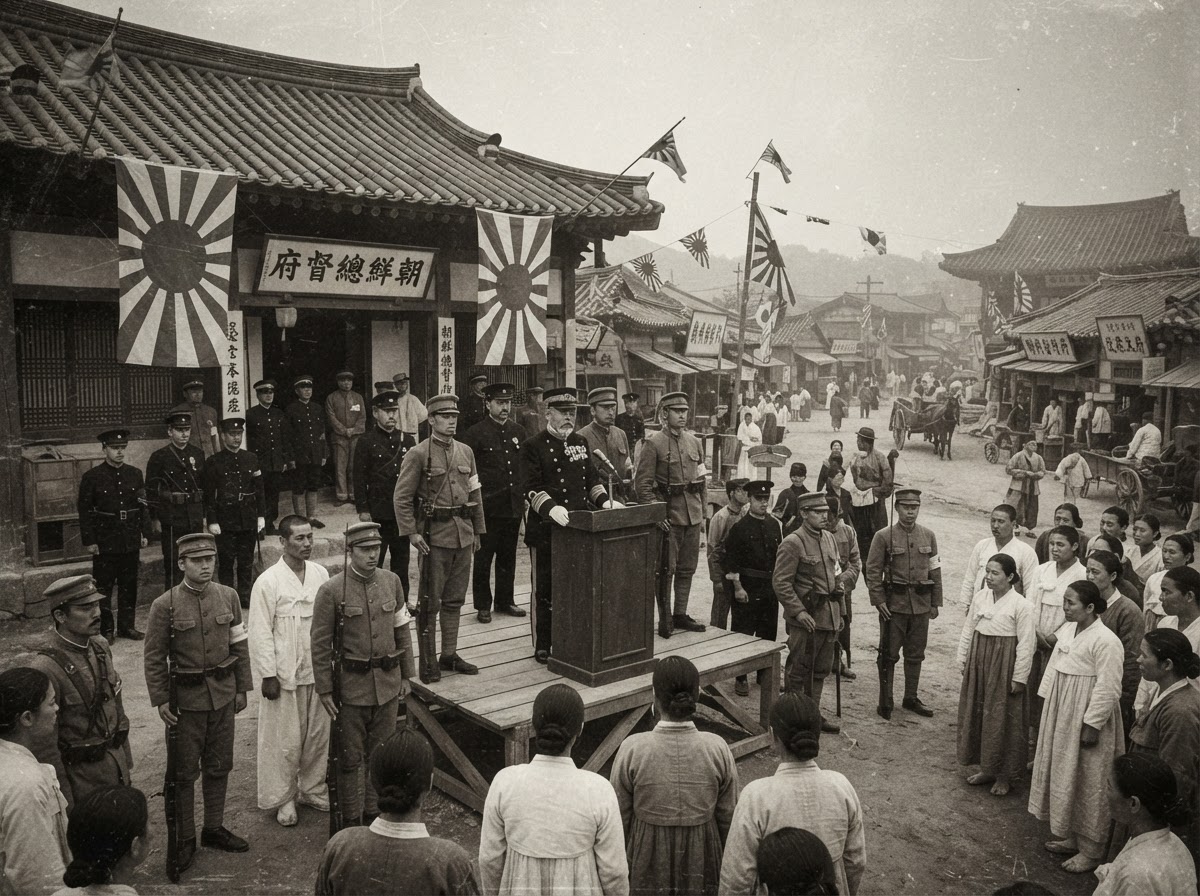
After the treaty was signed, Japan began to gradually erode the country's sovereignty.
Desperate to free Korea of Japanese influence, the now Emperor Gojong sent an emissary in secret to the 1907 International Peace Conference at The Hague to try and persuade the great powers to help.
However, the call went unanswered, and Japan coerced Emperor Gojong into abdicating in favor of his son. The Korean army was ordered to disband, and Japan annexed Korea in 1910.
Life Under Japanese Colonial Rule
In the lead up to the annexation, Korean guerrilla units had harassed the Japanese occupying forces. After the annexation of the country, these forces were driven into northeastern China. As the Japanese deprived the Korean people of freedom of speech, free press, and assembly, many emigrated to Siberia, Hawaii, and Manchuria.
The Japanese closed many Korean private schools and established their own school system, which prioritized the Japanese agenda and language while excluding Korean history and language. Japanese commerce was also promoted at the expense of Korean-owned businesses.
The Japanese also began to seize land, issuing proclamations that unregistered land would be forfeited. Forests and farmland that were owned by a clan or village were seized, as they had no single individual who could claim ownership of them. The land was then sold off cheaply to the Japanese.
The March First Independence Movement
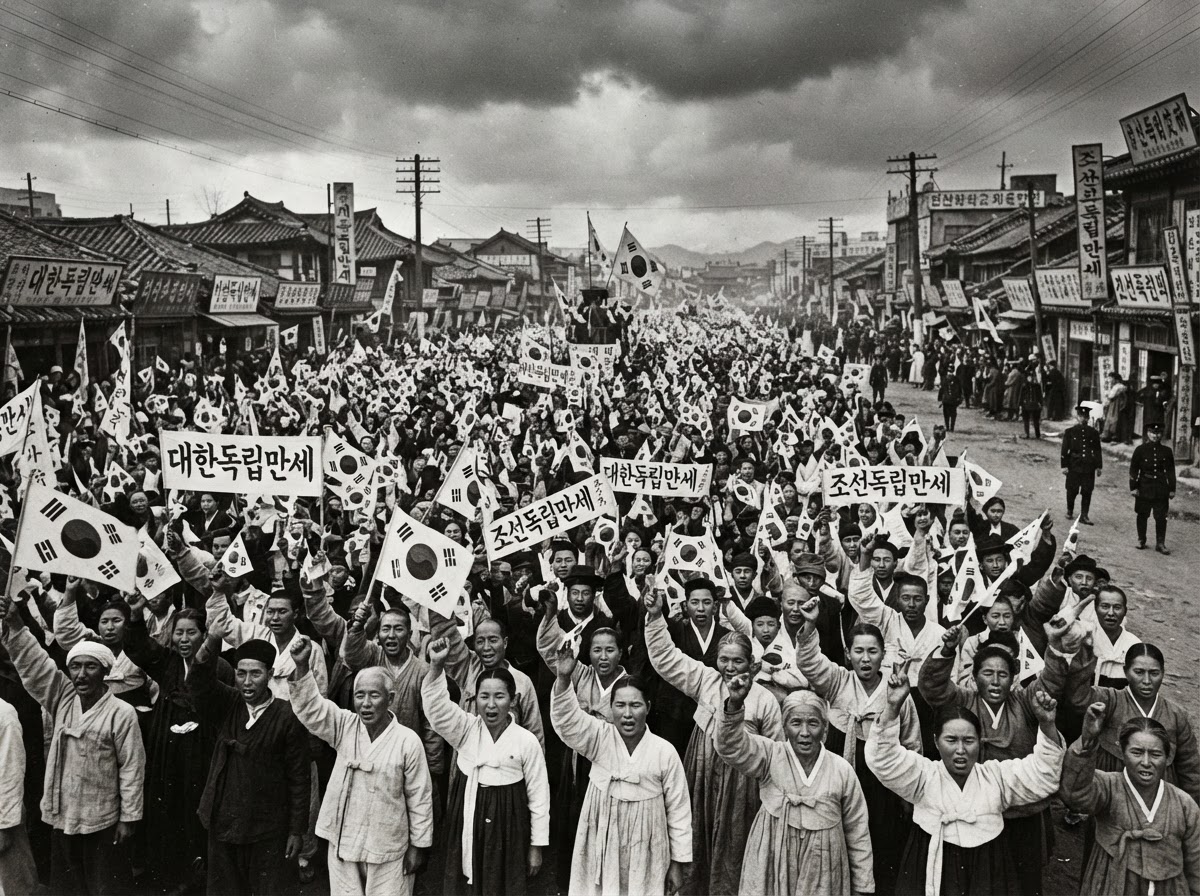
In 1919, the former Korean emperor, Gojong, died. As a symbol of independence, Korea collectively mourned his loss, and on March 1st, nationwide anti-Japanese rallies were staged.
The Korean Declaration of Independence was read aloud at the Korean capital of Seoul, and Koreans took to the streets demanding independence.
Although the protests were peaceful, Japan's response was that of brutal suppression. The military was called in to stop the demonstrations, and tens of thousands of Koreans were arrested, killed, or wounded.
The violent suppression of the call for independence was not as effective as the Japanese might have hoped. In April, independence leaders formed a Korean provisional government in Shanghai, and by September, they had elected a president, Syngman Rhee. Their efforts united Korean exiles, and they were able to establish communication with leaders inside Korea.
Economic Exploitation and Growing Nationalism
In the face of growing nationalism, Japan changed tactics, becoming less overtly oppressive, replacing the armed forces with the constabulary, and granting partial freedom of the press. Still, their exploitative colonial policies remained.
Korea became a market for Japanese goods as Japan became a capitalist country. Due to Japanese industrial development, Japan's agricultural production was moved to Korea, where farmers were ordered to turn their dry fields into rice paddies to make up for the shortfall in Japan.
Although this program was briefly suspended during the worldwide economic downturn of the 1930s, it was soon reinstated to help Japan's war efforts against China. Although Korean rice production increased, most Koreans had to live on cheap imported cereals while the rice was exported to Japan.
Meanwhile, Korean nationalism continued to rise, and several magazines and dailies inspired the Korean people with a renewed sense of patriotism and a desire for independence.
Wartime Repression and the End of Japanese Rule
However, in 1931, Japan once again imposed military rule in Korea. They began to crack down further on the Koreans, attempting to destroy their national identity after the outbreak of the Second Sino-Japanese War in 1937, and then the Second World War a few years later.
Koreans were encouraged to adopt Japanese names and forced to worship at Japanese Shinto shrines. Korean publications, as well as academic societies and studies, were banned.
In order to supplement their military, Koreans were drafted into the Japanese army or ordered to work in military bases, factories, and mines. Thousands of Korean women were forced to provide sexual services for the military as so-called comfort women.
Although Shanghai fell to the Japanese, the Korean Provisional Government moved to Chongqing in southwestern China, where it declared war against Japan in December 1941. They formed the Korean Restoration Army and fought alongside Allied forces until Japan surrendered in 1945, marking the end of 35 years of Japanese rule in Korea.
The Unfulfilled Promise of Independence
Unfortunately, this victory did not lead to Korea's independence. Although in the 1943 Cairo Declaration, the US, Great Britain, and China pledged that Korean independence would come in due course, the actual details of this proposed independence were not clear. When the Korean Provisional Government requested clarification from the US, they received no answer.
In 1945, at the Yalta Conference, President Franklin D. Roosevelt proposed a trusteeship for Korea, consisting of the US, Great Britain, the Republic of China, and the USSR. Although the four powers agreed to this trusteeship, no formal arrangement was reached. As tensions increased between the US and the USSR, the future status of Korea was still undecided.
Months later, at the Potsdam Conference, the US encouraged the Soviets to enter the war against Japan. In August, the USSR entered into war with Japan, pledging to support Korean independence.
The Division at the Thirty-Eighth Parallel
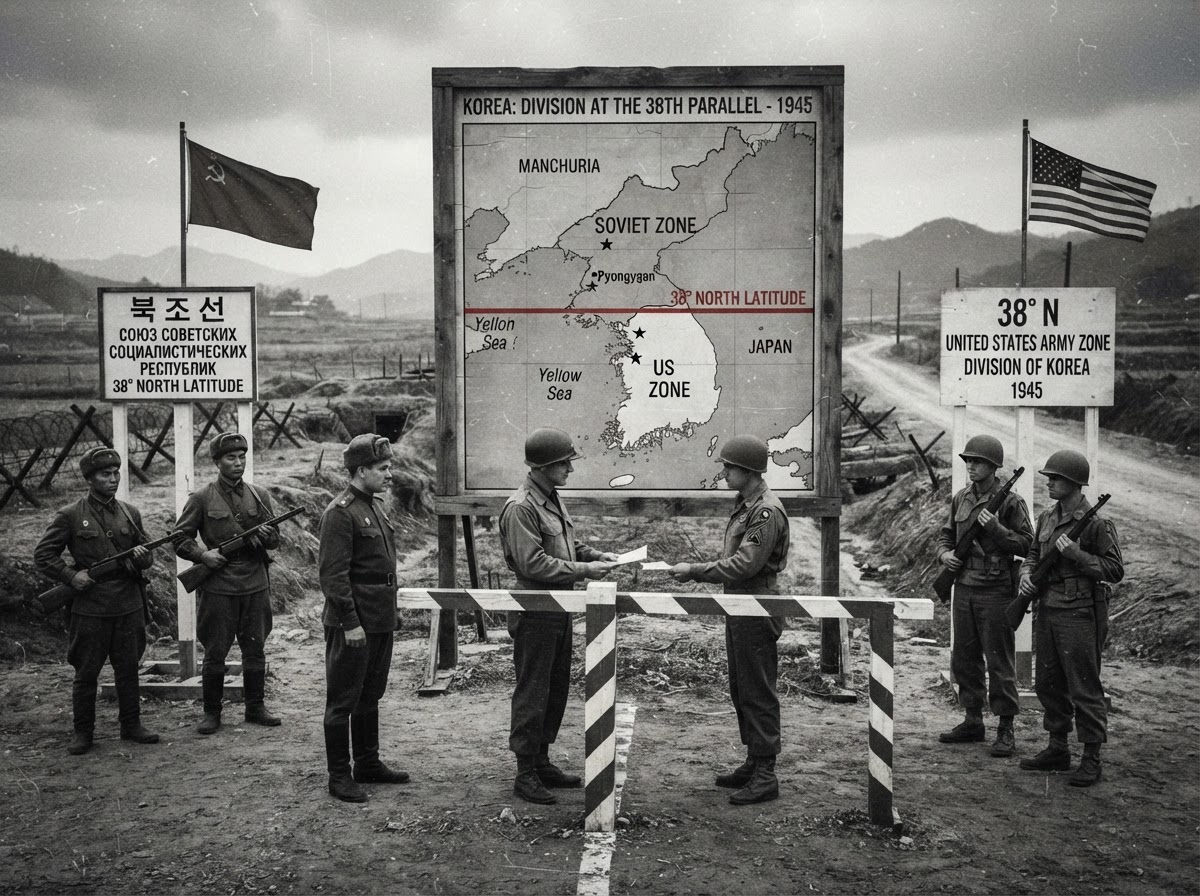
On August 11th, 1945, the Americans drafted General Order Number 1, which called for the Japanese in Korea to surrender. It had been agreed that Japanese forces that were north of latitude 38 degrees north would surrender to the Soviets. Those south of that line would surrender to the Americans, who landed a few weeks after the Soviets first entered the country.
Korea was split into two zones, with the North essentially being under the control of the USSR.
The division of the Korean Peninsula was controversial, with some believing that the US decided to do this in order to stop the USSR from occupying the entirety of Korea. This idea is predominantly based on the fact that US policy toward Korea during World War II was to prevent any one power from dominating the country.
Political Upheaval in the South
The end of Japanese rule and the subsequent division of the country caused political chaos in Korea. In the South, numerous political parties sprang up, although they were all striving for one common goal: self-governance.
On August 16th, the Committee for the Preparation of Korean Independence was organized, and by September 6th, a national assembly was called to proclaim the People's Republic of Korea.
However, the US military refused to recognize the Republic and asserted that they were the only government in Korea. The Provisional Government was briefly exiled and was forced to declare themselves as a political party, not a government, on their return.
In December 1945, the US, Great Britain, and the Soviet Union met and created a trusteeship of up to five years for the rule of Korea.
The Koreans reacted to the news with a wave of violence, and in order to quiet the discontent, the Representative Democratic Council was created in February 1946. The council was composed of Koreans and headed by the former president of the Korean Provisional Government, Syngman Rhee.
In October 1946, an interim legislative assembly was created, with half its members appointed by the military and half elected by the people. Several months later, the assembly condemned the trusteeship in Korea.
The Consolidation of Communist Rule in the North
Meanwhile, in the North, the Soviets had established a Communist-controlled government aided by a group of expatriated Korean Communists.
In October 1945, the Korean Communist leader, Kim Il-sung, arrived in Pyongyang and was hailed as a national hero. During this public appearance, he was dressed in the uniform of a major of the Red Army, and soon afterward, he was elected as the First Secretary of the North Korean Central Bureau of the Communist Party.
The Soviet Union was able to directly control the North without the need for a military government by creating the People's Executive Committee of South Hamgyong Province and then recognizing the Committee's power in the province.
Although Korean political leaders in the North established the Bureau of Five Provinces Administration, by February 1946, it had been replaced by the Provisional People's Committee for North Korea, which had Kim Il-sung as its chairman.
In February 1947, Kim Il-sung began to consolidate his political power with the support of the Soviet authorities, and a legislative body called the Supreme People's Assembly was formed.
Two Governments Emerge in 1948
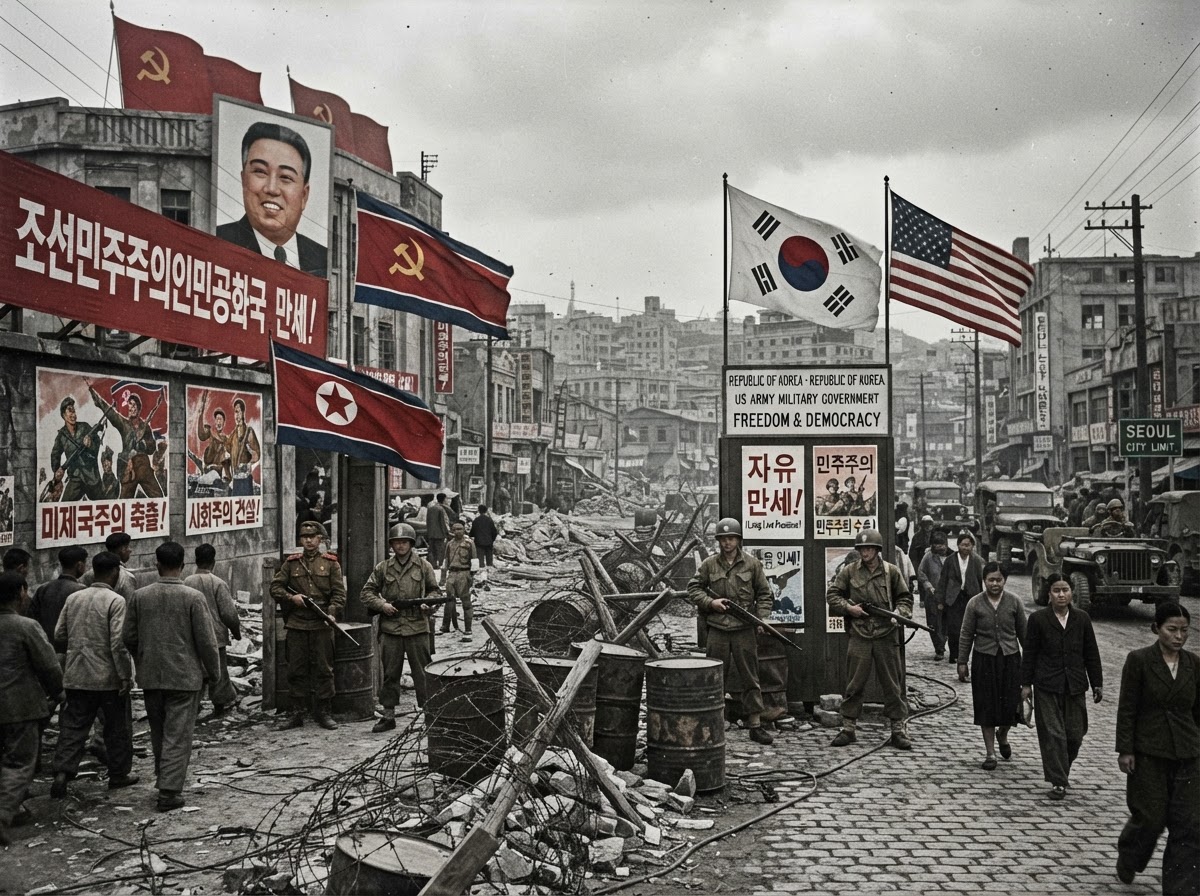
After years of discussion, the US and the Soviet Union were no closer to agreeing to the unification of Korea.
In November of 1947, a resolution proposed by the US suggested that general elections be held in Korea under the observation of a United Nations Temporary Commission. Although the elections went ahead as planned in the South, the Soviets prevented the UN Commission from entering the North.
In the South, on August 15th, 1948, Syngman Rhee became the President of the Republic of Korea. The military government was disbanded, and the UN General Assembly declared that the Republic was the only lawful government in Korea.
In the North, elections were held in August. In September, Kim Il-sung was appointed the Premier and the Democratic People's Republic of Korea was proclaimed, which was recognized by the USSR as the only lawful government in Korea.
Over 70 years later, the country of Korea is still divided, with the North dominated by a hereditary dictatorship and South Korea enjoying a democratic republic.
More from the Front
 Historical
The Rise and Fall of the Soviet Economy — Part 1: From Serfdom to Revolution
While the West crashed in 1929, the Soviet Union boomed — industrial output up 50% in five years, near-zero unemployment. But the roots of that miracle, and its eventual collapse, reach back to 14th-century feudalism, the Black Death, and a revolution that replaced one extractive elite with another.
 Historical
The Rise and Fall of the Soviet Economy — Part 2: How It Rose So Fast and Why It Collapsed
The Soviet economy grew rapidly by directing labor and resources into heavy industry. But its problems with incentives, information, and innovation made that growth unsustainable — and the seeds of collapse were planted before the nation even existed.
 Historical
How Russia Became So Big and Culturally Diverse
From a small Slavic society on the flat grasslands to a 17-million-square-kilometer empire across 11 time zones — the fur trade, the Mongols, and a relentless search for natural borders built the largest country on Earth.