
How Russia Became So Big and Culturally Diverse
From a small Slavic society on the flat grasslands to a 17-million-square-kilometer empire across 11 time zones — the fur trade, the Mongols, and a relentless search for natural borders built the largest country on Earth.
Russia encompasses over 100 languages spread across 11 time zones. At 17 million square kilometers, it is the largest country on Earth. But not that long ago, relative to empires and their borders, Russia was kind of a small fish.
Putting the Size of Russia in Perspective
Countries come in all shapes and sizes. Monaco is tiny. It's literally two square kilometers, smaller than most cities. Belgium is more like 11,000 square kilometers. Then you have even bigger countries like France with 550,000 square kilometers.
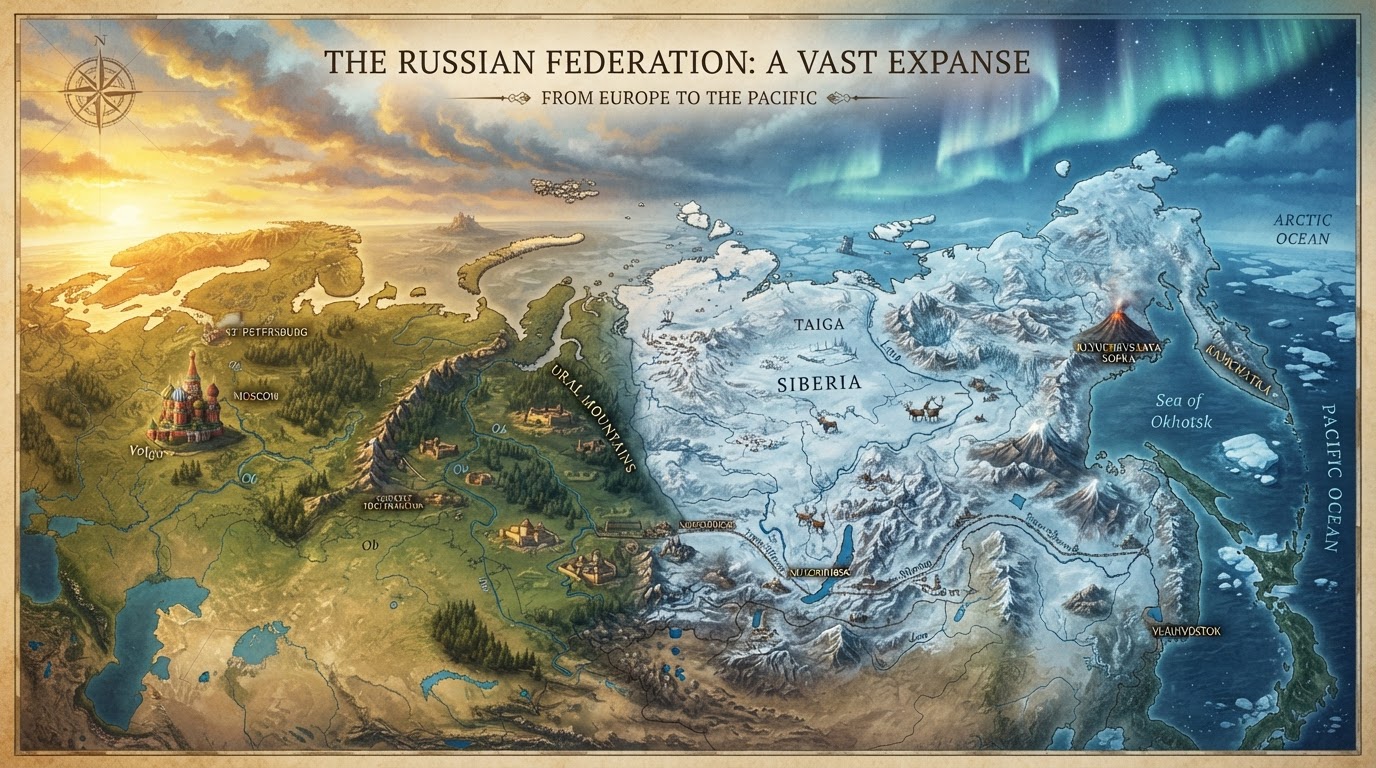
The state of Texas is 695,000 square kilometers. The 48 continental United States cover about eight million square kilometers. Russia is more than double that size. Its 17 million square kilometers make up one-eighth of the total habitable area on Earth, and it is almost double the next biggest country, Canada.
Russia is a part of Europe, but it also has an extensive border with China and North Korea. At one point, Russia and the United States are only two and a half miles apart.
The Mongol Invasion of the Slavic Lands
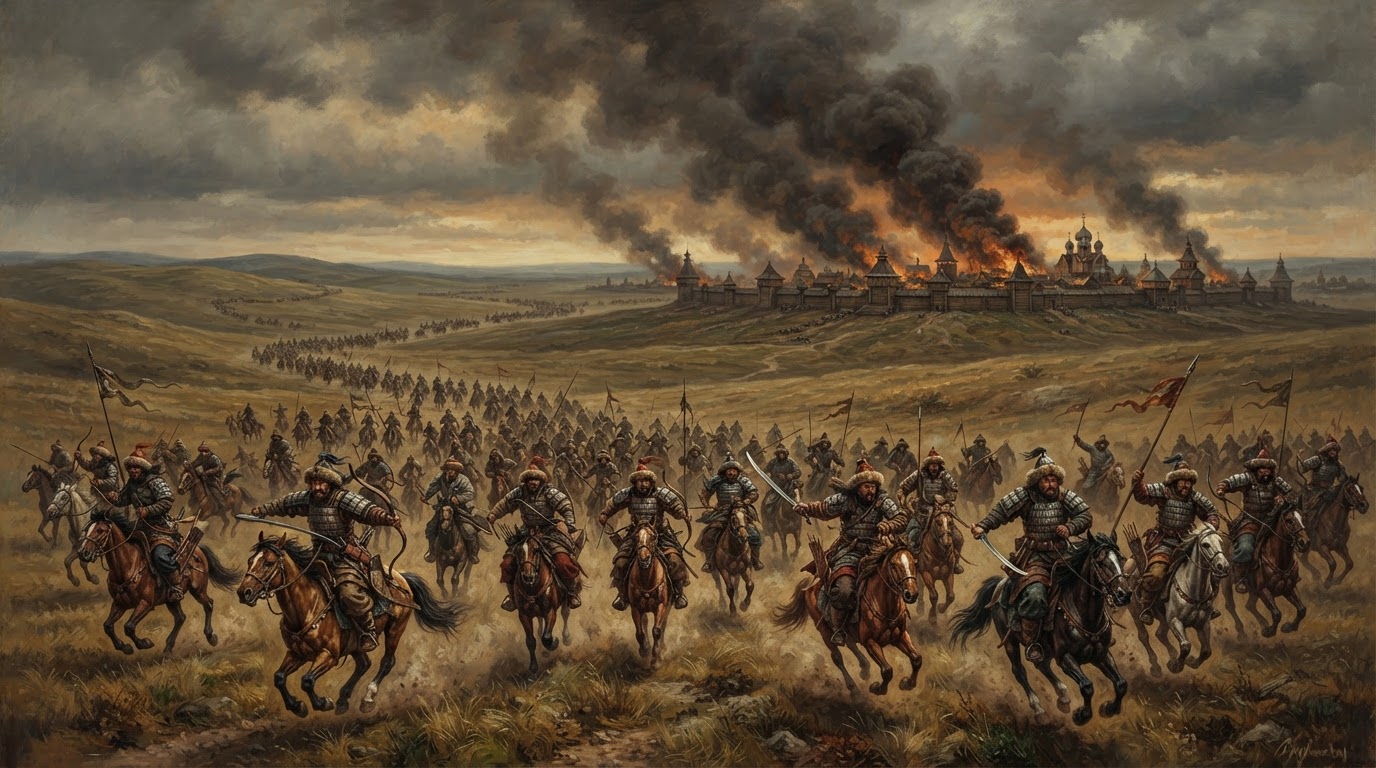
A thousand years ago, the Slavic peoples of Russia were a growing and prosperous society in Eastern Europe. But they had a pretty big weakness: flat grasslands that were very easy to cross if you were an army looking to pillage land.
A group of horse-riding warriors, the Mongols, used this path of flat grasslands to traverse across Asia and expand their empire. Some 40,000 Mongols on horses with bows and arrows eventually made it to the Slavic peoples of Russia, invading cities, burning them down, and conquering the people.
The Mongols took over and weakened their society. They broke up the cities that had been collaborating with each other, and those cities were now paying taxes to an empire from far away.
The Rise of Moscow and the Fur Trade
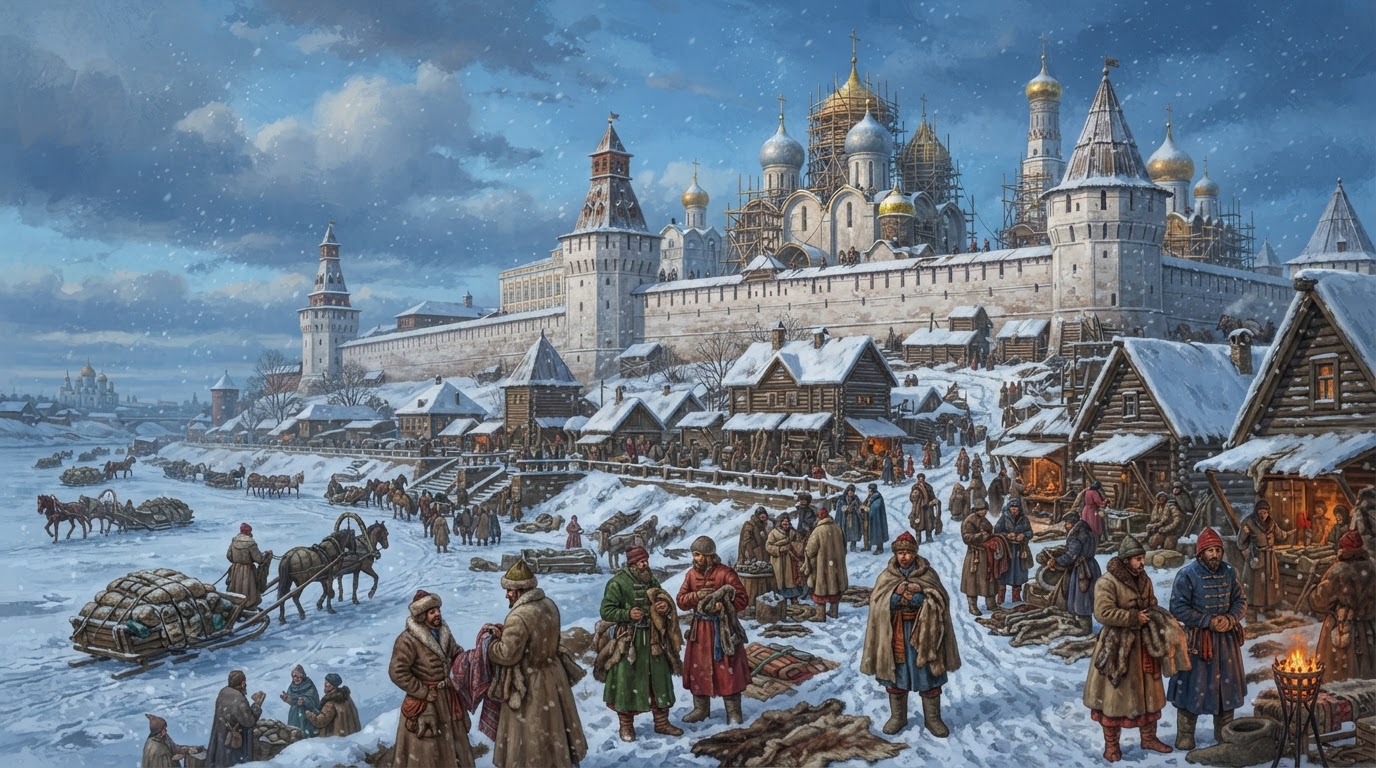
There was one city in this area that was particularly ready to fight back. Moscow was quietly getting more powerful and became the regional epicenter for trading fur, which was becoming all the rage in Europe.
Moscow was also learning how to use gunpowder, guns, and technology from Europe. Before long, it was able to punch back against the Mongols, whose enormous empire was getting hard to maintain and starting to crack. Moscow was there to take advantage of this.
The Mongol Empire was the biggest land empire in history, but it did not last long. Moscow had fur money and gunpowder, and it was having success pushing the Mongols out and moving east.
The Search for Natural Borders
Moscow, which was becoming the Russian Empire, wanted to make sure nobody could sneak up on it again as the Mongols had. Mountains and water offered natural protection, so Moscow started expanding toward the Ural Mountains.
Soon, it had an empire-sized set of borders, mountains for protection, a fur economy, technology, and commerce. It was getting rich. But there was a flaw in the plan. This natural border had a huge gap of flat grasslands that people could easily pass through on their way to Moscow.
By the middle of the 1500s, Moscow had beaten back the Mongols and was expanding east. It had found a natural border, but that border did not really work. It was still looking for mountains, water, or something else to buffer the country to the east.
Ivan the Terrible and the Expansion Across Siberia
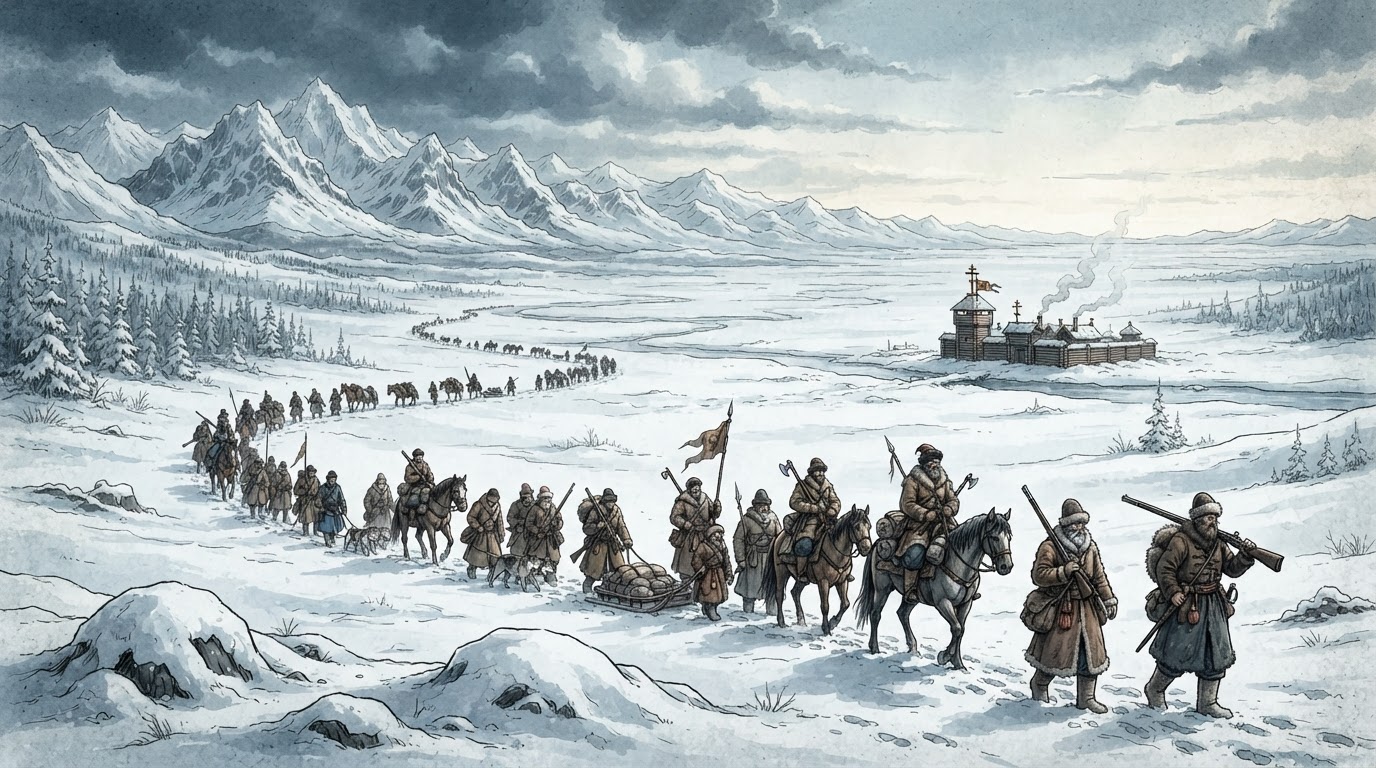
Ivan the Terrible came into power with big ambitions for expanding Russia. He did not want to stop at the mountains. He wanted to see how far Russia could push east, way past them.
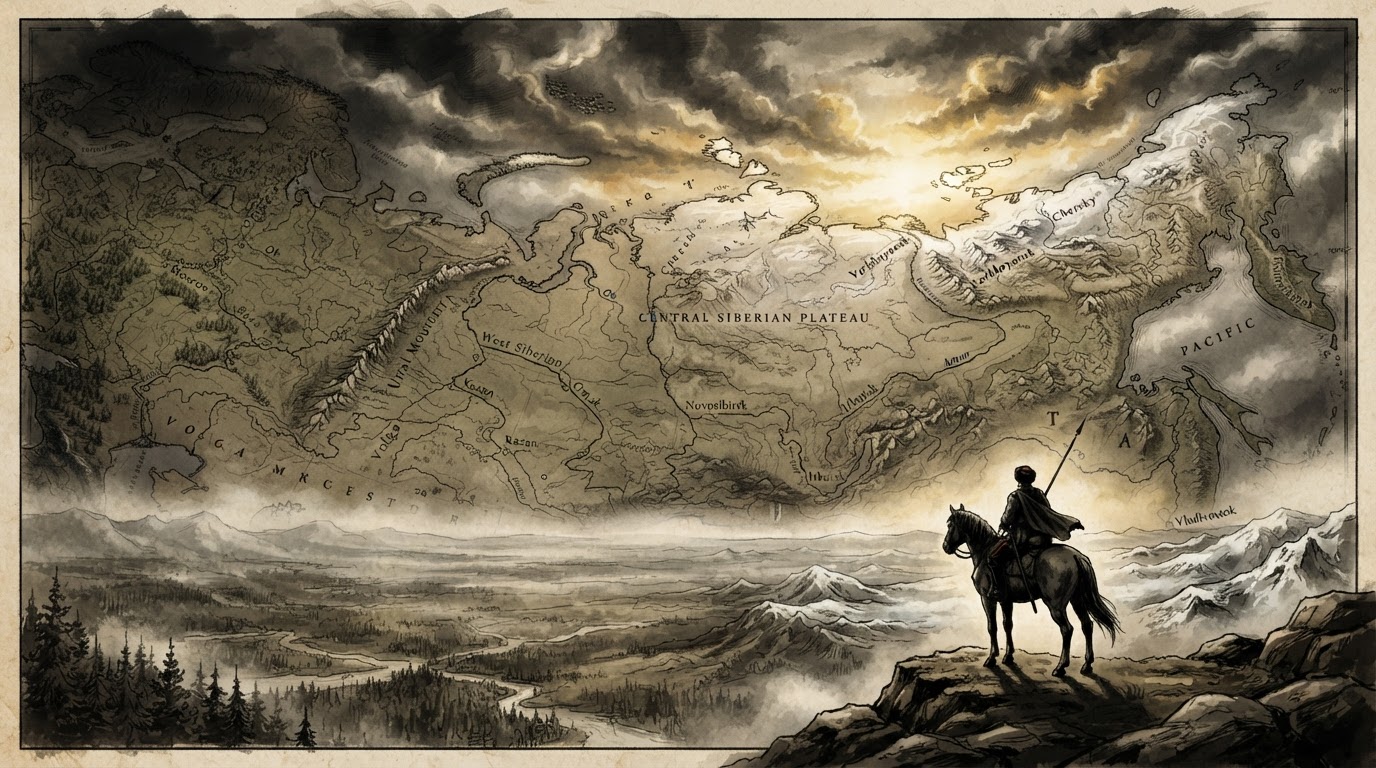
On the other side was a very sparsely populated land of ice called Siberia. There were not many people there, and the people who were there were not very resistant to the Russian takeover. The main thing the Russians had to fight against was the cold.
But with cold came furry animals with thick coats, which were incredibly valuable in European markets. That helped fuel the race to keep going east. Eventually, the Russians reached the Pacific Ocean, but they did not stop there.
The expeditions were getting so far from Moscow that the government could not really stay in touch with them. It sent them out without being entirely sure what they were doing or what they were taking over.
“Nobody really knows why he did that and to what end. There is, however, something erotic taking place in the borders of our empire.”
After one expedition conquered a remote city in the Far East, a government official in Moscow said, “Nobody really knows why he did that and to what end. There is, however, something erotic taking place in the borders of our empire.”
The Peoples and Cultures Within the Empire
When the Russians found a tribe, people, or culture very different from their own, they first tried to negotiate and convince them to join the Russian Empire. If people resisted, it became predictable imperialism very quickly. But many tribes did not resist and found it beneficial to be part of the growing empire.
The empire grew without a lot of conflict, enveloping cultures that kept their identity, language, and culture far away from Moscow. That expansion helps explain why Russia is not just a huge landmass, but also a country with many distinct peoples.
Republics Within Russia
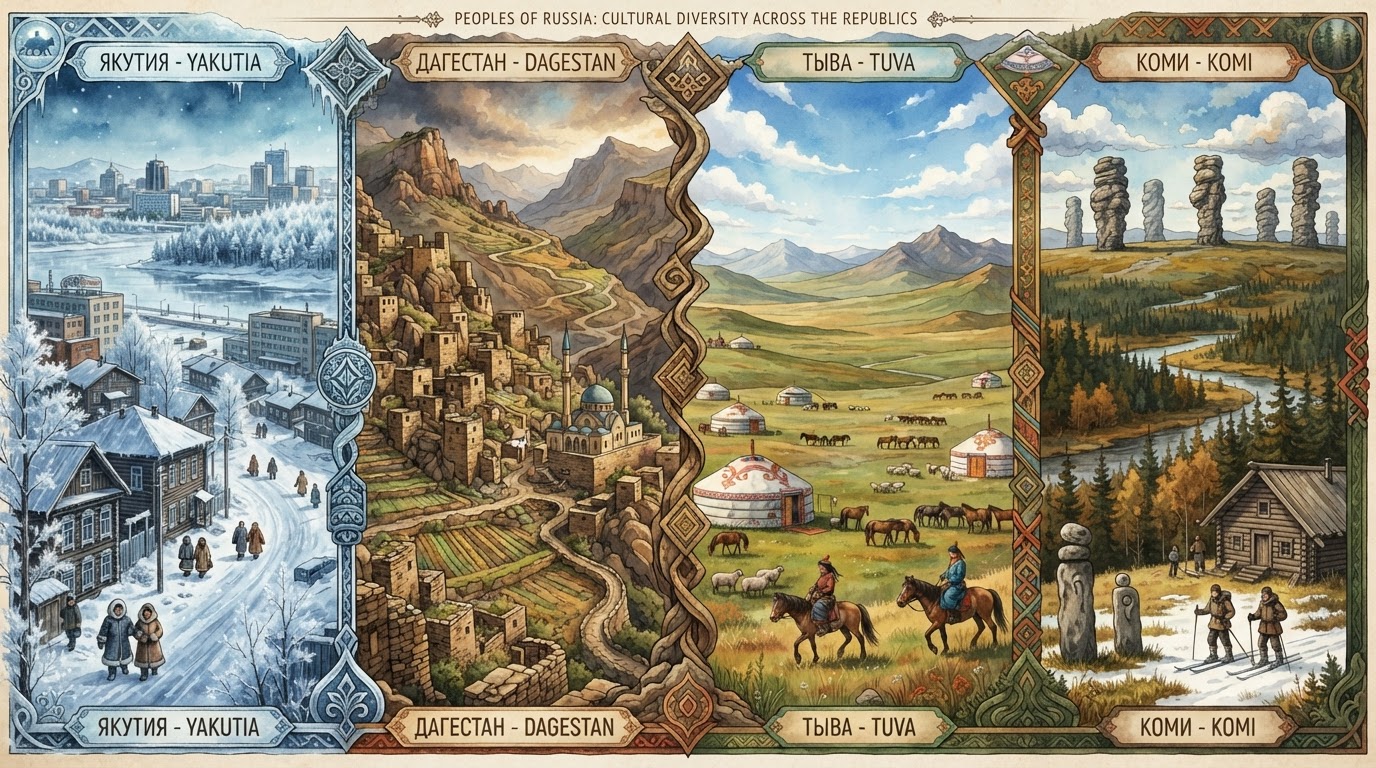
Russia is divided into 85 territories. Of these, 22 are called republics. They have their own official language and legislature, and are basically totally independent from Russia except in international affairs. It is like 22 countries within a country, all with their own unique style.
Sakha and Yakutsk
The Republic of Sakha is located far to the east and covers 3.1 million square kilometers. It is in a time zone six hours ahead of Moscow. The people here have ancestors from outside the original Moscow area, and they speak their own northern Siberian Turkic language.
Its capital is Yakutsk, the coldest large city on Earth, with an average temperature of minus eight degrees centigrade. The region is known for its enormous diamond-mining pits. About 25% of the world's diamonds are mined in this republic.
Dagestan and Chechnya
Dagestan borders Azerbaijan and Georgia. Its climate is hot and dry, and its people speak 13 different official languages besides Russian, along with many unofficial languages. About 83% of the people identify as Muslim.
Dagestan is next to Chechnya, another part of Russia with a distinct political and cultural identity. People there declared independence in the 1990s, followed by militarized rebel groups, war, terrorist attacks, and deaths.
The Komi Republic
The Komi Republic is located by the Ural Mountains. It is known for its natural beauty, landscapes, and distinctive rock formations. According to local legend, climbing those formations brings bad luck.
The republic was also the location of gulags, the brutal prisons of the Soviet period.
Kalmykia
Kalmykia has its own distinct people and culture. Russian authorities have been brutal to these people over the years, trying to erase their culture, but that culture persists.
Tuva
Tuva is another place where Russian ethnicity and language are a minority. The people are more related to the Mongols, and they speak a Turkic language called Tuvan.
The People Behind the Borders
Russia grew as it searched for a border and for fur. It kept expanding its empire, enveloping the people and cultures that came with it. That history helps explain both the size of the country and the diversity within its borders.
More from the Front
 Historical
The Rise and Fall of the Soviet Economy — Part 1: From Serfdom to Revolution
While the West crashed in 1929, the Soviet Union boomed — industrial output up 50% in five years, near-zero unemployment. But the roots of that miracle, and its eventual collapse, reach back to 14th-century feudalism, the Black Death, and a revolution that replaced one extractive elite with another.
 Historical
The Rise and Fall of the Soviet Economy — Part 2: How It Rose So Fast and Why It Collapsed
The Soviet economy grew rapidly by directing labor and resources into heavy industry. But its problems with incentives, information, and innovation made that growth unsustainable — and the seeds of collapse were planted before the nation even existed.
 Historical
How Korea Became Divided Into North and South
For centuries Korea was one independent, unified country. A century of foreign competition, Japanese colonial rule, and a Cold War line drawn at the 38th parallel tore it in two — and over 70 years later it has still not been put back together.