
Hostomel Airport and the Battle for Kyiv — Part 1: Why Russia Chose Hostomel
On February 24, 2022, an unassuming cargo airport on the outskirts of Kyiv became the single most important place in Ukraine. From the An-225 to a 300-man garrison, here is how the assault on Kyiv was meant to unfold.
It is 8:00 AM on February 24th, 2022. Although no one in Ukraine realizes it yet, what is about to unfold in a relatively unassuming part of the country will arguably be the single most important event in Ukrainian history. The stakes could not be higher. The country itself is on the line.
If Ukraine fails, Russian soldiers will have established a critical foothold into the country's interior. Soon after, hordes more soldiers and materiel will flood into Ukraine. Kyiv, the capital, will come under immediate attack. It is unlikely that Ukraine's army has the ability or ammunition to fend off such an assault. President Zelensky will be captured, or worse. Ukraine will become like a headless corpse. Not much after that, the rest of the country will likely get the Crimea treatment and be formally annexed into the Russian Federation bit by bit. Putin's dreams of being a modern-day Peter the Great will finally be fulfilled, and his legacy will be forever cemented in the upper echelon of Russian leaders.
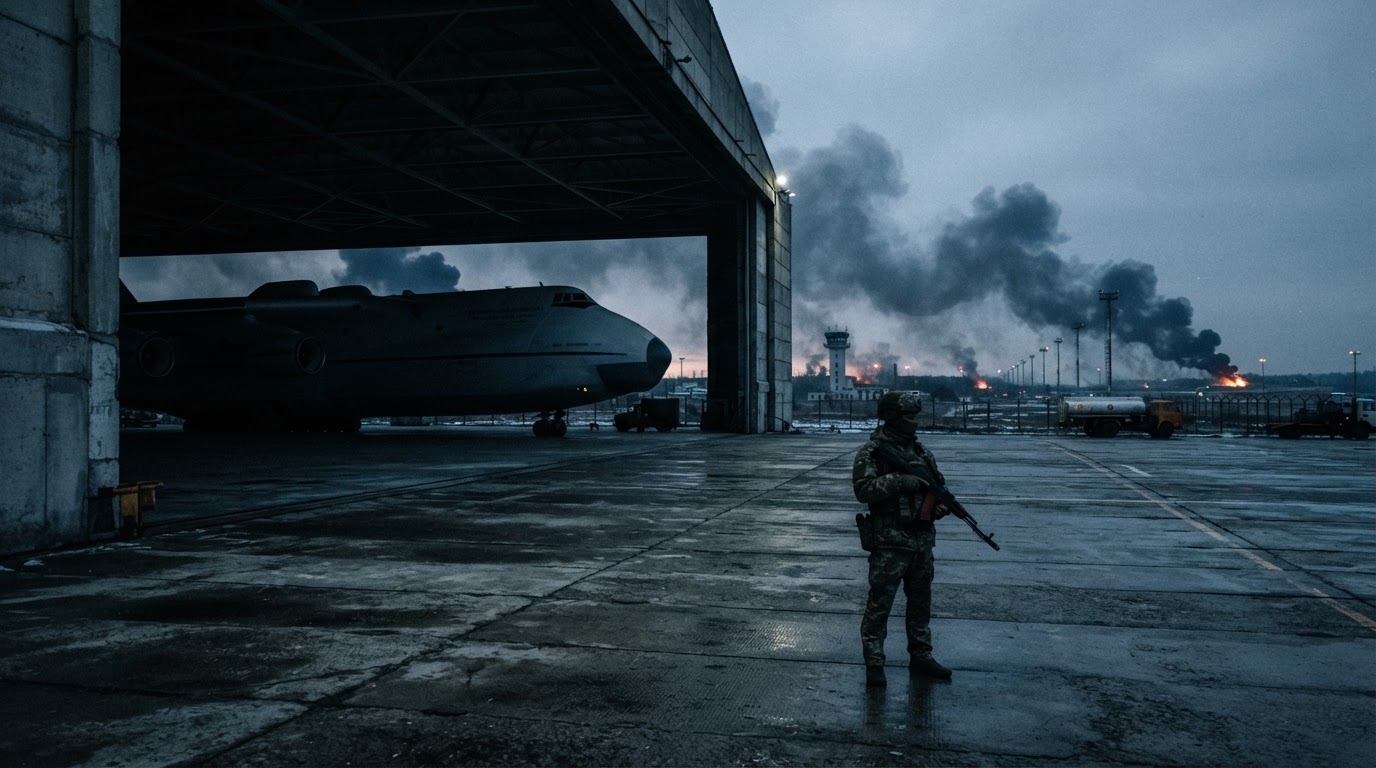
Ukraine is going to lose this battle. It is going to hurt, and hurt badly. The scene will look less like a war in the year 2022 and more like something out of a post-apocalyptic movie fit for Hollywood. And yet, somehow, this defeat will leave Ukraine with a chance to survive. The battle will take place at Hostomel Airport.
An Unassuming Cargo Airport Outside Kyiv
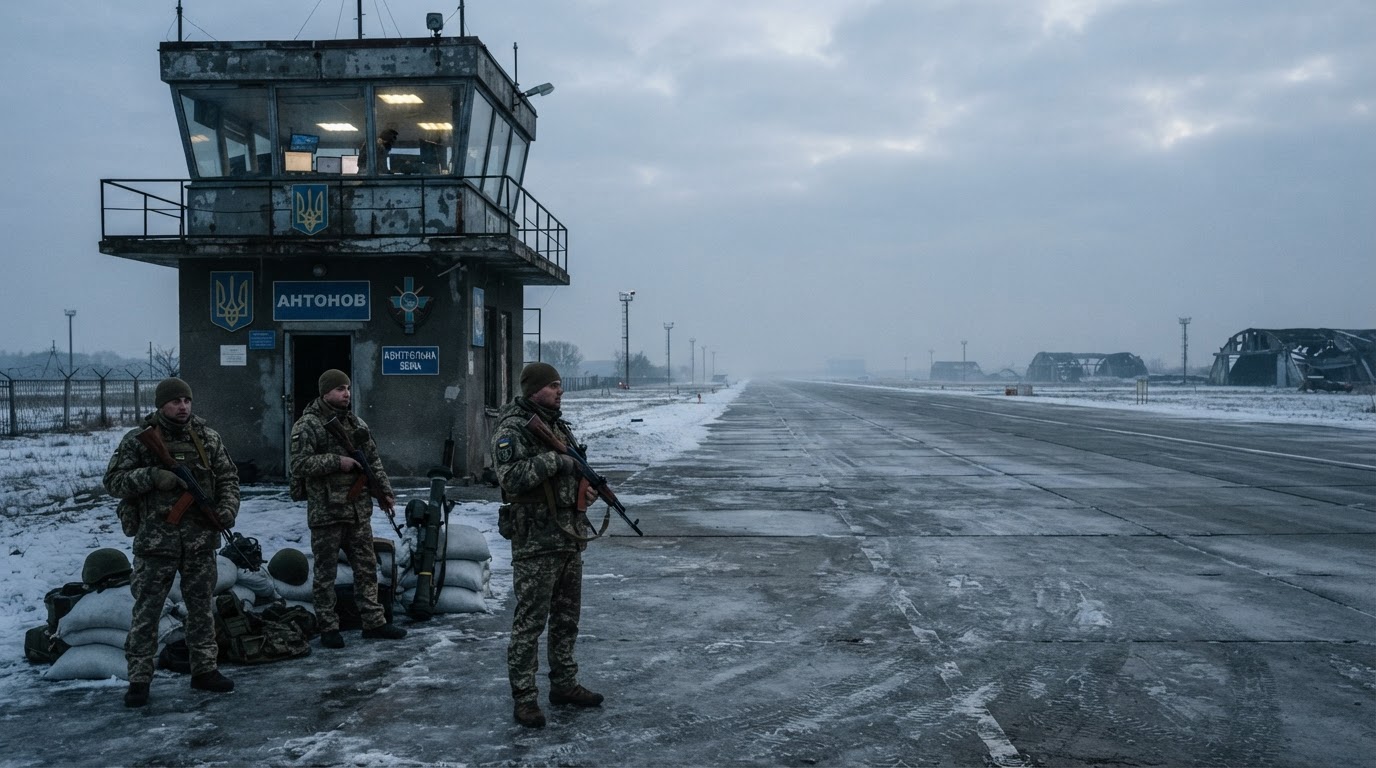
Founded in 1494, Hostomel is a small town of 18,000 people on the outskirts of Kyiv. Its main economic driver is the Hostomel Airport, also known as the Antonov Airport due to Antonov Airlines' presence there. Despite its prominence in the local economy, to the average person, it is an unassuming facility built in 1959. There is little reason to be familiar with it. The facility focused on cargo operations. By contrast, Ukraine's largest airport with 15 million yearly passengers, Boryspil International, sits just on the other side of Kyiv. Ukraine's second busiest airport outside of Crimea is Kyiv International, located just 26 kilometers away from Hostomel. Those are the airports that everyone knows and flies into and out of, especially with international travel. Not Hostomel.
The An-225 and Its Soviet Origins
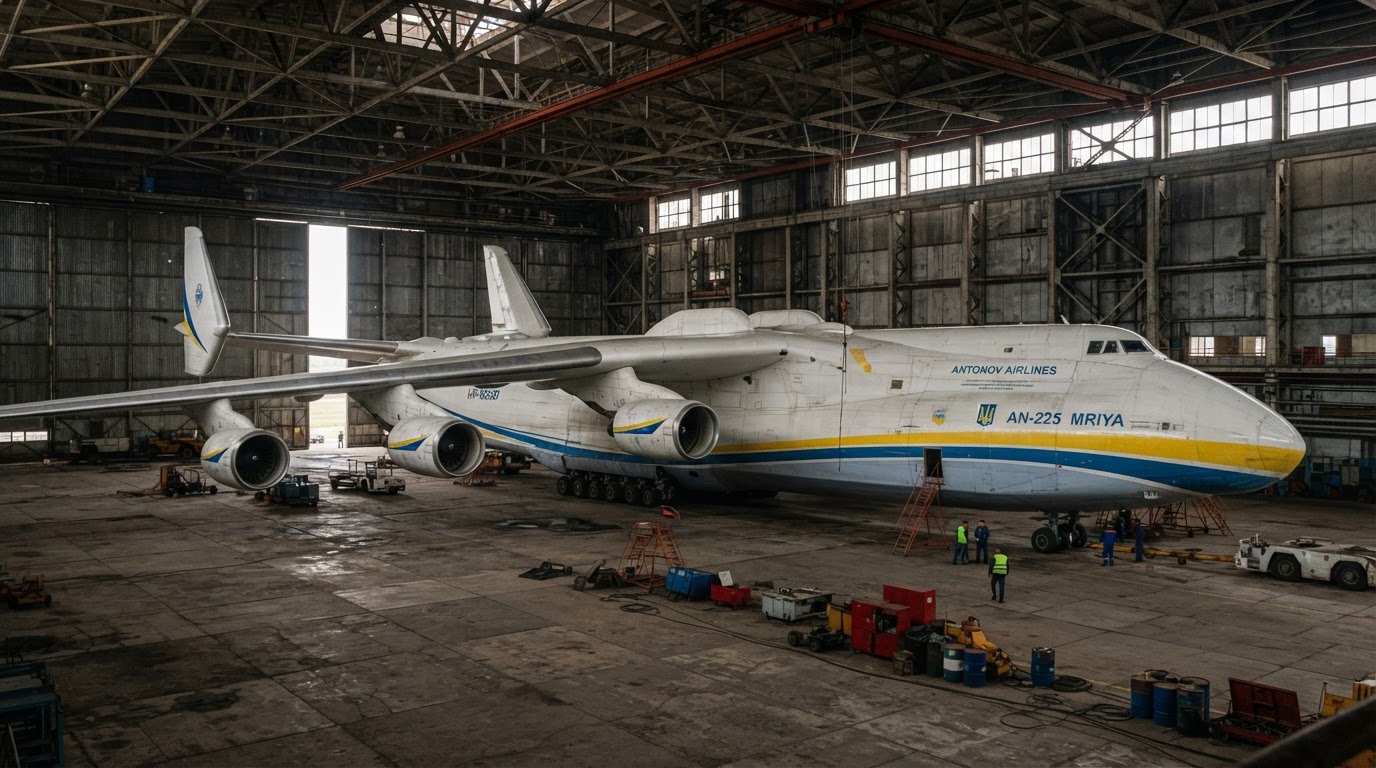
Instead, prior to the war, Hostomel's claim to fame was that it was the home of the world's largest aircraft, Antonov Airlines' An-225. The aircraft was a source of pride, but its own history is a microcosm for the events that are about to take place. The An-225 is a product of the Soviet era, first flown on December 21st, 1988, specifically to transport the Buran space plane.
The Buran program began in 1980 as the Soviet answer to the American Space Shuttle program. The similarities in their designs are striking. So much so that it became a political problem in Moscow. Some wanted to change the design so that the Soviet Union could not be accused of copying the Americans. However, raw aerodynamics ultimately won out. Most of the space shuttle's design was already optimized. Politics, in this case, was no match for physics.
But to be fair to the Soviet engineers, this was not a copycat job. Thanks mostly to a different fuel system, the Buran had a slightly larger payload capacity and could return significantly more from orbit. Of course, such a system is incredibly large and heavy. To transport it around the Soviet Union, you would also need an enormous plane. Hence, the An-225.
But the plane's glory days were behind it, as it quietly sat in a hangar at Hostomel Airport. Rather than hauling around the pride of the Soviet space program, its most recent mission was to ferry 90 tons of COVID tests from China to Denmark. A noble task to be sure, but not quite what its manufacturers originally had in mind.
The End of the Buran Program
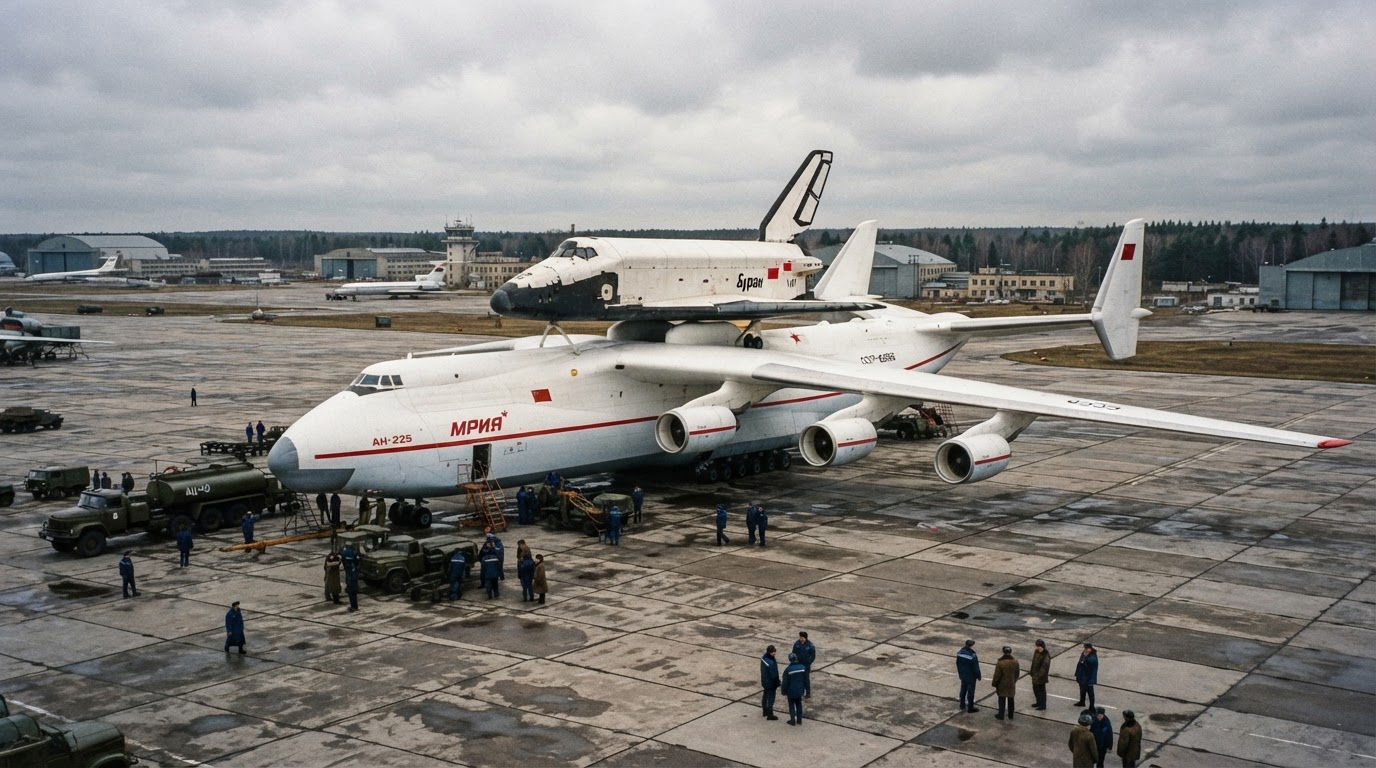
Through no fault of the An-225, the Buran system was a complete bust. Despite its promising start, the Space Shuttle program came to be recognized as a failure as well, whether due to the Challenger disaster, or Discovery disaster, or the program's general inability to turn space travel into a routine affair.
But the Buran disappeared almost as soon as it debuted. Its only flight occurred on November 15th, 1988, an unmanned three-and-a-half-hour trip. From a technical standpoint, the launch was a triumph. But then the Soviet Union collapsed. Russia did not have enough money to continue the program, and so Boris Yeltsin canceled it in 1993. The little money left over for the program was rerouted to the Mir Space Station. The Buran was an economic failure. That history provides a backdrop to the Soviet failures and the inability of Kremlin leadership to establish a glorious legacy.
The Russian Military Buildup
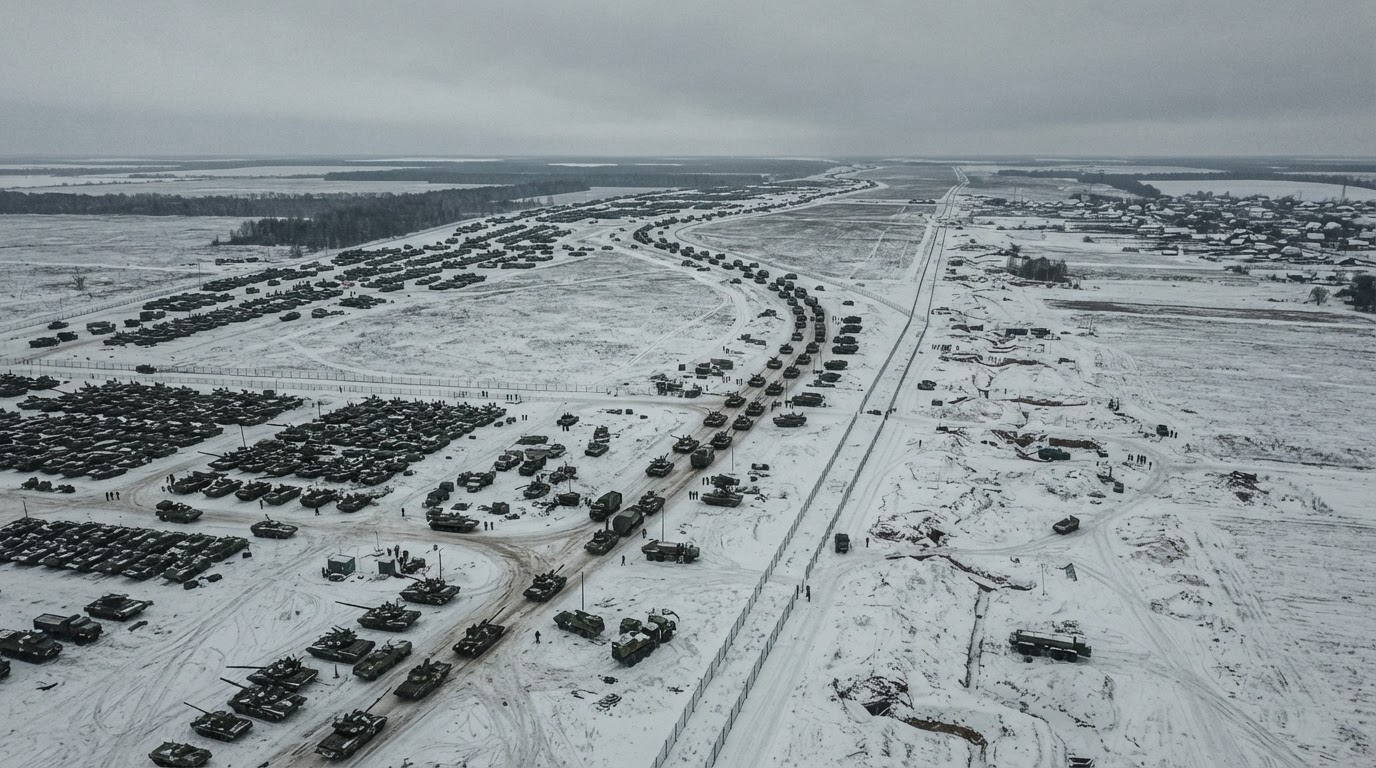
By November 2021, though, it appeared that Moscow might be trying something again. The Buran, the An-225, and Hostomel Airport were far from anyone's minds. Instead, the focus was on the border between Ukraine and Russia. On November 13th, 2021, Zelensky announced that an estimated 100,000 Russian soldiers had amassed along the border between Ukraine and Russia. The next three months were a jumbled mess of maneuvering, duplicity, and conflicting messaging.
Russia at various points denied that any mobilization was happening, and that any troop movements were a part of an elaborate war game operation.
The United States was concerned, however. President Biden dispatched CIA Director William Burns to Moscow at the beginning of the month to meet with his Russian counterparts. On December 7th, Biden and Putin further discussed the issues via a video conference call. One imagines that the pleasantries that began the meeting did not last long. The Kremlin later described the tone of the conversation as frank and businesslike.
By January 2022, the Biden administration had become convinced that Russia was going to invade, predicting a launch window between the middle of February and the end of March. The U.S. diplomatic focus turned toward raising awareness of the possibility of an invasion. The goal was to signal that the West would not tolerate such an action from Russia. With any luck, the campaign would convince Moscow that the economic devastation that Western allied countries could unleash would outweigh any benefit that Moscow could plausibly gain in Ukraine.
Why Ukraine Downplayed the Threat
Interestingly, Zelensky took a different approach, aiming to downplay the possibility that an invasion was inevitable. It's not that Ukraine was oblivious to the risks in front of it. The country had been in a de facto war against Russia over the Donbas region since 2014.
Zelensky's predecessor, Petro Poroshenko, had previously met with Putin through a peace talk process sponsored by France and Germany. Briefly, Zelensky too had taken part in these negotiations. He knew about the security threat, and if Zelensky was too optimistic, the United States sent CIA Director Burns to Ukraine to go over U.S. intelligence about a possible war. Instead, the reason Ukraine wanted to downplay the threat was all about economics. Zelensky worried that the endless talk of war would drive all the economic investment out of Ukraine, and if a war were to start afterward, Ukraine did not want to have to fight from a position as if it had been under de facto economic sanctions for months prior.
Moreover, there was some chance that this would ultimately go nowhere. After all, Russia had undergone an earlier mobilization in March and April 2021, but this did not culminate with an actual invasion, and the Russian troops partially withdrew by June. Perhaps this was a repeat of that. Maybe Russia would rattle its saber but not pursue things any further, especially now that the West was uniting in opposition.
Because this was a plausible interpretation of what was happening, Ukraine had not gone into full defense mode. Its alert status was elevated, but full mobilization was not yet in the picture, and Zelensky still wore suits.
The Small Garrison at Hostomel
Ukraine's posture over at Hostomel Airport reflected this. Only 300 National Guard troops, essentially armed caretakers, were stationed there at the time. Ukraine's true heavy hitters, and its heavy equipment, were over in the Donbas, taking part in that Russian-sponsored separatist war dating back to 2014.
Obviously, the Hostomel contingent seemed relatively understaffed. Ukraine thought that the odds that Russia would attack were acceptably low. Even the 300 troops stationed at Hostomel were laughing at the United States' frequent warnings about this. Yes, the military balance appeared stacked in Russia's favor, but the costs of diplomatic retaliation would simply be too high for the Kremlin to bear.
Why Russia Chose to Invade
Ukraine did not expect Russia to take that risk. Russia nevertheless chose to invade. We don't know why Russia went down this route. We might not know for sure for a long time either. Political scientists and historians will be debating this for decades to come. There are a few possible explanations.
Perhaps Putin's intelligence organizations were too scared to feed him accurate information about how weak the Russian military was. Perhaps they genuinely believed that Ukrainians would not defend their, at the time, unpopular president. A 31% approval rating prior to the invasion might do that. Perhaps Moscow thought that a Russian invasion would resemble the Iraq War, where many Iraqi soldiers simply abandoned Saddam Hussein rather than fight the United States. Perhaps Putin calculated that the West's response would be tepid. After all, when Putin signed the papers to annex Crimea eight years earlier, the pressure Western states produced was manageable.
And speaking of Crimea, perhaps the political situation there was deteriorating. If so, Russia would have needed to do something to create a land bridge to the peninsula, and thereby solve the logistical headaches that they were encountering. Absent that, they might lose it. Maybe the Kerch Strait Bridge was not sufficient to do the job on its own. In other words, this was all a convoluted plot to keep control of the strategically critical Sevastopol naval base.
But however Ukraine and Russia arrived at this point, they were now there. The era of joint parades was over. Now was the time to fight. At 4:30 AM Ukrainian time, Putin got on Russian national television to declare that a special military operation had begun.
Why Hostomel Suited the Plan for Kyiv
One way to win a war, or even a special military operation, is to decapitate the opposing leadership. That was easier said than done here. Russia was using Belarus as a staging ground. Even so, it is a 154-kilometer drive from the southern tip of Belarus to Kyiv.
Moscow's solution instead was to establish a forward operating base close to the capital. While Kyiv International Airport might seem like a good starting point, it is in the middle of a large population center and would be naturally better defended.
Then there is the fact that Kyiv International Airport's runway is only 2,300 meters long. Military aircraft tend to be heavier and also carry heavy things, like those tanks Russia desperately needs to invade Kyiv. That means that the military planes require longer runways. Hostomel Airport offered a 3,500-meter runway suited to cargo planes. No wonder the An-225 called Hostomel home. Conveniently enough for Russia, Hostomel Airport was also just beyond the outer edge of the defense perimeter that Ukraine would later establish for Kyiv.
Why Russia seemed less interested in Boryspil is not as obvious. It too sits outside of Kyiv's main population center and has an even longer runway at 4,000 meters. However, Russia chose to bomb it rather than control it at the beginning of the war. A likely explanation is that Russia had planned for the first phase of the Kyiv assault to come from the western side of the Dnipro River, making Hostomel the logistically simpler choice. An attack east of the river would come shortly afterward, but it's a greater distance to Boryspil anyway.
Regardless, it was a simple plan for Russia. Use a combined assault to capture Hostomel Airport, land everything the army needs to stage an attack on Kyiv, capture the capital, watch the rest of Ukraine fall apart, and maybe have the troops all back home by Easter. The plan depended on everything going that smoothly.
Hostomel Airport and the Battle for Kyiv — Part 2: How Ukraine Disrupted the Assault
Continue the Series
More from this multi-part investigation. Read the parts in order for the full picture.
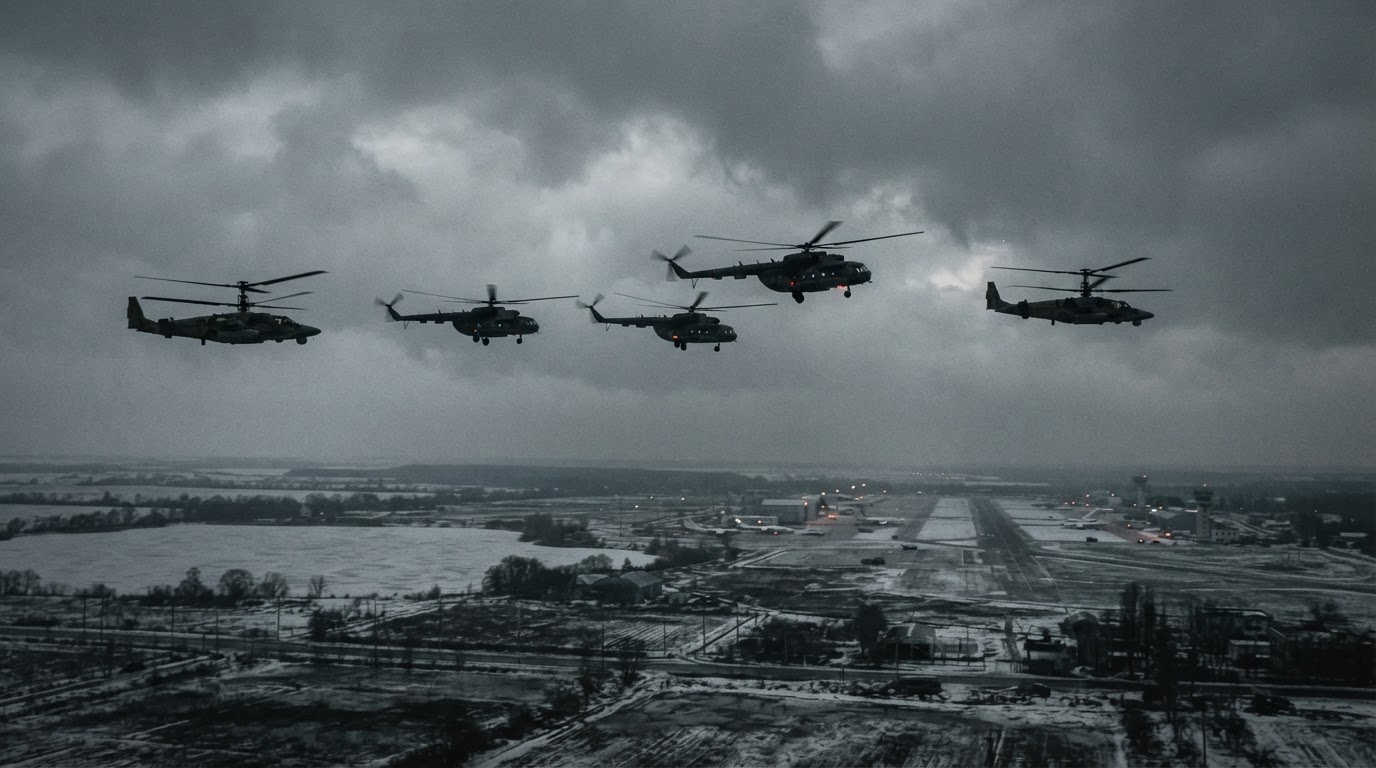
More from the Front
 Modern Conflict
Ukraine and the Long Fight for Independence
To understand the catastrophe in Ukraine, it is essential to have some historical and political context — from the Holodomor to the 2022 invasion, a century-long struggle for sovereignty.
 Military Tech
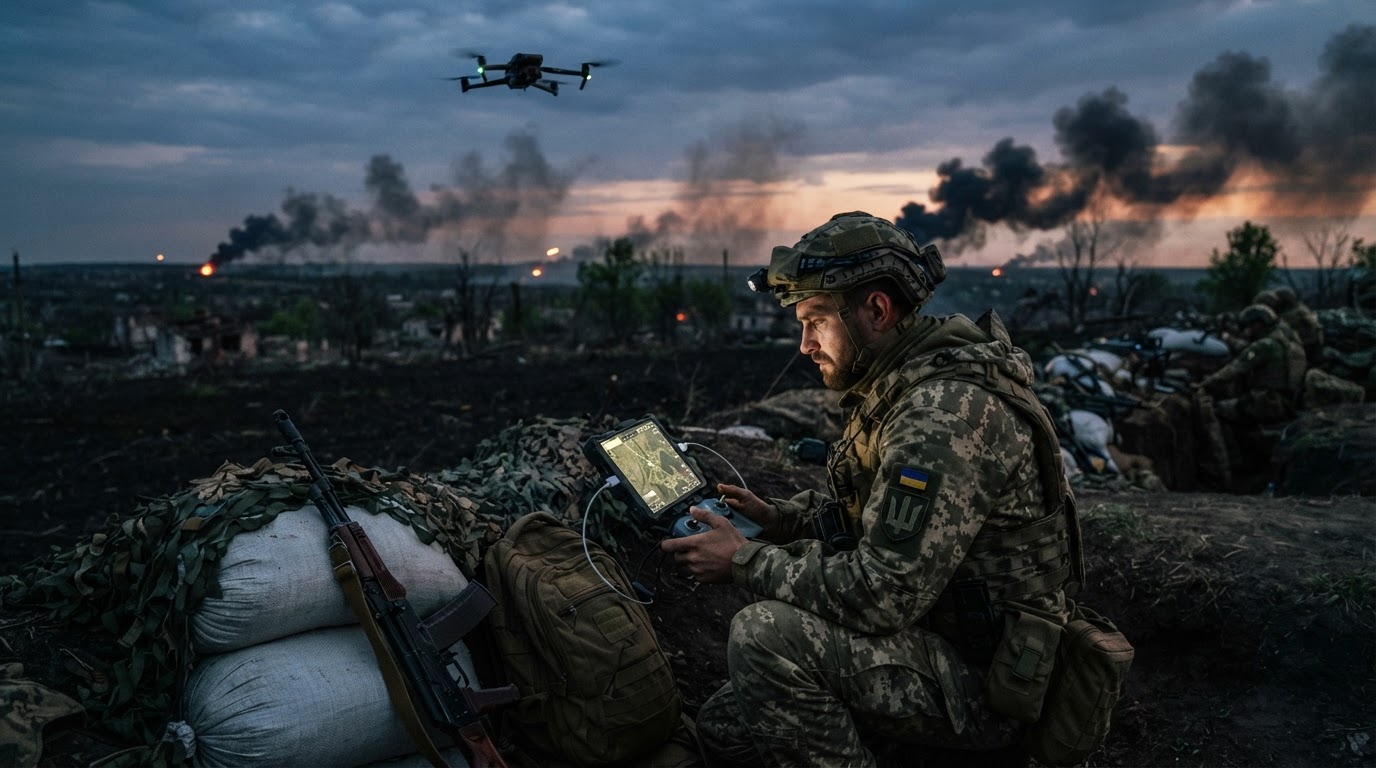
Air Power in the War in Ukraine — Part 1: How Drones and Glide Bombs Changed the War
From the era of the Reaper to industrial-scale quadcopters and Soviet glide bombs — how cheap, clever engineering reshaped the skies over Ukraine and overturned the assumptions of modern air warfare.
 Military Tech
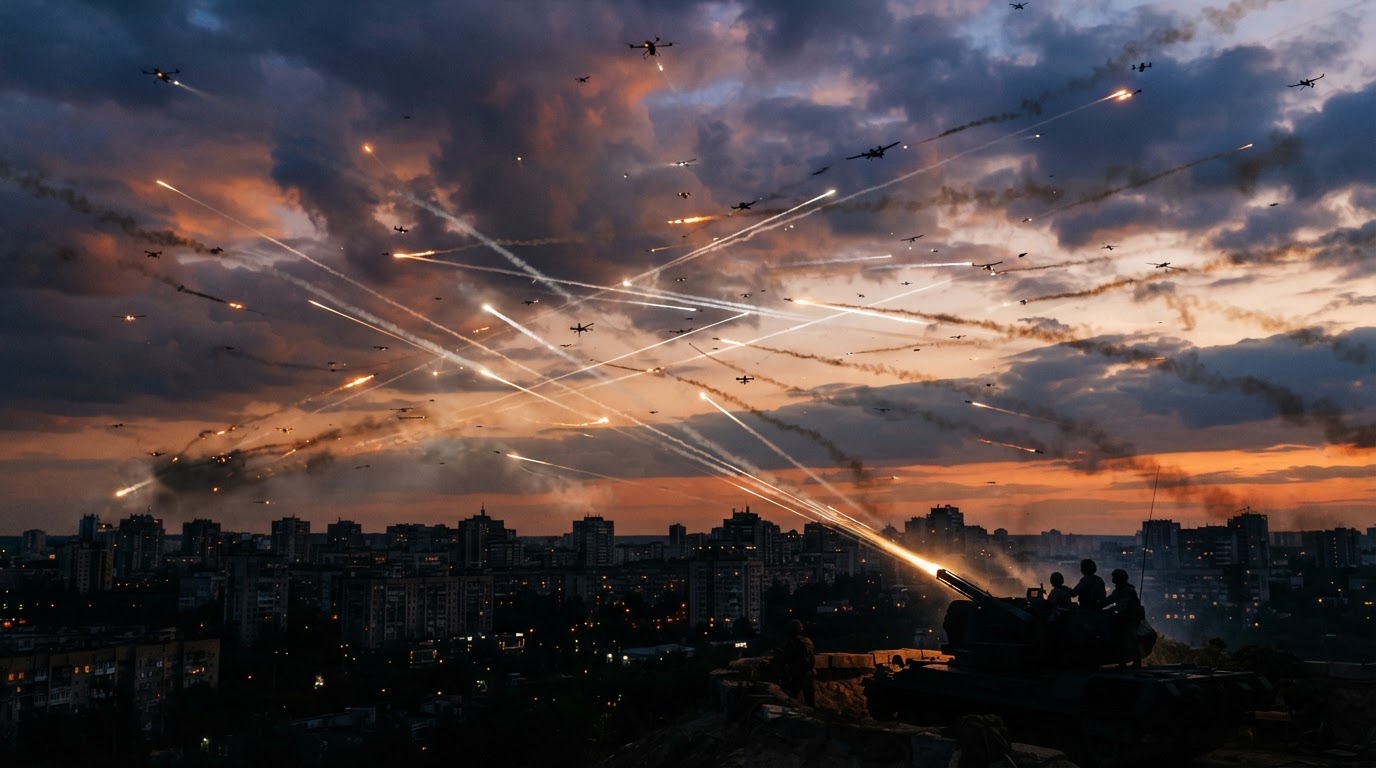
Air Power in the War in Ukraine — Part 2: How Ukraine Defends Its Skies and Carries the Air War Into Russia
From cell-phone Shahed detection networks to strikes on Russian oil refineries and Wildberries warehouses — how Ukraine turned cheap drones into a strategic campaign that reached deep inside Russia.