
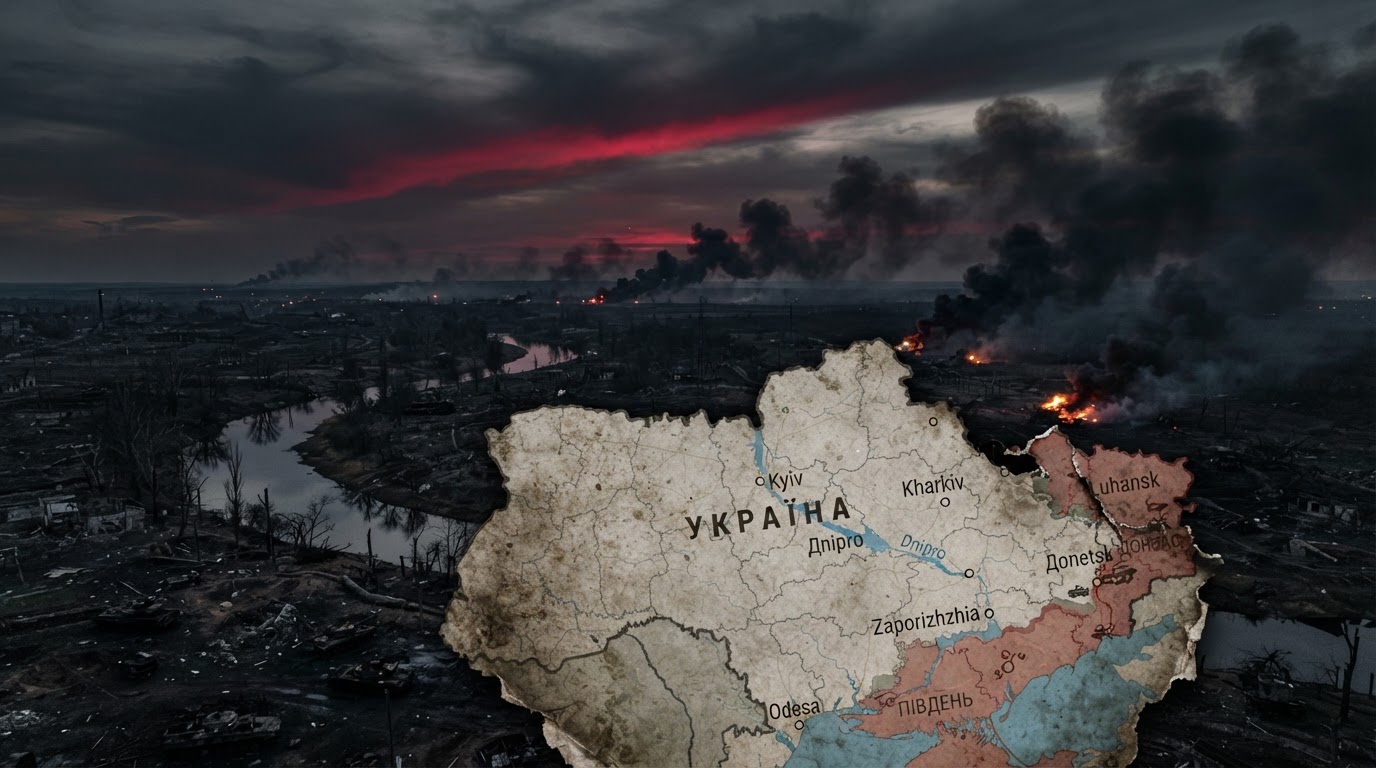
Understanding the War in Ukraine — Part 1: The Disputes Behind the War
An analysis from the opening months of the 2022 invasion — seven substantive issues that help explain what Russia and Ukraine are fighting over, from separatist regions and a land bridge to Crimea to energy, water, and the denazification claim.
Three months into Russia's 2022 invasion of Ukraine, actions on the ground and in the propaganda racket were starting to tell a clearer story of why the war was happening. Several substantive issues help explain what Russia and Ukraine are fighting over.
The Separatist Regions
Tensions in Ukraine are nothing new. In the 2004 presidential election, pro-West candidate Viktor Yushchenko squared off against pro-East candidate Viktor Yanukovych.
In the runoff election, Yushchenko received 46.69% of the vote, while Yanukovych received 49.42%. However, international election observers deemed the results fraudulent, and both candidates declared themselves victor. After rerunning the runoff, Yushchenko won with 52% of the vote to Yanukovych's 44.19%.
The major problem here was that the vote was heavily divided by region. Yanukovych was popular in eastern Ukraine, where Russian is the dominant language, and Yushchenko was popular in the west and center, where Ukrainian is the dominant language. Nevertheless, six years later, Yanukovych would emerge victorious in the next presidential election.
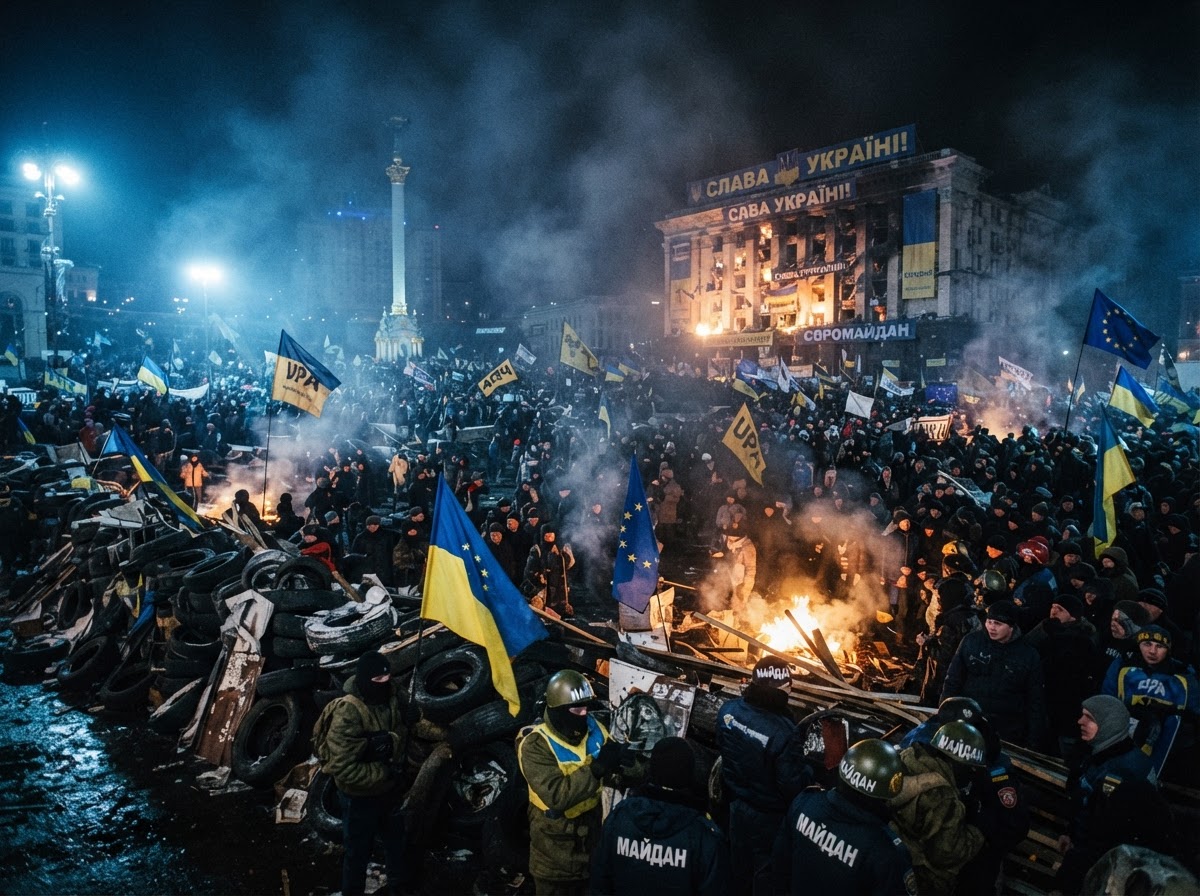
But in 2013, the Euromaidan crisis began. Ukraine looked set to agree to a trade deal with the European Union. Suddenly, though, Yanukovych deviated to supporting the Eurasian Economic Union, Russia's trade bloc. This led to protests in Kyiv's Maidan Square, hence the name, and a popular uprising.
In short order, Yanukovych fled to Russia, Russia annexed Crimea, and two separatist regions, the Donetsk People's Republic and the Luhansk People's Republic, declared themselves independent. Since then, Ukraine has been fighting a war against them.
Political scientists do not classify these as interstate wars because regular Russian soldiers were not taking part in it. However, many private Russians were taking part, and there is little doubt that the breakaway governments were receiving support from the highest levels.
In that regard, the 2022 invasion is just a continuation of the previous form of the war. Overt actions allow Russia to put greater pressure on Ukraine and perhaps finally make progress in capturing the entirety of the regions.
A Land Bridge to Crimea
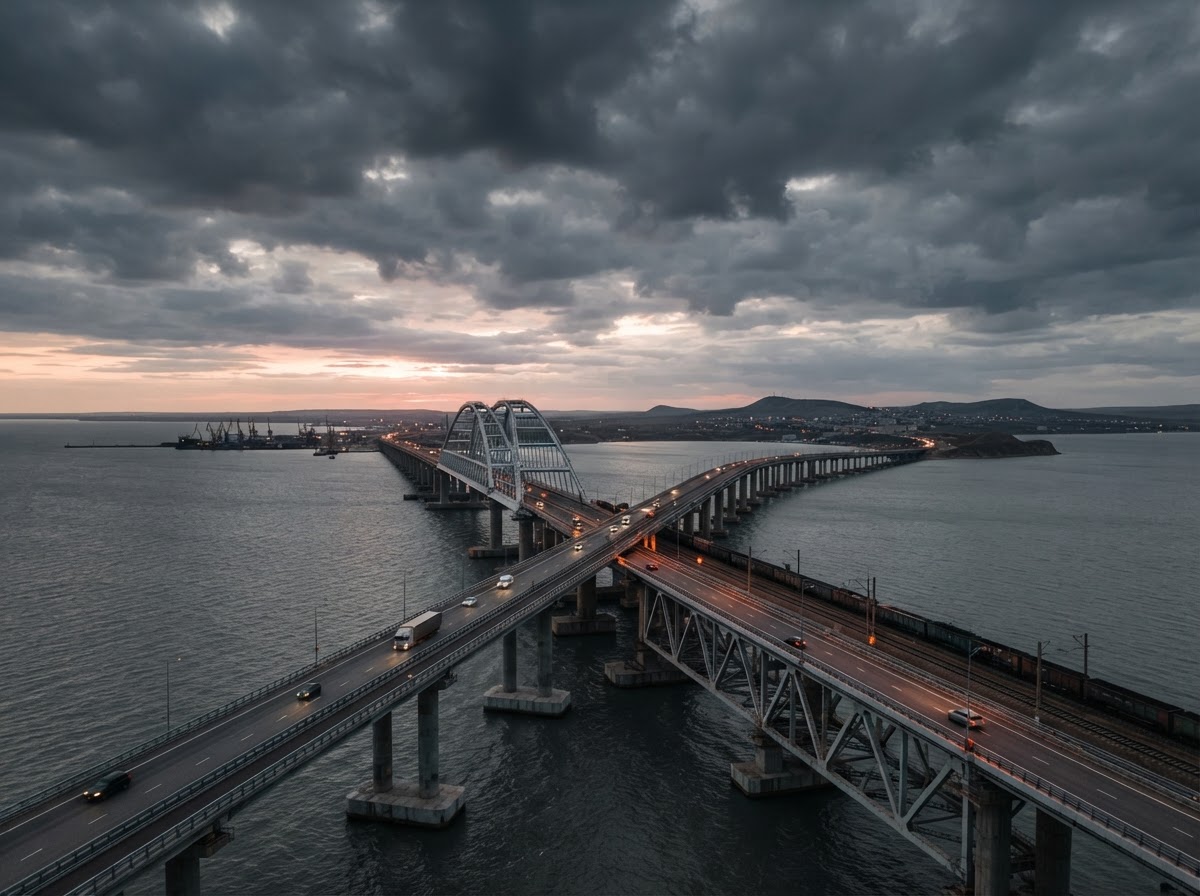
Crimea is a peninsula that juts out of Ukraine, not Russia. For all Russian intents and purposes, Crimea is essentially an island territory. Between 2014 and 2018, traffic coming in and out of Russia had to go via ferry. This was impractical over the long term.
As such, Russia started building the Crimean Bridge in 2016. Two years later, it opened for cars and trucks. A parallel rail bridge opened one year after that, but that is still only a single access point for a population of 2.4 million people.
If Russia were interested in expanding its borders, the strip of territory running along the Dnipro River up to the Donbas is an obvious place to start. And Russia succeeded in that effort when Mariupol fell on May 20th, 2022.
Restoring Former Borders
Irredentism is just a fancy term for wanting previously held land back. This explanation takes the idea of territorial expansion much further. Instead of being interested in just capturing a land bridge through eastern Ukraine to Crimea, imagine instead that Putin had dreams of reestablishing European borders similar to those during the Soviet era.
There is good evidence for this. Since 1997, Russia and Belarus have formed a supranational union state with the eventual goal of essentially merging the two countries. Abkhazia and South Ossetia, the breakaway regions that have been de facto states since the 2008 Russo-Georgian war, participate as observers. So too does Transnistria, which has been de facto independent since a 1990 civil war with Moldova. Russian troops intervened in that conflict, too.
More recently, in 2021, Putin published an essay titled On the Historical Unity of Russians and Ukrainians, which basically argued that Russians, Belarusians, and Ukrainians are all a common people. Putting these pieces together, Putin's grand goal under this theory for the war is to reestablish something like the old Soviet borders, or at least the regions that are willing to come along for the ride.
Russia and the West
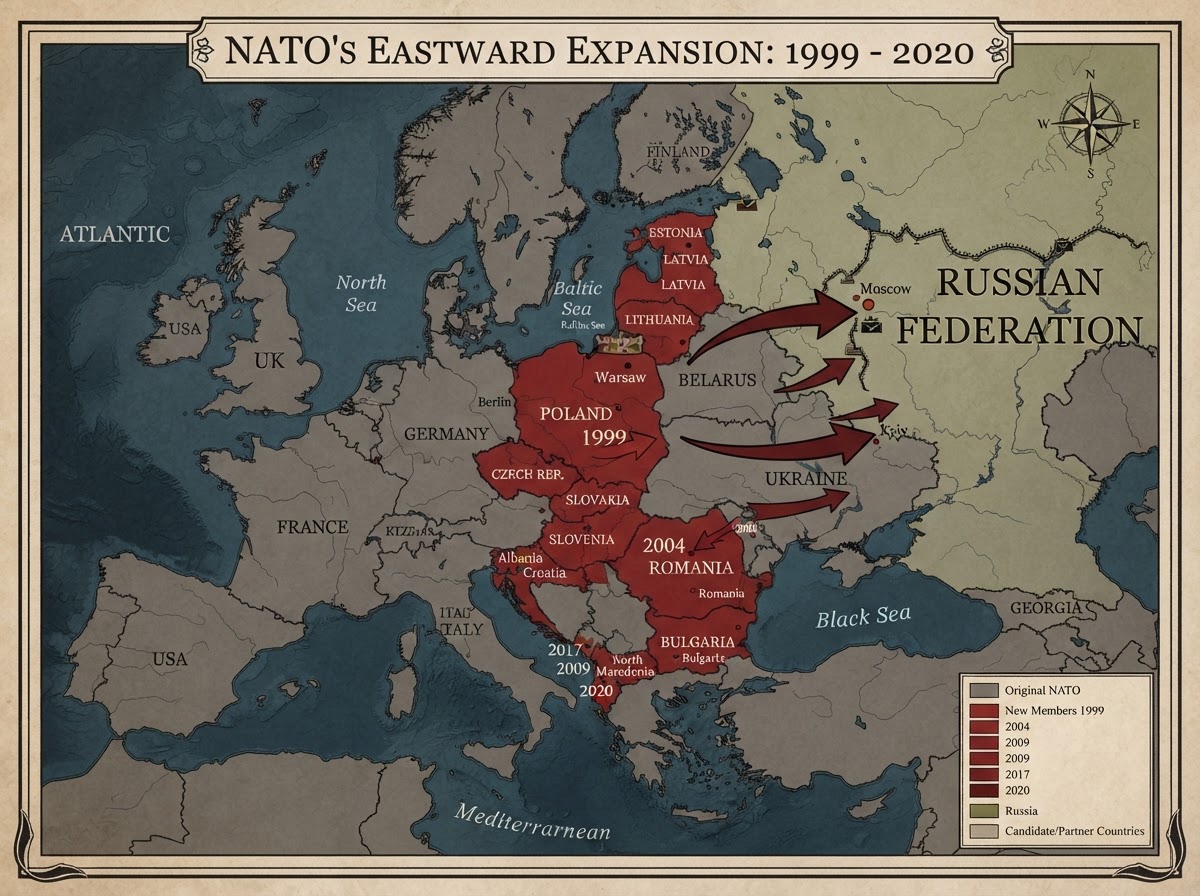
The war might not be about Ukraine per se, but rather a broader battle between Russia and the West. Since the end of the Cold War, NATO has steadily crept eastward.
First, unification pushed NATO through the former East Germany, then the Czech Republic, Hungary, and Poland joined in 1999. Bulgaria, Estonia, Latvia, Lithuania, Romania, Slovakia, and Slovenia all followed in 2004. Then Albania and Croatia in 2009, Montenegro in 2017, and North Macedonia in 2020.
If Putin views the Cold War as having never truly ended, each of these departures represents a further deterioration of Russian influence. Fighting a war to capture Ukraine is then just a first step in a longer plan to push further back.
Energy Reserves and Market Power
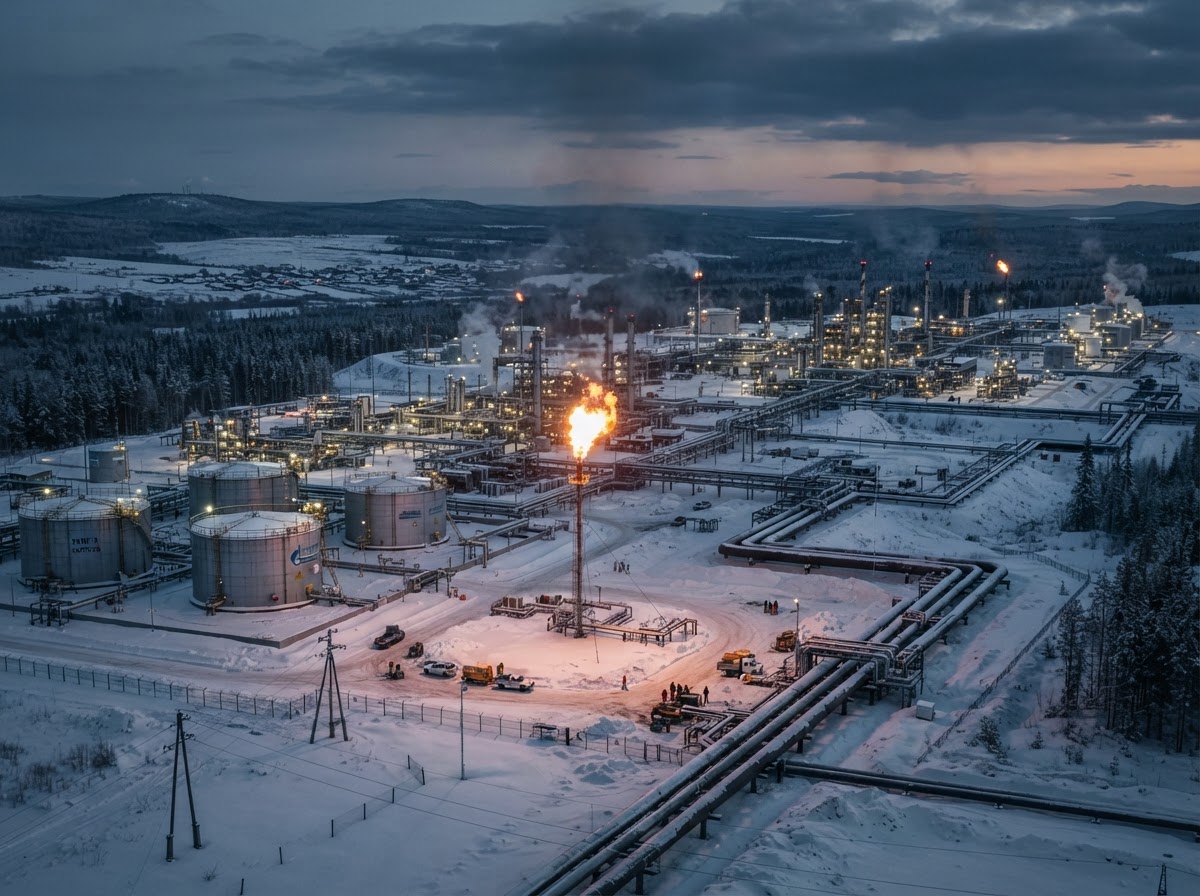
At this stage of the war in 2022, Europe depends on Russia for its energy needs, to the point that Europe is still buying much of that fuel despite the other economic sanctions. This gives Russia an enormous amount of market power. It can take advantage of its geographic proximity to Europe to sell the fuel at substantial profits.
The problem is that Ukraine is not yet in a position to fuel Europe. Ukraine has enormous untapped oil and gas deposits. Its proven natural gas reserves rank second in Europe, only behind Norway. Although Russia dwarfs all of these numbers, the ability to extract and sell to willing trade partners would make Ukraine a major competitor, if they can get their wells online, and that's a big if.
Obviously, Russia would benefit from capturing and extracting the fuel from those deposits, particularly in the Sea of Azov and west of Crimea, which would be easier to control. However, the war might not be intended to do that specifically. Instead, merely starting the war prevents Ukraine from beginning extraction. And as long as fighting continues, the energy reserves may as well not exist, which thereby preserves Russia's market power.
In fact, the very instability of the war has caused Ukraine's international business partners to withdraw from those projects, and it is difficult to imagine any company that would jump at the chance, even if the war were to end tomorrow.
Water Access in Crimea
Another issue is the water crisis in Crimea. Back in 2014, Russia annexed the Crimean Peninsula in haste, taking advantage of the chaos over in Kiev. Everything else was an afterthought. That included water. Crimea's main source of water used to be a canal that runs from the rest of Ukraine.
In response to the Russian annexation, Ukraine took the obvious step. They dammed the canal. This has led to water shortages in Crimea, especially for the agricultural sector. Estimates are that Crimea loses more than $200 million each year as a result. Over eight years, that's $1.6 billion. Starting the war meant that Russia could remove the barrier blocking the canal and secure future water access.
The Denazification Claim
The claim of denazification is the worst of these explanations. In Putin's address that began the war, the stated purpose of the invasion was to strive for the demilitarization and denazification of Ukraine. Now, it is true that there are neo-Nazis in Ukraine, but there are neo-Nazis all over Europe, including more than a dozen groups in just Russia all by itself. The fact is that Nazis do not have any meaningful support or political power within Ukraine.
To underscore that point, Zelensky is Jewish and had members of his extended family die in the Holocaust. Furthermore, Russia defeated the Azov Battalion, the group most commonly cited as harboring fascist ideologies, in the Battle of Mariupol, yet the war continued.
But if you understand the broader propaganda effort at home, this wild claim begins to make more sense. Victory Day, the gigantic annual holiday and patriotic parade that Putin is so fond of, celebrates the Soviet victory over Germany in World War II, and the Russian people have legitimate reason to be proud of their accomplishment.
After all, the Soviet Union lost about an eighth of its population during the war. Consequently, if you were Putin, anything that ties the current war to the Great Patriotic War, as it's called in Russia, is good for business. But it's definitely not the reason that the war is happening.
These seven explanations identify the main issues at stake between Russia and Ukraine, six of which are plausible. It is difficult to give a coherent narrative of the war without citing at least some of them.
Understanding the War in Ukraine — Part 2: Why Disputes Alone Do Not Explain War
Continue the Series
More from this multi-part investigation. Read the parts in order for the full picture.
 Analysis
Understanding the War in Ukraine — Part 2: Why Disputes Alone Do Not Explain War
An analysis from the opening months of the 2022 invasion — territory, energy, and autonomy are at best half-causes of war. To understand why fighting happens at all, we need a bargaining friction that blocks a negotiated settlement.
Read part Analysis
Understanding the War in Ukraine — Part 3: Why Russia and Ukraine Failed to Reach a Deal
An analysis from the opening months of the 2022 invasion — to get war, we need both an issue worth fighting over and a bargaining friction that blocks a settlement. Preventive war, preemptive war, miscalculation, and political survival each help explain why no deal was reached.
Read part Analysis
Understanding the War in Ukraine — Part 4: How Wars End and What That Means for Ukraine
An analysis from the opening months of the 2022 invasion — from military defeat and changing leadership to the removal of a power shift and the slow learning process of convergence, the causes of the war point toward very different ways it might end.
Read partMore from the Front
 Military Tech
Air Power in the War in Ukraine — Part 1: How Drones and Glide Bombs Changed the War
From the era of the Reaper to industrial-scale quadcopters and Soviet glide bombs — how cheap, clever engineering reshaped the skies over Ukraine and overturned the assumptions of modern air warfare.
 Military Tech
Air Power in the War in Ukraine — Part 2: How Ukraine Defends Its Skies and Carries the Air War Into Russia
From cell-phone Shahed detection networks to strikes on Russian oil refineries and Wildberries warehouses — how Ukraine turned cheap drones into a strategic campaign that reached deep inside Russia.
 Historical
The Rise and Fall of the Soviet Economy — Part 1: From Serfdom to Revolution
While the West crashed in 1929, the Soviet Union boomed — industrial output up 50% in five years, near-zero unemployment. But the roots of that miracle, and its eventual collapse, reach back to 14th-century feudalism, the Black Death, and a revolution that replaced one extractive elite with another.